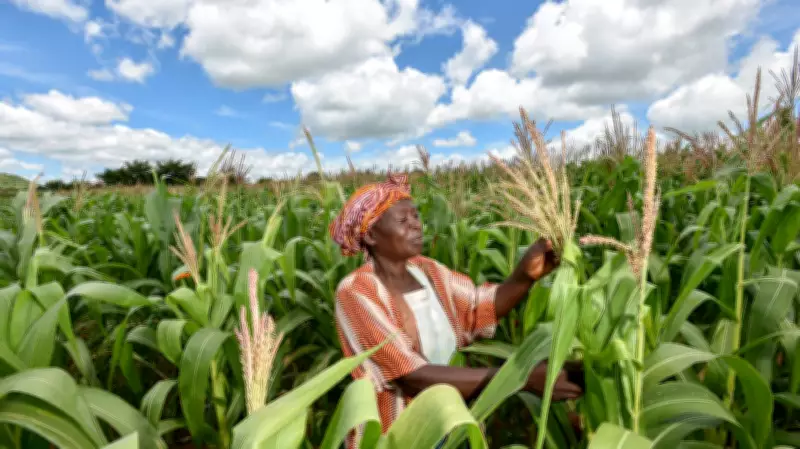
Global Food Insecurity Crisis: 800 Million Affected, Urgent Action Needed
Approximately 800 million people worldwide are currently experiencing food insecurity, a staggering figure that demands immediate and sincere governmental intervention. This alarming statistic was highlighted by Prof. Lateef Sanni, the Executive Director of the Nigerian Stored Products Research Institute in Ilorin, Kwara State. He emphasized that achieving food security requires a robust partnership between governments and farmers to yield tangible results.
Keynote Address at Agricultural Workshop
Prof. Sanni delivered his remarks during a keynote address at the 37th South West Research Extension Farmers Input Linkage System (REFILS) workshop. The event was hosted by the Institute of Agricultural Research and Training (IAR&T) at Obafemi Awolowo University's Moor Plantation in Ibadan, Oyo State. Represented by Dr. Mariam Bola Aremu, Sanni stressed that synergy between stakeholders is crucial to ensuring food availability across the country.
He pointed out that farmers must actively adopt research findings, particularly in response to unpredictable weather patterns. This adoption is essential for determining the optimal timing and types of crops to plant, thereby enhancing agricultural productivity and resilience.
Government Support and Mechanization
Olalekan Emmanuel Akinola, the Ondo State Commissioner for Agriculture, echoed the call for action. He urged governments at all levels to support farmers by providing mechanized technologies, which are vital for boosting food security. Akinola also advocated for the allocation of grants to genuine farmers, warning that diverting funds to "political farmers" poses a significant threat to national food security.
Furthermore, Akinola appealed to researchers to ensure their findings reach farmers directly, rather than remaining confined to academic shelves. He asserted that the implementation of research outcomes is key to achieving optimal food production. "If farming and technology could work together, there will be food security in the country," he stated, underscoring the importance of integrating innovation into agricultural practices.
Innovation and Climate Resilience
In his welcome address, Prof. Adebayo Simeon Bamire, Vice Chancellor of Obafemi Awolowo University and Chairman of IAR&T's Governing Board, declared that innovation must become foundational, not optional. He highlighted the need for research to translate into practical, scalable solutions for farmers, ranging from improved seed technologies and digital extension platforms to precision irrigation systems and climate-smart agriculture.
Bamire emphasized that knowledge must move from laboratories to farmland, transforming theory into thriving agricultural operations. He also stressed the critical importance of climate resilience and called on IAR&T management to engage closely with Nigerian farmers and government agencies to disseminate knowledge for improved farming practices.
Additional Perspectives from Stakeholders
Dr. Olusegun Mimiko, former Governor of Ondo State, participated in the event and advocated for stronger synergy between government and farmers. He highlighted the need to prevent farm products from rotting due to lack of market access. Mimiko specifically proposed a price mechanism to protect farmers from financial losses when they cannot sell their goods after substantial investment in production.
Dr. Femi Oke, General Secretary of the All Farmers Association of Nigeria (AFAN), responded to various questions by noting the absence of financial agencies like the Bank of Industry and Bank of Agriculture from the gathering. He identified financing as the primary obstacle for farmers, stating that it prevents them from hiring necessary equipment to enhance production levels.
The collective insights from these experts underscore a unified message: addressing food insecurity requires coordinated efforts, adequate funding, and the practical application of research to support farmers in Nigeria and beyond.