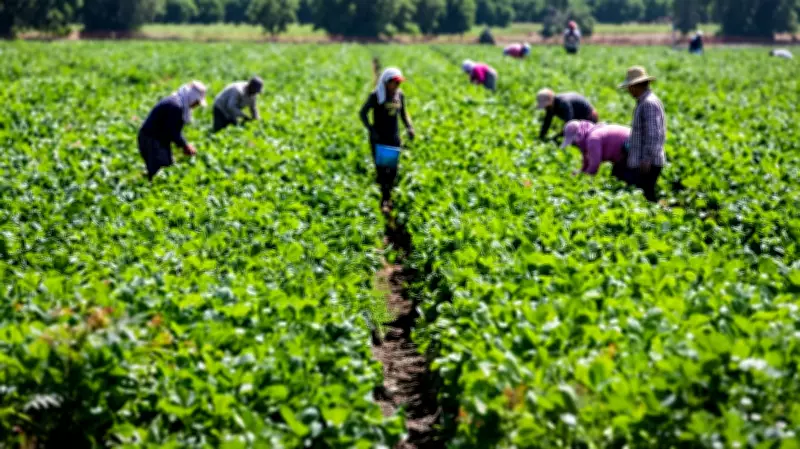
The Bank of Agriculture (BOA) has introduced a new food price stabilisation initiative designed to purchase surplus farm produce directly from farmers. This move aims to address price fluctuations, minimise post-harvest losses, and protect smallholder farmers from market instability.
Guaranteed Minimum Price Mechanism
During an interview, BOA Managing Director Ayodeji Sotinrin revealed that the programme is part of President Bola Tinubu's agricultural reform agenda, which seeks to strengthen food security and improve farmer welfare. The initiative will operate through a Guaranteed Minimum Price (GMP) mechanism, setting a price floor for staple crops such as maize, rice, soybeans, and cassava. When market prices fall below the approved threshold, the bank will purchase the surplus and store the commodities in the nation's 33 silos for future price stabilisation.
Protecting Farmers from Exploitative Pricing
Sotinrin explained that the plan is intended to shield farmers from exploitative pricing while ensuring a stable food supply across the country. The GMP mechanism addresses the long-standing gap between production costs and farm-gate prices. The food stabilisation programme will be driven as a massive national campaign, with sensitisation through all media platforms.
Digital Transformation and Mechanisation
The BOA boss also announced a shift from direct micro-credit to a digital ecosystem powered by farmer aggregation companies. The bank now uses digital platforms and identity verification tools, including BVN and NIN, to open bank accounts for farmers within minutes, ensuring financial support reaches genuine producers rather than middlemen.
Mechanisation remains a major focus, given Nigeria's low tractor density of 0.27 per 100 square kilometres. To address this, the bank has deployed 2,000 high-durability tractors sourced from Belarus to service providers who must demonstrate the capacity to mechanise at least 600 hectares each. This initiative is expected to support over 1.2 million farmers during the current wet season.
Ginger Revival Programme
Sotinrin further revealed the launch of a ginger revival programme following a devastating fungal infection that hit the crop in 2023. The programme will replace traditional replanting methods with tissue culture technology, with the goal of expanding the ginger industry from a $300 million sector to a $3 billion export powerhouse by 2028.
National Farmer Data Registry
In addition, the Federal Government has issued a presidential directive to establish a permanent National Farmer Data Registry. This will enable government, development partners, and financial institutions to track farmers and provide targeted services such as health and crop insurance.
Historic Recapitalisation of BOA
Beyond the BOA reforms, the Tinubu administration has prioritised massive financing and technology-driven initiatives to make farming more productive and profitable. The Federal Government approved a historic N1.5 trillion recapitalisation of the bank to transform it into a development finance institution capable of providing affordable credit, capacity development, and innovation support for farmers, particularly youth and women-led agribusinesses. The policy direction emphasises mechanisation, digital agriculture, and stronger research-to-market linkages to boost productivity nationwide.