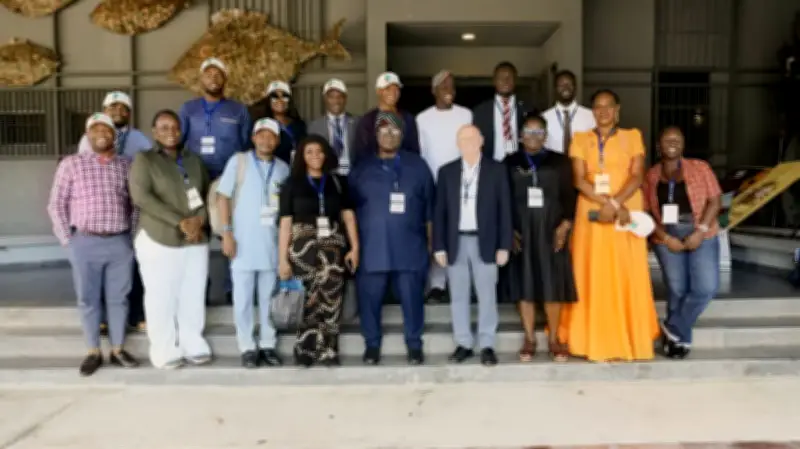
A professor in the Department of Information, Journalism and Media Studies, University of Abuja, Abdulahi Bashir, has identified effective communication as a key enabler of climate resilience. He stated this at the second NNPC Foundation symposium on Energy and Environmental Communication organised by the Centre for Media and Communication Research (CMCR) at Pan Atlantic University, Lagos.
Speaking on the topic, ‘Practical pathways for the use of environmental communication for climate resilience in Nigeria,’ the don listed effects of climate change to include drought, rising sea level, rising temperatures, animal extinctions, and economic losses among others. To this end, Bashir, who is also President of the African Council for Communication Education (ACCE) Nigeria Chapter, argued that environmental communication has become imperative to bridge these gaps.
He further listed components of environmental communication as environmental rhetoric and discourse, media and environmental journalism, public participation in environmental decision-making, social marketing and advocacy campaigns, environmental collaboration and conflict resolution, risk communication, representation of nature in popular culture, and green marketing.
The don highlighted key pathways to using effective communication for climate resilience: knowing your audience, getting the audience’s attention, translating scientific data into concrete experience, writing from local angles, appealing to cultural values, targeting specific social networks, and finding aspects of issues that resonate with audience beliefs. Other pathways include building credibility and trust, embracing storytelling, building collaborations, and segmenting audiences among others.
He, however, identified challenges of communication for climate resilience as complexity of climate information, misinformation, communication overload and public apathy, funding focused on politics and entertainment, journalistic norms, new values, episodic coverage, media transition with attention moving online, influencer culture, and other social problems that require attention.
In conclusion, the don proffered the following recommendations: more training for journalists, social media influencers, and other public communicators in climate resilience; more funding for communicators involved in climate resilience; more communication research in the area of resilience and communication; and media need to work with communities and government in information dissemination, education, and early warning related to climate resilience.
Speaking in a similar vein, Prof. Angela Nkiru Nwammuo of the Department of Mass Communication, Southern Delta University, Ozoro, Delta State, also agreed that strategic environmental communication remains crucial and indispensable in promoting sustainability in the country. To her, environmental challenges are not merely scientific or technological problems; they are fundamentally communication and behavioral issues requiring collective action and societal transformation. Saying effective strategic environmental communication creates awareness, builds knowledge, shapes attitudes, promotes community participation, and strengthens environmental policy and governance, she said it also enhances corporate accountability and responsibility and encourages positive environmentally sustainable practices among individuals and communities.
As scholars, policy makers, media professionals, and corporate entities, the don insisted, “we must recognise that environmental sustainability cannot thrive without the implementation of effective strategic communication. The future of Nigeria’s environment depends not only on policies and technologies, but also on our ability to strategically communicate responsibly, engage communities, and inspire sustainable action.”
In her speech, Acting Managing Director of NNPC Foundation, Eugenia Chinedu Dominion, stated that at a time when climate and energy transition, environmental degradation, and sustainable development have become defining issues across the world, the role of communication cannot be overemphasised. To her, environmental communication is a strategic tool for public enlightenment, behavioral change, policy advocacy, community mobilisation, and sustainable development. She added, “how we communicate about the environment determines how people understand environmental risks; how communities respond to climate threats; how institutions design interventions; and how nations build resilience. For a country like Nigeria with a vast population and diverse ecological zones, growing energy needs, environmental communication must be deliberate, inclusive, practical, and action oriented. It must reach every member of Nigerian society. This is why NNPC Foundation is proud to partner with Pan Atlantic University on this symposium. For us, this engagement is a veritable Corporate Social Responsibility platform for promoting critical discourse on the future of energy and environment and sustainable development in Nigeria.”
CMCR Director, Pan Atlantic University, Prof. Nelson Okorie, disclosed that the symposium aims to provide a platform for critical conversations on the role of communication in shaping understanding of energy, climate issues, and environmental sustainability across the country. Speaking further, he noted, “the event brings stakeholders from media, academia, and civil society to examine how communication strategies can contribute to sustainable development and environmental awareness. The aim is in line with the United Nations Sustainable Development Goal 7, which seeks to ensure access to affordable, reliable, sustainable, and modern energy for all.”
There were also breakout sessions and paper presentations by lecturers from different institutions of higher learning across the country. Some of the presentations include: ‘Framing the just transition: Analysing media narratives, risk communication, and public resistance to energy infrastructure deployment’; ‘Reframing climate change communication in Nigeria: The role of media, brands, and storytelling in driving environmental awareness’; and ‘Audience reactions and engagement with sustainable waste disposal campaigns on X: An insight from Lagos Ministry of Environment’ among others.