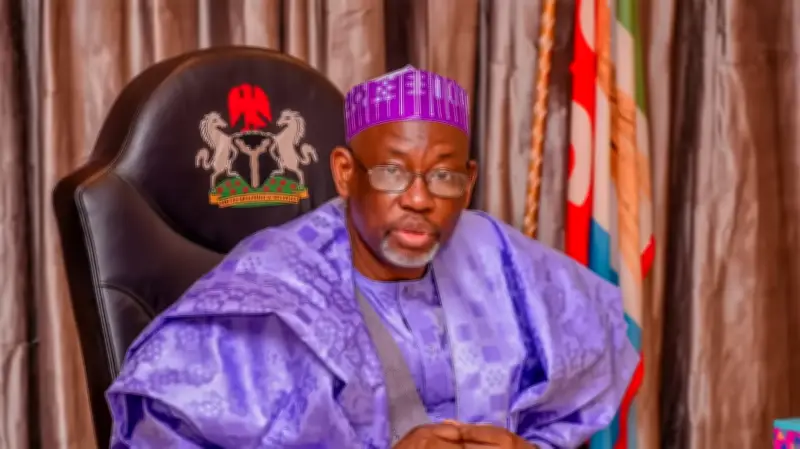
Governor Umar Namadi of Jigawa State has distributed aquatic weed removal and canal clearance equipment to 15 Community Based Organizations in riverine areas as preventive measures against flooding. The beneficiaries are among the most vulnerable to flooding and environmental degradation in the state.
Launch of the Intervention
Speaking at the official launch of the intervention in Auyo Local Government Area, Governor Namadi stated that the initiative reflects the state's recognition of the crucial role local communities play in protecting waterways, preserving livelihoods, and reducing environmental risks.
The items distributed include 10,000 bulk-sized empty sacks, 25 large canoes, 1,000 sickles, 500 cutlasses, 500 shovels, 500 headpans, 300 boots, 200 axes, 100 pairs of gumboots, and 40 rolls of rubber ropes.
Governor's Remarks
"Our rivers, wetlands, and water channels are not only environmental assets; they are sources of livelihood for thousands of people through farming, fishing, livestock production, and other economic activities. Protecting them is therefore a responsibility we must all share," he said. "More than 180 kilometres of waterways have already been cleared. With the additional machinery now available, we expect to improve water flow further and reduce flood risks in vulnerable communities."
Governor Namadi noted that many communities along rivers and wetlands continue to face challenges from invasive aquatic weeds, blocked channels, and silted waterways, which often contribute to flooding, damage farmlands, and disrupt economic activities.
Broader Environmental Efforts
The programme forms part of broader efforts by the state administration to promote environmental sustainability, strengthen climate resilience, and encourage community participation in development initiatives. The governor observed that environmental challenges linked to land degradation, poor resource management, and climate variability continue to pressure natural ecosystems and dependent communities.
He emphasized that sustained intervention is necessary to preserve these resources and prevent avoidable disasters, particularly in riverine areas where flooding can have severe impacts.
Grassroots Participation
Governor Namadi said the support was intended to strengthen grassroots participation in environmental management and encourage communities to take ownership of efforts to keep waterways open and functional. He commended the beneficiary organizations for their commitment to community service and environmental protection, describing their contributions as vital to the success of the state's environmental management programmes.
The governor urged the groups to make proper use of the equipment and ensure the materials are carefully maintained for the benefit of their communities.
Recent Investments
The governor also highlighted recent investments by the state government to expand capacity for waterway clearance and flood mitigation. He disclosed that two additional amphibious excavators had been procured under the Agro-Climatic Resilience in Semi-Arid Landscapes (ACReSAL) Project, bringing the number of state-owned machines to four. Combined with two excavators earlier provided by the Hadejia Jama'are River Basin Development Authority, the state now has six amphibious excavators dedicated to weed clearance and canal dredging operations.
He explained that the additional equipment would accelerate ongoing interventions across affected areas and build upon progress already recorded. He further assured that the Jigawa State Government would continue to support initiatives that promote environmental conservation, climate adaptation, afforestation, pollution control, and responsible management of natural resources.