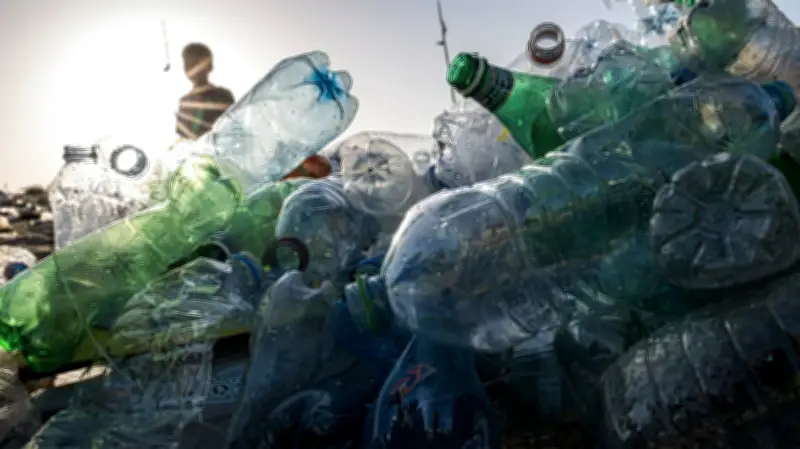
The Manufacturers Association of Nigeria (MAN) has voiced strong opposition to the proposed National Environmental (Plastic Waste Control) Regulations by the National Environmental Standards and Regulations Enforcement Agency (NESREA). According to MAN, the proposed measures would disrupt industrial production, undermine investments in the plastics value chain, and threaten thousands of direct and indirect jobs.
Details of the Proposed Regulations
The regulations seek to prohibit the production and use of single-use plastic (SUP) products below 80 microns in thickness under Section 26(1). They also impose taxes on shopping bags with wall thicknesses ranging from 30 to 50 microns under Section 26(2) and restrict a wide range of plastic products listed in the Eleventh Schedule.
MAN's Concerns
MAN Director-General, Segun Ajayi-Kadir, called for an immediate suspension of the proposal, describing it as premature, lacking sufficient empirical justification, and posing significant risks to Nigeria’s economy, industrial sector, employment landscape, and the livelihoods of millions of citizens. He noted that the Federal Government, through the National Plastic Action Partnership (NNPAP), developed a comprehensive Plastic Circularity Roadmap in 2024 in collaboration with the Federal Ministry of Environment. This roadmap provides a framework for achieving plastic waste reduction through enhanced collection systems, recycling infrastructure, extended producer responsibility (EPR), circular economy initiatives, public awareness, and investments in waste management.
Ajayi-Kadir expressed regret that the recommendations contained in the roadmap have yet to be implemented. He questioned the logic of proceeding with a new prohibition regime without first evaluating the effectiveness of existing measures and implementing the agreed roadmap designed specifically to address plastic pollution sustainably and inclusively.
Lack of Evidence
He emphasized that there has been no publicly available assessment of the impact of previously restricted SUP products in Nigeria. There is no evidence showing the extent to which earlier bans have reduced environmental pollution, improved waste collection rates, enhanced recycling performance, or changed consumer behaviour. He stressed that public policy should be driven by evidence, measurable outcomes, and stakeholder consultation rather than assumptions.
International Experience
Ajayi-Kadir noted that international experience shows that banning thin plastic bags and other thin plastic products without adequate recycling infrastructure rarely delivers the intended environmental outcomes. He outlined several negative consequences:
- Rebound effect: When enforcement weakens, plastic consumption returns. Demand for affordable, lightweight packaging is structural, and thin bags inevitably re-enter the market through informal channels, imports, and cross-border trade.
- Industrial damage: The domestic industry does not recover easily. Closed factories, displaced workers, lost investments, broken supply chains, and abandoned export markets are not automatically restored when policies are relaxed.
- Import dependency: The country becomes increasingly dependent on imports. Products once manufactured locally are sourced from abroad, consuming scarce foreign exchange while eroding domestic employment, tax revenues, and industrial capacity.
MAN urged the government to suspend the plan and focus on implementing the existing Plastic Circularity Roadmap to achieve sustainable plastic waste management.