
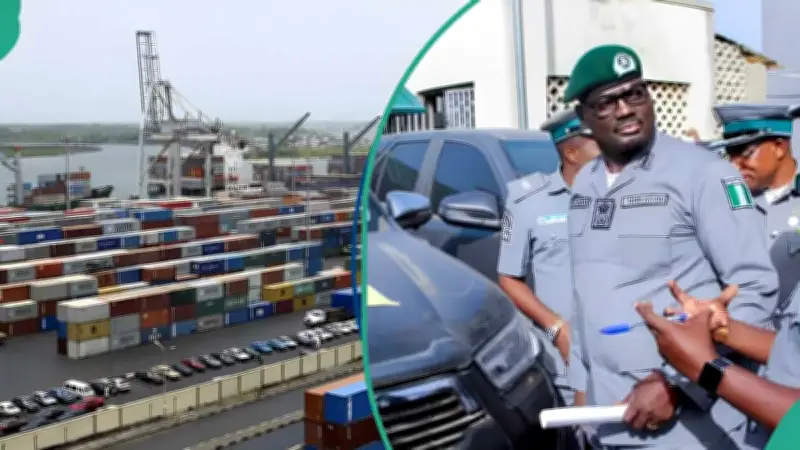
The Nigeria Customs Service (NCS) has confirmed that the Federal Government slashed import duties on used (Tokunbo) and brand-new vehicles, with new rates already in effect since May 2026. Comptroller-General Adewale Adeniyi announced the tariff reductions while defending the agency's 2026 budget before the House Committee on Customs and Excise. Duties on used vehicles dropped from 15% to 5%, and on new vehicles from 20% to 10%, under the government's 2026 fiscal policy measures.
Details of the New Import Duty Rates
Adeniyi stated that the revised tariff regime began implementation in May, marking a significant policy shift to lower vehicle import costs for Nigerians. He noted that while the reductions should encourage legitimate imports and boost trade, they may reduce Customs revenue from vehicle imports. "Used vehicles now attract five per cent duty instead of 15 per cent, while new vehicles have been reduced from 20 per cent to 10 per cent. This may negatively affect revenue," Adeniyi said.
Lawmakers Welcome the Policy but Raise Concerns
House Committee Chairman Leke Abejide praised the tariff reduction as long-awaited relief for Nigerians. He urged citizens to acknowledge the policy as a positive step, responding to repeated calls for lower import charges. However, lawmakers questioned whether the cuts would prevent cargo diversion to neighbouring ports like Cotonou in Benin Republic. Abia lawmaker Alex Mascot argued that many importers still avoid Nigerian ports due to high overall clearing costs, despite the tariff reduction.
Customs Surpasses 2025 Revenue Target
Despite fiscal concessions, the NCS exceeded its 2025 revenue target. Adeniyi disclosed that the agency generated N7.258 trillion between January and December 2025, surpassing its approved target by N1.153 trillion (an 18.89% increase). He attributed this to improved enforcement and compliance, despite policies that reduced collections—including suspension of excise duty on telecoms, tax incentives for healthcare imports, exemptions on CNG and electric vehicles, and duty waivers under government programmes. Imports worth N34.538 trillion qualified for revenue concessions in 2025, with petroleum products accounting for the largest share, followed by military imports and other exemptions.
Customs Targets N11.07 Trillion in 2026
Looking ahead, Adeniyi said the NCS has been assigned a N11.074 trillion revenue target for 2026. To achieve this, the agency plans to fully deploy its Unified Customs Information System (B'Odogwu), strengthen post-clearance audits, expand the Authorised Economic Operator programme, deploy geospatial technology to tackle smuggling, and deepen stakeholder collaboration. He added that the planned reintroduction of the Green Tax and other fiscal measures are expected to support revenue growth despite global trade uncertainties. For 2026, Customs proposed an expenditure budget of N1.235 trillion, covering personnel costs, overheads, and capital projects for modernisation.
Green Tax and Broader Fiscal Reforms
The federal government also commenced the Green Tax Surcharge on July 1, 2026, under the 2026 Fiscal Policy Measures. The environmental levy aims to reduce carbon emissions and encourage cleaner vehicle imports. Implemented by the NCS alongside a broader review of import tariffs and excise duties affecting vehicles, food items, and industrial inputs, the Green Tax has raised concerns among importers and clearing agents about potential cost impacts. However, the government insists it is part of wider reforms to promote environmental sustainability and revenue diversification.




