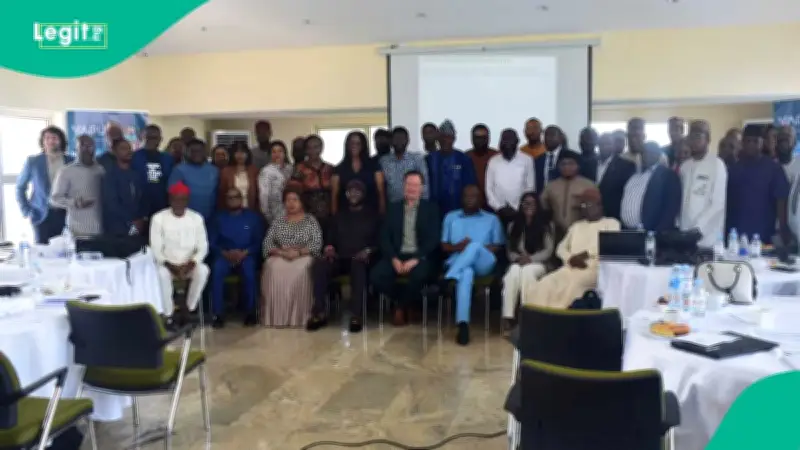
The Presidential Implementation Committee on Technology Transfer (PICTT), in collaboration with YAPU Solutions, hosted a Taxonomy Validation Workshop on Adaptation and Resilience Solutions in Abuja. The event gathered financial institutions, agricultural experts, and stakeholders to validate a national taxonomy that defines which activities qualify for climate finance, according to Legit.ng.
Current Funding Falls Short of Needs
Dr. Charles Nyangbe, WorldFish Country Representative in Nigeria, reported that the country has attracted about $2.5 billion in climate-related funding so far, which is significantly below estimated requirements. He explained that northern Nigeria faces drought while southern communities deal with flooding and waterlogging, necessitating different financing tools and adaptation strategies for each region.
Nyangbe advocated for index-based insurance and blended finance as instruments to help farmers manage climate risks. He also urged the government to channel climate funds through commercial banks, using public money as guarantees to encourage lending to farmers. "Government should come up with an envelope of funding that is targeted at climate financing, give it to financial institutions, give it to commercial banks so that they can lend," he said.
Pilot Project and Expansion Targets
Christoph Junghleisch, Managing Director of YAPU Solutions, stated that climate adaptation represents an investment opportunity of up to $30 billion per year for smallholder farmers across Nigeria. He outlined initial plans for a pilot project valued between $100 million and $200 million, with a target to scale up to $1 billion in the first expansion phase. Junghleisch stressed these are targets, not confirmed funding commitments.
Junghleisch emphasized the importance of digital technology for transparency, saying the framework would digitally track every naira reaching smallholder farmers and make transactions fully auditable. "What we are focusing on is smart use of technology, optimisation of processes that enable you to document each and every cent, Naira, that you are basically bringing to the smallholder farmers," he explained.
Government Collaboration and Next Steps
PICTT Chairman Dr. Dahiru Muhammed noted that the Federal Ministry of Finance and the United Nations Development Programme (UNDP) are already working on the national taxonomy, while PICTT and partners focus on making it functional at the community level. "Having a national taxonomy is good, but without defining which activity qualifies as adaptive or resilient to climate change, there is no way you can access the financing," Muhammed said.
He added that financing has not yet been assessed and stakeholders are still identifying partners needed to implement the framework. Muhammed called on federal, state, and local governments to collaborate on flooding and other climate challenges through better infrastructure and mitigation measures.
YAPU Solutions is in talks with development finance partners, including the Bank of Agriculture and the African Development Fund, while also seeking private-sector investment. Junghleisch stressed that government support through sound policy and legislation is essential, as public funding alone cannot meet the required scale. The workshop marks a step toward operationalizing climate finance for smallholder farmers, with the next phase involving pilot implementation and scaling based on outcomes.