
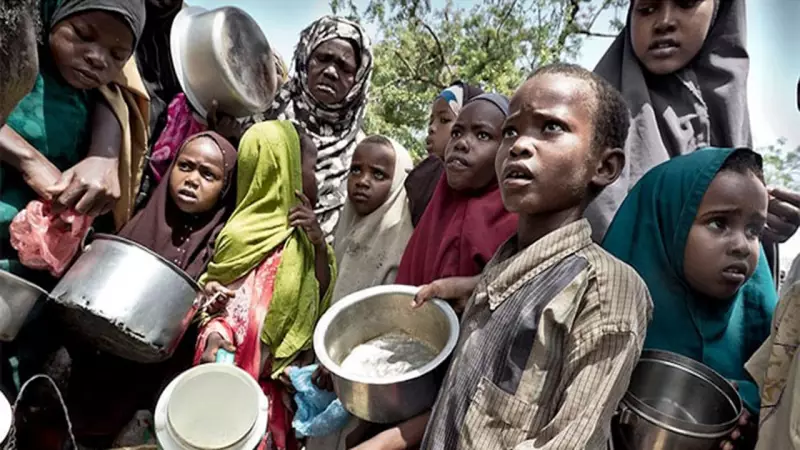
A leading academic has detailed the severe and persistent food security crisis that gripped Nigeria, peaking in mid-2024 and affecting over 26 million citizens. This alarming situation forms part of a broader continental emergency, with the Red Cross reporting that over 700 million Africans face food insecurity.
The Perfect Storm: Factors Behind Nigeria's Food Crisis
Professor Bosede Olukemi Lawal, a Professor of Agricultural Extension and Rural Sociology at Obafemi Awolowo University (OAU), Ile-Ife, presented a stark analysis. She identified a confluence of social and environmental shocks that converged to create the crisis. Key factors included:
- Climate shocks, notably the devastating 2022 floods.
- The lingering economic and social disruptions of the COVID-19 pandemic.
- Persistent insecurity, such as the Boko Haram insurgency, which disrupts farming and supply chains.
- Various structural economic reforms.
Prof. Lawal delivered this assessment during the university's 403rd inaugural lecture, titled “Navigating the World of Sustainable Food Security: Odyssey of a Change Enabler.” She emphasized that the consequences extended beyond empty shelves, leading to acute malnutrition in children, with over nine million at risk and 2.6 million facing severe acute malnutrition.
The Critical Role of Extension Services and Collaboration
A central theme of the lecture was the often-overlooked role of agricultural extension professionals. Prof. Lawal argued that researchers in other agricultural fields frequently develop innovations without involving extension experts. This critical gap means that the best technologies often remain confined to laboratories or sit on shelves, never reaching the farmers who need them.
She called for robust collaboration among all agricultural disciplines, stating that effective interaction between research scientists, extension workers, and farmers is crucial for technology transfer. Furthermore, she advocated for a stronger interface between academia, industry, extension systems, and all tiers of government to drive national development.
NEEP: A Digital Game-Changer Needing Support
Prof. Lawal highlighted the National Electronic Extension Platform (NEEP) as a potentially transformative tool to accelerate Nigeria's march toward sustainable food security. NEEP aims to bridge the digital and knowledge gap between research institutions and farming communities.
However, she issued a crucial caveat: for NEEP to succeed, it requires sufficient funding and improved coordination. She stressed the urgent need to recruit, train, and fund extension services adequately, with resources trickling down to the local government level. This is vital to address the capacity and infrastructural gaps hindering Agricultural Development Programmes (ADPs), especially in the southwest zone.
Finally, Prof. Lawal pointed to the human element of the crisis. She noted that attracting youth, women, and children to farming depends on reducing its drudgery through adequate infrastructure and technological support. For her, sustainable food security means ensuring continuous access to nutritious food for all, now and in the future, without compromising the economic, social, and environmental foundations needed by generations to come.




