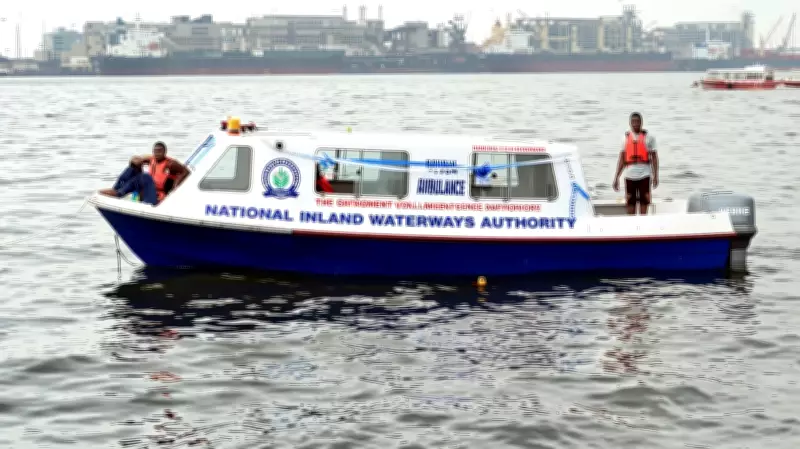
The National Inland Waterways Authority (NIWA) has unveiled plans to facilitate the development of a West Coast cargo jetty aimed at enhancing seamless movement of goods and services across the West African sub-region. In a strategic move to maximize Nigeria's vast inland waterways, the Authority disclosed that it may operationalize some of its existing jetties to boost cargo traffic between Nigeria and Ghana as a pilot phase of the initiative.
Joint Inspection at Marina Jetty
This was made known during a joint inspection of the Marina Jetty in Lagos on Thursday by officials of the Nigerian Ports Authority (NPA), Nigeria Immigration Service (NIS), NIWA, and a delegation from Ghana comprising corporate and private sector trade representatives. The inspection aimed to assess the infrastructure and potential for regional cargo movement.
NIWA's Commitment to Regional Trade
Leading the NIWA delegation, the Acting Managing Director, Mr. Yusuf Girei, reiterated the Authority's readiness to support the proposed West Coast cargo jetty. He highlighted the availability of extensive waterfront infrastructure capable of driving efficient, technology-driven, and hassle-free cargo operations with direct access to key markets within Lagos. Girei was accompanied by NIWA's General Manager (Marine), Horsefall Dakio, and the Lagos Area Manager, Sarat Braimah.
Girei explained that the Authority's expansive network of waterways positions it as a critical enabler of inland cargo movement across West Africa. He noted that NIWA's existing operational experience, particularly along the Calabar–Cameroon route, provides a solid foundation for scaling similar initiatives across the West Coast corridor.
“We are committed to leveraging our infrastructure and expertise to facilitate regional trade. Our experience on the Calabar–Cameroon route demonstrates the viability of inland water transport in boosting market access within Nigeria and across West Africa,” Girei said.
Potential Impact on Trade
The proposed jetty is expected to significantly enhance trade flows between Nigeria and other West African countries, reducing transit times and costs for cargo movement. By utilizing inland waterways, the initiative aims to decongest ports and improve efficiency in the region's logistics network. The pilot phase focusing on Nigeria-Ghana trade could serve as a model for broader integration across the Economic Community of West African States (ECOWAS).