
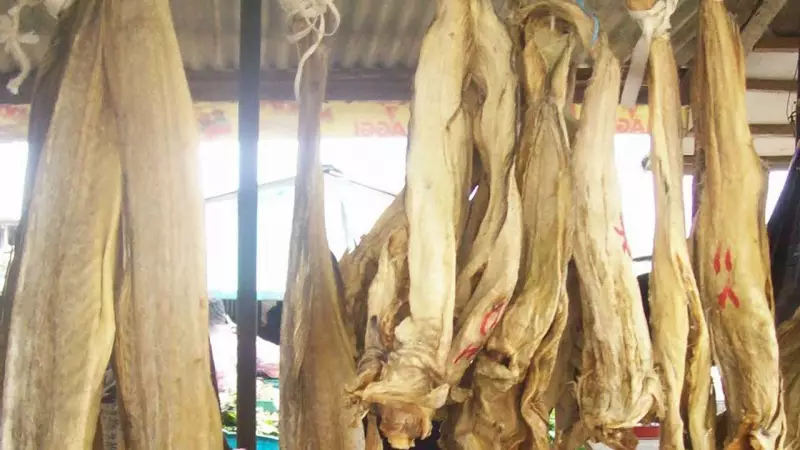
Amid rising concerns over the use of dangerous chemicals to preserve stockfish in Nigeria, a top fisheries consultant has called for a shift in regulatory approach from punishment to education. The call was made during a recent market inspection in Lagos.
Education Over Enforcement: A Plea to Regulators
Abiodun Oritsejemine Cheke, the Fisheries Consultant to the Norwegian Seafood Council in Nigeria, has urged authorities like the National Agency for Food and Drug Administration and Control (NAFDAC) and the Federal Department of Fisheries to intensify training for market stakeholders. She made this appeal during a visit to the White Sand stockfish market in Otto, Lagos, on 27 December 2025.
Cheke emphasized that while her council continuously educates retailers on hygiene, some local handlers resort to unsafe methods like using sniper insecticide out of ignorance. "I would implore NAFDAC and fisheries authorities to go there and train them. When you train them, you can sanction them. But if you’ve not trained them, the practice will continue," she stated.
The Natural Norwegian Method
Cheke stressed that authentic Norwegian stockfish is preserved naturally without any additives, not even salt. She detailed the process: "From the water, it goes straight to the processing factory where it’s gutted, washed, and spread in the cold snow for about six months to dry out. The final drying is done at room temperature before packaging and certification by the EFTA Quality Assurance Group."
Truls Helness, Chief Financial Officer of Sufi, a Norwegian seafood company, reaffirmed this. "Every fish we use is wild-caught. No farm fish, no chemicals, only Mother Earth does the work. The process is sustainable and healthy," he said. He attributed reports of chemical use to handlers trying to extend the product's shelf life beyond its natural limit in Nigeria's high temperatures.
Market Realities and Trader Lamentations
Inspections at Lagos warehouses and markets reportedly revealed no signs of chemical contamination or pests. However, traders highlighted a different challenge: soaring costs.
Chikaodi Onyekwere, a trader with Masterfish, praised the quality of Norwegian stockfish but lamented the price hike driven by high tariffs and import costs. "Before now, we used to do something around N8 million, but now it’s between N18 million and N20 million. The hike has slowed the market because people can’t afford it as before," he explained.
Onyekwere appealed to the government for tariff reduction, describing stockfish as a daily staple that shouldn't be priced like contraband. "It’s what everybody eats. If tariffs keep rising, people will switch to other species of fish," he warned.
The Norwegian Seafood Council's alert underscores a critical need for collaborative efforts between regulators, importers, and sellers to ensure the safety and affordability of this beloved protein source for Nigerian consumers.




