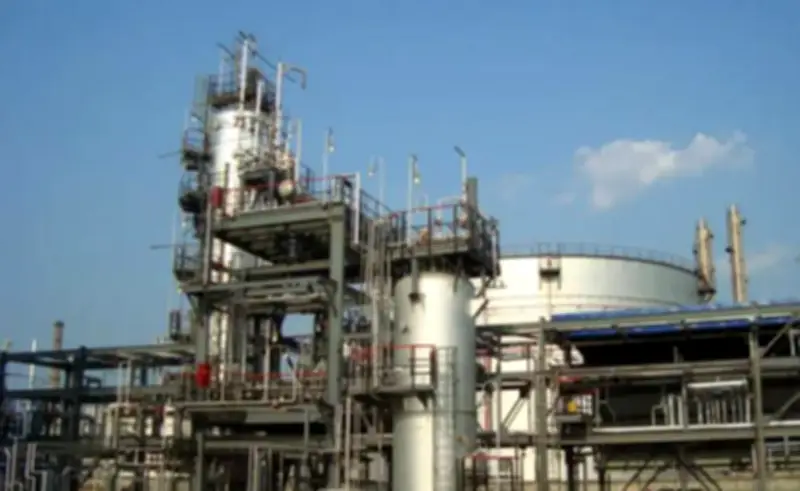
Energy expert Dan Kunjle has called on the federal government to privatise the four state-owned refineries operated by the Nigerian National Petroleum Company Limited (NNPCL). In an open letter to President Bola Tinubu dated Sunday, titled "NNPC's Four Diseased Fingers: The Refineries That Must Be Privatised," Mr Kunjle described the refineries—Port Harcourt Refineries I and II, Warri Refinery, and Kaduna Refinery—as "four diseased fingers" that have drained public resources for decades without delivering reliable refining capacity.
Decades of Failed Rehabilitation
Mr Kunjle argued that continued spending on the refineries diverts scarce resources from critical sectors such as healthcare, education, infrastructure, security, and electricity. He cited the privatisation of the Eleme Petrochemicals complex under former President Olusegun Obasanjo as evidence that government divestment can improve efficiency, attract investment, and create jobs. Under Indorama's management, Eleme has become one of Nigeria's leading petrochemical success stories, he noted.
The energy expert urged President Tinubu to direct NNPC Limited to transfer the refineries to the National Council on Privatisation and the Bureau of Public Enterprises for a transparent and competitive privatisation process to be completed within one year. He said the sale should include full disclosure of bidders, asset valuations, ownership structures, and investment commitments, while allowing both Nigerian and foreign investors, including reported Chinese interests, to compete on equal terms.
Warning Against Opaque Deals
Mr Kunjle cautioned against opaque asset transfer arrangements disguised as technical partnerships or memoranda of understanding, warning that such deals could trigger legal disputes and erode investor confidence. "Do not call privatisation a 'technical partnership.' Do not call asset transfer an 'evaluation.' Do not call control 'collaboration.' Do not disguise a concession as a Memorandum of Understanding," he wrote. He emphasised that the lawful route through the National Council on Privatisation and the Bureau of Public Enterprises is the path to transparency and investor confidence.
The expert said the government should privatise, concession, or liquidate the refineries where economically justified, arguing that such reforms would enable NNPC to focus on upstream operations while ending decades of waste. He proposed a practical ownership structure: 85 per cent to core investors, five per cent to host states, and 10 per cent retained by the federal government.
Ongoing EFCC Investigations
Mr Kunjle's intervention comes amid ongoing investigations by the Economic and Financial Crimes Commission (EFCC) into the alleged diversion of refinery rehabilitation funds. Last week, PREMIUM TIMES exclusively reported that the EFCC recovered more than N38.66 billion, along with several landed properties, during an investigation into funds released for the rehabilitation and turnaround maintenance of Nigeria's refineries. Investigators described the case as one of the agency's largest probes into refinery rehabilitation spending.
Nigeria has four state-owned refineries with a combined installed refining capacity of 445,000 barrels per day—two in Port Harcourt with 210,000 bpd, the Kaduna Refining and Petrochemical Company with 110,000 bpd, and the Warri Refining and Petrochemical Company with 125,000 bpd. Despite repeated rehabilitation efforts and billions of naira in public spending, the facilities have remained largely non-operational for decades.
Legal Actions and Chinese Interest
PREMIUM TIMES also reported that the EFCC has charged the immediate past managing directors of the Port Harcourt and Warri refineries, Ahmed Adamu Dikko and Jimoh Olasunkanmi Yisawu, with money laundering over the alleged diversion of funds earmarked for refinery rehabilitation. As efforts to revive the refineries continue, the federal government and NNPC have pursued strategic investors and technical partners. In May, NNPC signed a memorandum of understanding with two Chinese companies to support the completion, operation, and possible expansion of the Port Harcourt and Warri refineries.
In his letter, Mr Kunjle stated: "The time for endless rehabilitation has passed. The time for decisive reform has arrived. Mr President, this is a legacy decision. Privatise them transparently. Concession them transparently where appropriate. Liquidate those that can no longer be economically justified. Above all, let the law, openness and the national interest guide every decision. The Chinese are welcome to compete. Nigerian investors are welcome to compete."
Legacy Decision for President Tinubu
Mr Kunjle concluded by urging President Tinubu to release Nigeria from the burden of these failed assets, allow competent investors to rebuild them, and let NNPC focus on upstream operations. "Nigeria can no longer afford to spend productive upstream revenues sustaining unproductive downstream assets. Those resources belong in our hospitals, our schools, our roads, our power sector, our security institutions and in creating opportunities for millions of young Nigerians," he wrote.