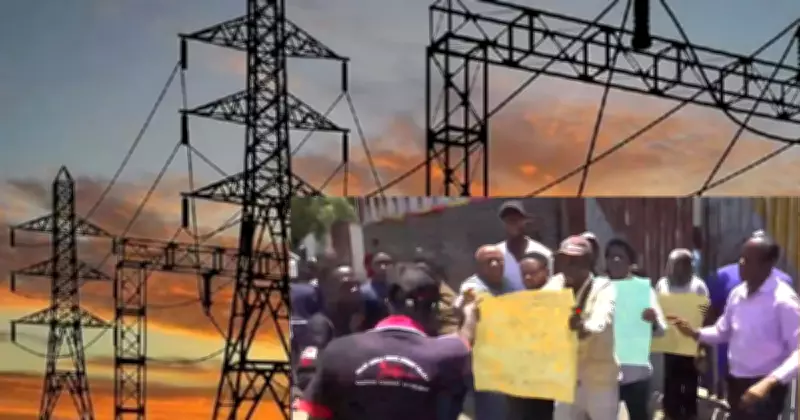
Residents of Yaba, Lagos, stormed the office of the Ikeja Electricity Distribution Company (IEDC) on April 27, 2026, to protest the persistent lack of power supply that has plagued their area. The protest, which took place at the Igbobi branch of IEDC, saw residents of Abule Oja and Abule Ijesha demanding an end to what they described as discriminatory and corrupt power distribution practices.
Six Months of Blackout
The protesters accused IEDC of systemic corruption and discrimination, claiming that their communities have endured a near-total blackout for six months. Video clips shared by Arise Television showed residents gathered at the company's gate, despite attempts by police officers to disperse them. The demonstration is the latest in a series of protests across Nigeria triggered by the deteriorating electricity supply.
Nationwide Power Crisis
In March 2026, residents in Lagos, Osun, Edo, and Oyo States also protested poor power supply. The decline in electricity generation stems from a significant drop in thermal power plant operations. Plant operators blame the federal government's failure to pay a backlog of electricity subsidy costs, which has left them unable to settle debts to gas suppliers. The power generation companies claim the government owes 6 trillion naira in unpaid subsidies, though the Tinubu administration has revised this figure to 3.3 trillion naira.
Former Minister of Power, Adebayo Adelabu, who recently resigned to pursue his gubernatorial ambitions in Oyo State, stated that the power sector's challenges are beyond government control. He noted that Nigeria requires an investment of 100 billion dollars to achieve stable electricity supply.
Government Response
President Bola Ahmed Tinubu has approved the process to begin payments to generating companies, but the power situation has yet to improve. To address the issues, Tinubu established the Grid Asset Management Company (GAMCO) to enhance power generation and transmission and tackle the national grid's poor performance. Despite an installed capacity of 15,000 megawatts, Nigeria struggles to produce 4,000 megawatts for over 200 million people.
Speaking at the Federal Executive Council on April 21, 2026, President Tinubu blamed the previous administration's flawed privatization process for the power sector's problems. As the 2027 elections approach, Nigerians have reminded Tinubu of his 2023 campaign promise to deliver 24-hour electricity supply, with a pledge that voters should not re-elect him if he fails to fulfill it.