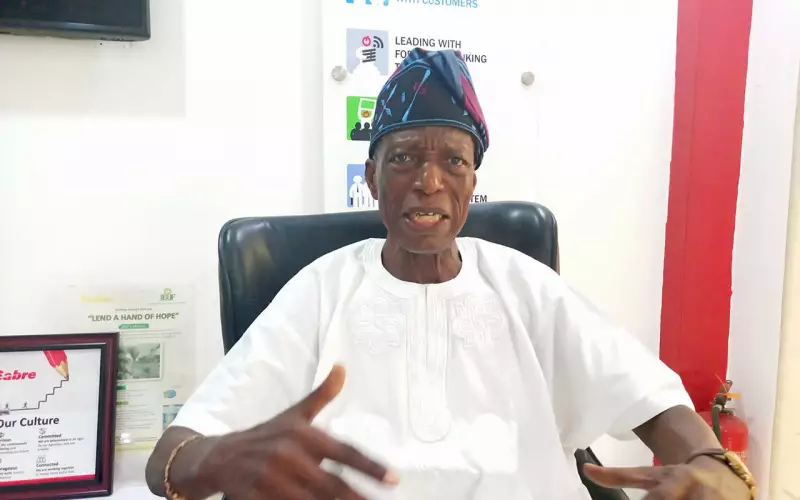
Olusoji Amusan, a former manager with Lufthansa German Airlines and past President of the National Association of Nigerian Travel Agencies (NANTA), has provided a detailed analysis of the pressing issues facing Nigeria's aviation sector. In an interview with Olusegun Koiki, Amusan addressed the controversial spike in domestic airfares during the recent Yuletide season, the critical need for a national carrier, and the pervasive disorder at the nation's airport terminals.
Festive Airfare Hikes: A Matter of Supply, Demand, and Taxes
Responding to accusations that indigenous airlines unnecessarily inflate ticket prices during festive periods, Amusan offered a clear economic perspective. He stated that while fares are indeed high, the increase is not arbitrary. The fundamental principle of supply and demand is at play, he explained, with more travellers chasing a limited number of seats.
"This situation is not peculiar to aviation," Amusan noted, drawing a parallel with the seasonal price of ram. He further highlighted the burden of multiple taxes, charges, and levies imposed on airlines, which are inevitably passed on to passengers. He described the current pricing as a normal, cyclical seasonal variation, predicting a drop in fares as travel demand decreases after the holidays.
The Capacity Crisis and the Imperative for a National Carrier
On the capacity of local airlines to handle traffic surges, Amusan was unequivocal. He stated that Nigerian carriers simply lack the required scale. He argued for a holistic view of capacity, linking a nation's benefits from travel to its ability to reciprocate, a gap a national carrier could fill.
"Only the government can order 50 or 100 aircraft at once and get them delivered seamlessly," Amusan asserted. He proposed a model where the government initiates the project, brings in investors, and then hands off day-to-day management. This government-backed entity, with its financial muscle, could effectively compete with foreign airlines on Nigerian routes.
He expressed confidence that with such a structure, prominent investors like Alhaji Aliko Dangote and Bayo Ogunlesi would be willing to participate, providing the scale currently absent in the sector.
Restoring Sanity at Nigeria's Gateway Airports
Amusan expressed deep concern over the persistent disorder at Nigerian airport terminals, calling for immediate, practical solutions. He emphasized that sanity must begin at check-in counters, arrival halls, and departure areas. A major problem, he identified, is the unchecked access of individuals who have no business being in sensitive zones.
He insisted that access to restricted areas should be strictly based on an On-Duty Card (ODC), regardless of an individual's affiliation with agencies like the Federal Airports Authority of Nigeria (FAAN), Customs, or Immigration. Using the baggage reclaim area as an example, he pointed out that crowds often consist of non-passengers seeking to "help" with luggage.
Amusan called for clearly defined responsibilities between FAAN and the Nigerian Civil Aviation Authority (NCAA), which enforces International Civil Aviation Organisation (ICAO) standards. He recommended starting with the five ICAO/IATA-recognised international airports, promising visible improvement within months if basic protocols are enforced.
2025 Assessment and 2026 Projections
Reflecting on 2025, Amusan said the sector did not achieve much of what it ought to, particularly in making aviation tourist-friendly. He critiqued a lack of nationalistic support for indigenous operators like Air Peace on international routes and referenced the unresolved case of former Minister of Aviation, Sen. Hadi Sirika.
However, he singled out one significant achievement: the efforts of the Minister of Aviation and Aerospace Development, Festus Keyamo, in actualising the Cape Town Convention. This, he said, boosts lessors' confidence to provide aircraft to Nigerian airlines on favourable dry lease terms.
For 2026, Amusan's primary expectation is visible sanity in the sector. He also questioned plans for an aerotropolis (airport city), noting that available land around airports has already been allocated. Realising such a project would require reclaiming and expanding space.
Finally, on the issue of retired agency staff illegally returning to work at airports, Amusan attributed it to a culture of impunity. He contrasted it with his own post-retirement conduct from Lufthansa, stressing that without being on duty, one has no business milling around restricted areas. He placed the onus on the NCAA and its Director-General, who he described as an employee of both Nigeria and ICAO, to establish and enforce a working system with strict rules for all.