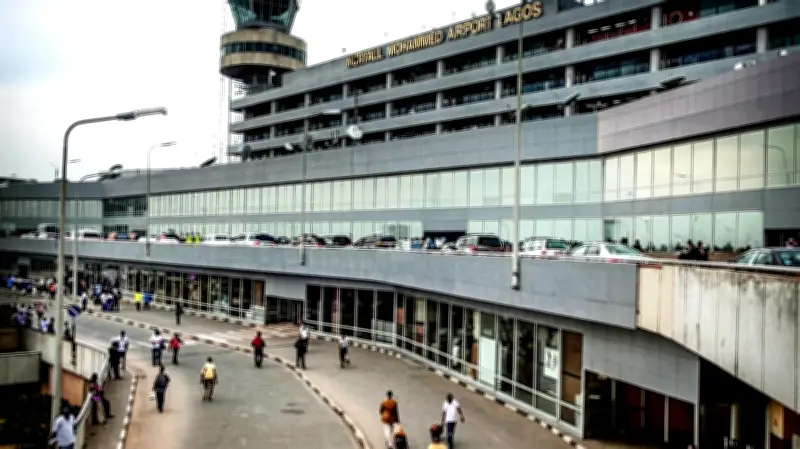
Despite emerging safety and operational risks across the aviation sector, Nigerian airports are operating without comprehensive insurance cover, which is the norm in modern international airports globally. The inadequate protection, industry experts said, exposes airlines, equipment, passengers and the government to significant financial liabilities.
No Comprehensive Insurance for Federal Airports
Findings revealed that none of the 22 Federal Government-owned airports has comprehensive insurance coverage for equipment against fire, storms, floods, and other major incidents. Further investigation by The Guardian revealed that compulsory insurance cover was embedded in the Nig. CARs 2012, but was later expunged from the NIG.CARs 2023. FAAN representative in a chat with The Guardian, however, insisted that “the airports are insured”, but was silent on the type of policy that covers the facilities.
Regulatory Gaps in Aviation Insurance
It will be recalled that the 2012 NCARs in Section 18.12.2 on Aviation Insurance, specifically stipulated ‘provision of adequate and Valid Insurance for airlines, aerodromes, air navigation, meteorological services, ground handling, and other Allied Aviation Service Providers’. Section 18.12.4 provides for minimum third-party liability by Airlines, aerodromes, air navigation, meteorological services, ground handling, and other Allied Aviation Service Providers. While the 2023 NCARs in Section 18 of Economic Regulations and 18.14.1.1 on ‘Procedure for filing Aviation Insurance Policy Documents,’ directed airlines and aviation allied service providers to “write to the Director-General of Civil Aviation informing him of the insurance covering their operations,” it was silent on insurance cover for aerodromes and airport operators. The Federal Airports Authority of Nigeria (FAAN) Act, 2022, was also silent on aerodrome insurance throughout its 24 pages.
By the development, aerodromes in Nigeria may be worlds apart from the African counterparts in South Africa, Ethiopia, Egypt, and Tunisia, among others, with mandatory comprehensive insurance covering equipment, assets, and other assets. Notably, the International Civil Aviation Organisation (ICAO) strictly mandates minimum liability and war risk insurance for airline operators and aircraft owners to cover passengers, cargo, and third-party damages; it did not issue binding requirements forcing airport operators to insure their own terminals and infrastructure, but advised them to do so.
Global Best Practices in Airport Insurance
Modern aerodromes globally and in Africa, however, take precautionary measures a step further by ensuring comprehensive risk cover. For instance, Ethiopia’s insurance cover is split into two categories: property and infrastructure coverage, and liability and passenger insurance. Property and infrastructure coverage includes major hubs such as Addis Ababa Bole International Airport, which is insured against structural damage, natural disasters, and fire. This coverage is primarily underwritten by domestic entities and backed by international reinsurers. Similarly, almost all major commercial airports in South Africa maintain comprehensive insurance policies that cover infrastructure, physical damage, employees, public liability, and operational risks. The Airports Company South Africa (ACSA) operates South Africa’s nine principal airports, including major hubs such as O.R. Tambo International Airport in Johannesburg, Cape Town International Airport in Cape Town, and King Shaka International Airport in Durban, among others.
Government Acknowledgment and Incomplete Coverage
Last year, the Minister of Aviation and Aerospace Development confirmed that the aerodromes were not insured. He, however, said that the Federal Executive Council (FEC) in March had approved a N1.09 billion insurance package for the airports, in tandem with a directive from the Secretary to the Government of the Federation mandating Ministries, Departments, and Agencies (MDAs) to insure critical government assets. He explained that the measure was a key requirement for Nigeria’s airports to obtain ICAO certification. He said, “Most of these airports have remained without insurance for a long time. This one not only covers the assets, but also the personnel of FAAN. Of course, you know that is in keeping with best labour practices that you don’t have personnel working in such an environment without insurance cover, so that has been done today for all the airports in Nigeria.” However, conspicuously missing is comprehensive insurance cover for the aerodrome, operators, and customers, given the emerging risks.
Impact on Airlines and Concessionaires
The era of minimum insurance cover for airports has compelled airlines, auxiliary businesses, and other airport concessionaires to single-handedly shoulder the financial burden of damages that should ordinarily be covered by airport insurance and borne by FAAN. Recall that the recent fire outbreak that occurred at Terminal One of the Murtala Muhammed International Airport (MMIA), Lagos, destroyed the equipment of the Nigerian Airspace Management Agency (NAMA), Nigerian Meteorological Agency (NiMET) and other concessionaires. Also, Airline Operators of Nigeria (AON) disclosed in 2025 that the country’s airlines lose at least N20 billion annually to bird strike incidents alone at all the nation’s airports. So far in 2026, no fewer than 15 bird strike incidents have been reported involving Air Peace, Ibom Air, and United Nigeria Airlines alone. Bird strikes, runway hazards and other airport-related incidents frequently damage aircraft during take-off or landing, but airlines often pay the full cost of repairs. There is no evidence that FAAN has used insurance mechanisms to offset any such losses in the past.
Regulatory Silence and Industry Concerns
Also, the NCAA is silent on the issue when The Guardian contacted it. But a source close to the agency confided that the airports lacked insurance. The source also confirmed that the 2023 NCARs did not require aerodrome managers to ensure airports, but said the agency was working with FAAN to ensure adequate insurance coverage for assets in all the airports across the country. Industry experts warned that failure to ensure comprehensive airport insurance contributes to Nigeria’s classification as a harsh operating environment for airlines by global organisations. They argued that this classification also drives up insurance premiums, aircraft leasing costs and investor confidence in the sector.
Expert Opinions on the Insurance Gap
Aviation expert, Capt. Samuel Caulcrick, warned that the situation could expose operators, airlines and passengers to significant financial and safety risks. Caulcrick said the Nig. CARs 2023 made it mandatory for airport operators to maintain valid insurance for passenger processing areas and other operational facilities. He added that the rule was further reinforced by an All Operators Letter (AOL) issued by the NCAA in August 2023. Under this framework, he noted that FAAN, which manages most of the country’s airports, was required to maintain insurance policies covering passengers, staff and third-party liabilities. He said: “If speculation about the lack of a valid insurance policy for Terminal 1 proves true, it would constitute a direct breach of Nig. CARs Part 18 and the Civil Aviation Act 2022, which could lead to penalties, suspension or revocation of operating permits.”
Also, aviation analyst Mohammed Badamasi questioned official claims that some Nigerian airports are fully insured. Badamasi challenged FAAN to disclose details of the infrastructure covered under the insurance policies. According to him, any airport without adequate liability insurance should not be licensed to operate, stressing that if the NCAA were to issue a license to an airport without comprehensive insurance, it would compromise the Insurance Act of 2023. Badamasi also tasked the NCAA with discharging its oversight functions as stipulated by law and in accordance with recommended practices. He said, “There’s something fishy about the information that these airports are insured. We challenge FAAN to prove that these airports are fully insured in accordance with the Insurance Act 2023. Standard insurance covers the terminal buildings against fire, storms and other dangerous occurrences. It also covers passenger safety within and around the terminal buildings. It’s necessary to know which policy covers their airports. I don’t think that FAAN knew what was covered in their insurance policy.”
Besides, a technical staff member with the liquidated national carrier, Nigeria Airways, Frank Oruye, noted that the Nigeria Insurance Industry Reform Act 2025, signed into law by President Bola Tinubu, strengthened enforcement of compulsory insurance for public buildings. Oruye noted that the law requires public facilities, including airports, to be insured against risks such as fire, collapse, and other hazards. He explained that failure to comply could result in significant financial consequences for owners and operators of such facilities. “Nigeria has had a spate of fires affecting skyscraper buildings since the mid-’60s. In recent times, building collapses have affected inhabited buildings and buildings under construction. Therefore, compliance with this provision will ensure that owners and occupants of buildings can have access to funds for their compensation in the occurrence of such events. Non-Insurance of airports will expose the operators to colossal claims for damages, along with the penalties for non-compliance with the statute. The owners of such businesses will also have to bear the cost of repairs or rebuilding of the damaged facility.”
Aviation security consultant, John Ojikutu, confirmed that the Nig. CARs 2023, unlike the Nig. CARs 2012 was without mandatory airport insurance for FAAN, a situation he said drew the attention of the National Assembly and the NCAA to, but without any fruitful result. He warned that inadequate airport insurance cover could create liability issues for aviation agencies and operators, particularly in the event of accidents involving airlines, ground handlers or airport authorities. Ojikutu recalled past aviation incidents in which regulatory agencies were compelled by courts to pay compensation for operational lapses. For instance, he mentioned a 2004/2005 incident involving a cargo flight that was cleared to land on a closed runway, but later crashed, leading the court to award $6 million in damages against the government. He also mentioned another incident involving an Emirates aircraft, which was cleared to take off from runway 18L at the Lagos airport, when its wing struck a parked aircraft on the domestic terminal apron while taxiing to its parking spot. According to him, insurance coverage plays a critical role in mitigating such liabilities and ensuring prompt compensation for victims of aviation incidents.
The aviation security expert also suggested that Nigerian airports should be categorised by traffic volume and operational scale to determine appropriate service charges and insurance requirements. He added: “Implementation of non-insurance is seen on the cost of tickets of some airlines, especially the foreign airlines, where, for example, fares cost higher from Nigeria to travel to Europe than from Ghana. These are necessary issues for the NCAA to look into. I have repeated several times that the airports should be graded into five categories for service charges and insurance. Some agencies’ equipment was burnt in the last fire incident at the Lagos airport. Are there provisions for them to challenge FAAN to claim damages? The NCAA and the Ministry of Aviation will have to tell us who should be responsible for such careless losses.” Ojikutu regretted that the agencies in the sector did not prioritise the safety and security of air travellers but focused more on commercial services for revenue generation.
Also, the Chief Executive Officer (CEO) of Nigame Aircraft Consult, based in the United States, Olufemi Adeniji, said that the problem lies largely with enforcement. He pointed out that Section 65 of the Insurance Act 2003 already mandated compulsory insurance for public buildings against risks such as fire, storms, flood and building collapse. Adeniji declared that airports fall under public buildings because they are facilities where members of the public enter for business and services. According to him, failure to insure such buildings could attract fines or imprisonment under the law. He wondered what FAAN was doing with the various airport taxes, parking charges and Passenger Service Charge (PSC) collected from airport users and passengers. He further called on President Bola Tinubu to investigate the expungement of airport insurance in the Nig. CARs 2023 and apply appropriate sanctions.
FAAN’s Response and Ongoing Debate
However, the Director, Public Affairs and Consumer Protection, FAAN, Henry Agbebire, in a sparse response to The Guardian’s enquiry on the appropriate insurance cover for the airports, said: “We insist again that the airports are insured.” Just in 2025, at the 5th CHINET Aviacargo Conference held in Lagos, the Managing Director of Overland Airways, Edward Boyo, alleged that provisions requiring airports to maintain insurance were removed from the 2023 Nig. CARs. According to him, this gap had left airlines vulnerable to airport-related risks. “We have to make sure that all airports in Nigeria take on insurance. A lot of aircraft damage occurs because of airport inefficiencies.” He cited poor wildlife control, runway deterioration, and inadequate maintenance as factors that increase operational risk. He therefore urged NAICOM to give serious consideration to making FAAN and other airport operators in Nigeria take on appropriate insurance.
In a swift response, the Managing Director of FAAN, Olubunmi Kuku, said that the agency had insured all its airports. According to her, all the Federal Government-owned airports managed by FAAN are insured, with insurance up to date, and that derubberisation and runway hygiene are intact, with verifiable records. The Commissioner for National Insurance Commission (NAICOM), Olusegun Omosehin, said Nigeria’s airports lacked insurance cover. Omosehin, who was represented at the occasion by Deputy Commissioner (Insurance Technical), Usman Jankara, however, stated that the commission was willing to engage government authorities to address the issue. Jankara stressed that compulsory insurance plays a vital role in protecting public interest and safeguarding economic stability. He explained that NAICOM requires insurers to exhaust local capacity before resorting to reinsurance abroad, ensuring that Nigerian insurers remain active participants in covering domestic risks. He said: “The underlying rationale for compulsory insurance is to protect members of the public from harm. We are now insisting on very sound underwriting practices. Insurers are in business to make profits, not losses. Paying the right premium ensures that claims are settled when risks materialise.”