
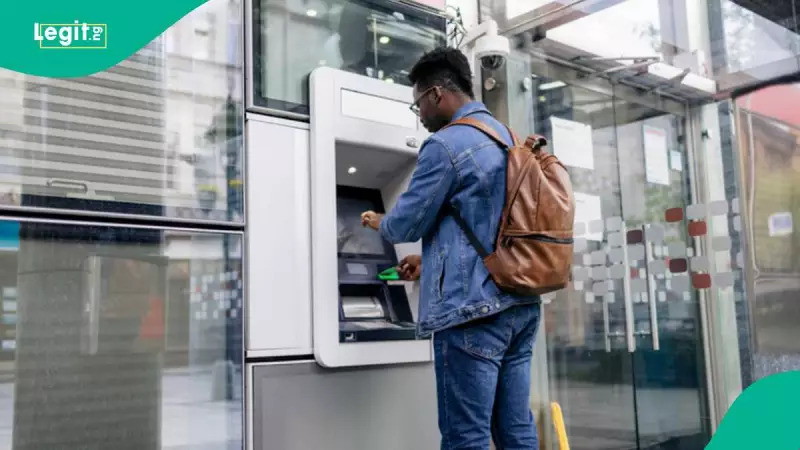
In a dramatic defiance of regulatory measures, Nigerians have significantly increased their reliance on cash, with ATM withdrawals nearly tripling in value during the first half of 2025. This surge comes despite the Central Bank of Nigeria's (CBN) implementation of a revised and more expensive fee regime aimed at curbing cash usage and encouraging digital payments.
Staggering Growth in Cash Withdrawals
Data released in the CBN's quarterly statistical bulletin reveals a monumental leap in cash accessed via ATMs. Withdrawals soared to ₦36.34 trillion between January and June 2025. This figure represents a staggering 197.66 per cent increase from the ₦12.21 trillion recorded in the same period of 2024.
The volume of transactions tells a similar story of intensified cash reliance. Nigerians conducted 858.80 million ATM withdrawals in H1 2025, a sharp rise of 72.98 per cent from the 496.47 million transactions in H1 2024.
CBN's Fee Policy and Public Backlash
This explosive growth occurred against the backdrop of the CBN's revised ATM fee framework, which took effect in March 2025. The new policy introduced significant changes:
- A charge of ₦100 for every ₦20,000 withdrawal from another bank's ATM.
- Additional surcharges of up to ₦500 per ₦20,000 for offsite ATMs in locations like malls and airports.
- The removal of the previous allowance for three free monthly withdrawals on other banks' machines.
Far from deterring cash use, the policy has sparked significant public outcry. Critics argue it disproportionately burdens low-income Nigerians who depend on frequent, small-value cash withdrawals for daily sustenance. FinTech executive Tope Dare and consumer rights group SERAP have been vocal, with the latter even filing a lawsuit against the CBN, labeling the charges as exploitative.
Quarterly Momentum and the Persistent Cash Economy
The data shows the trend gained momentum as the year progressed. The first quarter of 2025 saw withdrawals hit ₦15.97 trillion, a 192.9% year-on-year jump. Growth accelerated in the second quarter, with withdrawals reaching ₦20.36 trillion. May 2025 alone recorded ₦7.44 trillion in ATM withdrawals, nearly three times the value from May 2024.
This trend underscores a critical reality: Nigeria remains a deeply cash-driven economy. While digital payment channels like POS terminals continue to see higher absolute values (₦147.20 trillion in H1 2025), the growth rate of ATM withdrawals far outpaces them, highlighting cash's enduring role, especially in the informal sector and among low-income populations.
Broader Economic Implications
The surge in cash withdrawals aligns with another concerning indicator: the amount of cash outside banks climbed to ₦4.91 trillion by November 2025, with over 93% of currency in circulation held outside the formal banking system. Economists warn this trend weakens the CBN's monetary policy control, hampers deposit mobilization by banks, and complicates efforts to manage inflation.
In a related development, the CBN further adjusted its cash policy framework effective January 1, 2026, increasing daily withdrawal and deposit limits in a bid to address the high costs of cash handling and security risks. This move appears to be a recalibration alongside the bank's ongoing push for electronic payments, a push that is also reflected in the closure of 229 physical bank branches in 2024 as transaction patterns shift.
The overwhelming data presents a clear challenge for policymakers. The attempt to use pricing pressure via higher fees to change deep-seated financial habits has, in the short term, failed to reduce cash demand. It has, however, raised significant questions about economic equity and the need for more nuanced strategies to modernize Nigeria's payment landscape without unfairly penalizing its most vulnerable citizens.




