
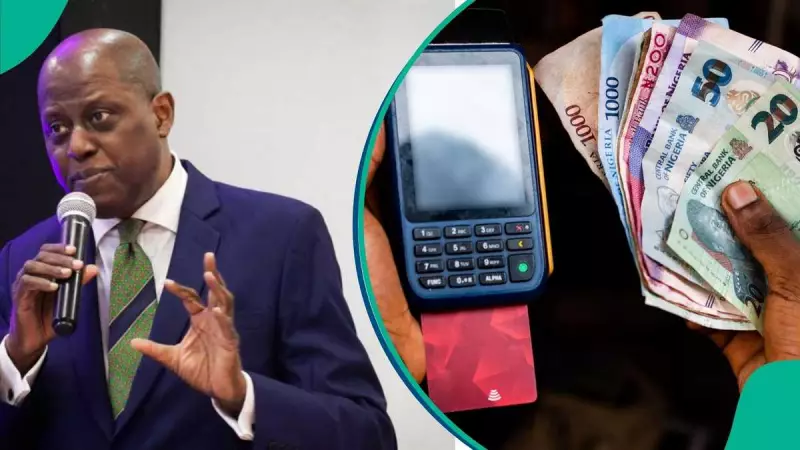
The Central Bank of Nigeria (CBN) has unveiled its strategic priorities for 2026, placing a major emphasis on accelerating the country's digital payment infrastructure and driving meaningful financial inclusion for its citizens.
Digital Payments and Fintech at the Core of CBN's Plan
Governor Olayemi Cardoso announced the agenda during his keynote speech at the 60th annual bankers' dinner organised by the Chartered Institute of Bankers of Nigeria (CIBN). He stated that the apex bank is accelerating reforms designed to position Nigeria as a leader in payment innovation across Africa.
A key focus will be on improving the interoperability of various payment platforms while strengthening regulatory oversight to ensure that digital transactions remain safe, secure, and affordable nationwide. Cardoso revealed that the regulatory framework is being reviewed to accommodate emerging technologies, including new fintech models for lending, merchant payments, and cross-border activities.
The adoption signals are strong: the CBN Governor noted that over 12 million contactless payment cards are currently in circulation in Nigeria. Furthermore, more than 40 fintech innovators are active within the CBN's regulatory sandbox, testing new solutions. By mid-2025, several top fintech apps had each surpassed 10 million downloads, with one even exceeding 50 million downloads.
Bridging the Financial Inclusion Gap
While acknowledging progress, Governor Cardoso stressed that true financial inclusion requires moving beyond mere account ownership to enabling meaningful economic participation, particularly for underserved groups.
He reported that 74% of Nigerian adults now have access to formal financial services, a figure approaching the global average. A network of over 3 million agent bankers supports this access across the country. However, gaps persist, especially in rural communities.
To address this, the CBN is introducing targeted initiatives leveraging agent banking, microfinance institutions, remittance channels, and mobile money operators. Specific programmes highlighted include the Women's Financial Inclusion Dashboard, the Women Entrepreneurs Finance Code, and an Inclusion Roadmap for Displaced Persons.
Digital wallets, mobile money, and fintech-enabled microcredit were identified as crucial tools for expanding options for households and small businesses.
A Broader Agenda for Monetary and Financial Stability
The 2026 plan forms part of broader efforts to restore monetary stability and rebuild public confidence following periods of economic uncertainty. The CBN's wide-ranging reform agenda aims to deepen the effectiveness of monetary policy, strengthen bank supervision, and improve macro-financial stability.
Cardoso also signalled closer coordination with fiscal authorities to tackle structural drivers of inflation, such as food supply challenges and foreign-exchange pressures. He reaffirmed the bank's commitment to a market-driven foreign exchange system, supported by ongoing liquidity measures.
Additionally, the CBN will intensify efforts to improve governance within the banking industry, enhance risk-management standards, and enforce prudential regulations as banks expand their digital operations and adjust to new capital requirements.
In a related move to boost inclusion, the CBN has also rolled out a project to revive the eNaira, aiming to increase access to digital financial services for populations with limited access to both financial services and telecommunications.




