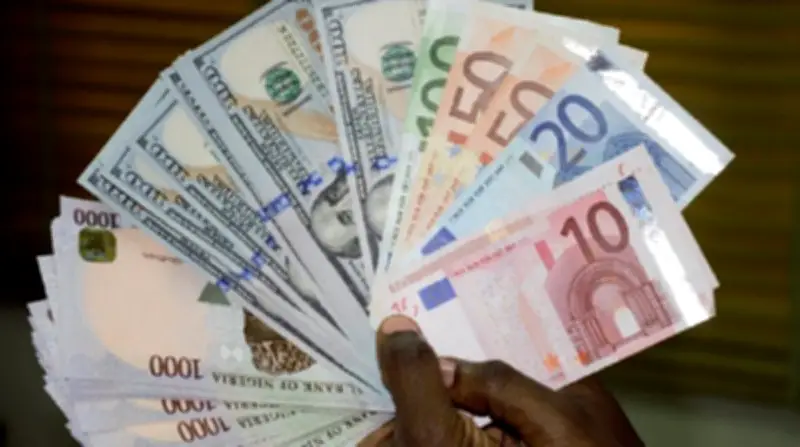
The Nigerian naira has maintained its stability in the foreign exchange market, with the Euro consistently trading below N1580, a development attributed to the ongoing reforms by the Central Bank of Nigeria (CBN). As of August 10, 2026, the Euro is quoted at N1575 in the official window, marking a continuation of the recent trend that has seen the local currency hold its ground against major global currencies.
Current Exchange Rates and Market Performance
Data from the FMDQ Exchange, the official trading platform, indicates that the Euro opened at N1578 and closed at N1575, with a daily turnover of $120 million. This represents a marginal appreciation of the naira by 0.2% against the Euro, following a similar pattern observed over the past two weeks. The British Pound also traded within a narrow range, closing at N1850, while the US Dollar remained stable at N1450.
According to financial analysts, the stability is a direct result of the CBN's policies aimed at unifying the exchange rates and boosting liquidity. "The reforms have instilled confidence among investors, leading to increased inflows and a more predictable market," said Adebayo Ogunlesi, a Lagos-based currency strategist.
Impact of CBN Reforms on Forex Stability
The CBN's reforms, introduced earlier this year, include the removal of multiple exchange rate windows and the adoption of a market-driven pricing mechanism. These measures have narrowed the gap between official and parallel market rates, reducing arbitrage opportunities and speculative activities. As a result, the parallel market premium has dropped to less than 2%, compared to over 10% before the reforms.
"The convergence of rates is a significant achievement. It indicates that the market is functioning more efficiently, and the naira is finding its true value," commented Dr. Chika Mordi, an economist at the University of Lagos. The CBN's sustained intervention, through periodic injections of foreign currency, has also helped to smooth volatility.
Future Outlook and Economic Implications
Looking ahead, analysts expect the naira to remain stable in the short term, barring any external shocks such as fluctuations in global oil prices or geopolitical tensions. The CBN's commitment to maintaining a tight monetary policy, coupled with rising foreign reserves now at $38 billion, provides a buffer against potential pressures.
For businesses and individuals, the stable exchange rate reduces uncertainty, facilitating better planning and investment. However, some experts caution that the real sector must be strengthened to ensure long-term sustainability. "Exchange rate stability alone is not enough; we need to boost productivity and exports to create a lasting impact," noted Ogunlesi.
As the naira continues to hold firm, the CBN's reforms are being closely watched by international investors, who see Nigeria as a key emerging market. The steady performance of the naira against the Euro is a positive signal, reinforcing the country's economic resilience.