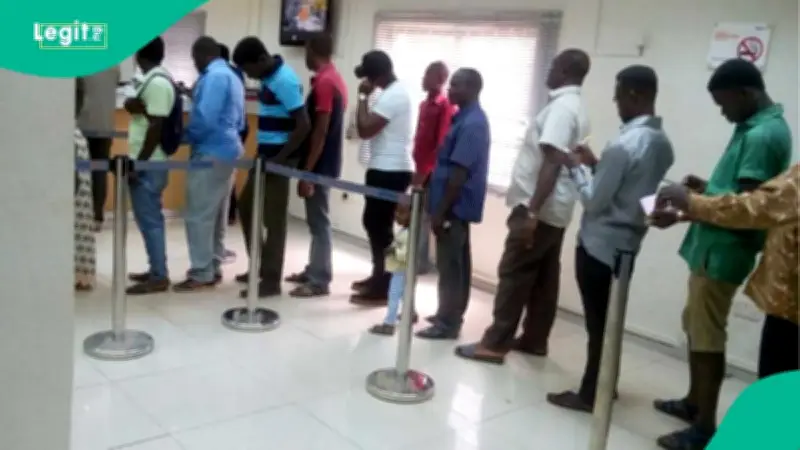
Nigeria's commercial, merchant, and non-interest banks closed 229 branches and cash centres across the country in one year, according to data from the Central Bank of Nigeria's (CBN) Financial Sector Statistical Bulletin. The total number of bank branches fell from 5,373 in 2023 to 5,144 in 2024, reflecting a sharp shift towards electronic transfers, mobile banking, and Point of Sale (PoS) services.
Digital Payments Drive the Shift
The decline in physical branches comes amid rapid growth in electronic payment channels across Nigeria. Customers now have access to mobile banking applications, internet banking, USSD services, and PoS terminals, reducing the need to visit bank branches for routine transactions. PoS operators have become an important part of Nigeria's financial services ecosystem, providing cash withdrawals, transfers, and other basic services within communities.
For banks, the migration of customers to digital channels can reduce the cost of maintaining large branch networks while allowing institutions to concentrate physical operations in locations with stronger commercial demand. However, the closures have raised concerns about access to formal banking services, particularly in communities where digital infrastructure and reliable internet connectivity remain limited.
Ebonyi Suffers Biggest Blow
The impact of the closures was uneven across the country, with some states recording substantially larger reductions than others. Ebonyi recorded the most dramatic decline, losing 89 branches during the period. Its branch network fell from 120 to just 31, representing one of the steepest reductions recorded nationwide.
Niger State followed, losing 32 branches as its total dropped from 108 to 76. Oyo State recorded a decline of 26 branches, leaving it with 200, while Ekiti and Ondo each lost 18 branches. Ekiti's total fell from 83 to 65, while Ondo declined from 127 to 109. The Federal Capital Territory also recorded a reduction, losing nine branches and falling from 400 to 391. Other states affected included Anambra and Ogun, which each lost eight branches, Plateau with seven, and Cross River with five.
Lagos Remains Nigeria's Banking Hub
Despite losing 11 branches, Lagos remained overwhelmingly dominant in Nigeria's physical banking network. The state had 1,521 bank branches in 2024, far exceeding every other state and reinforcing its position as the country's leading financial and commercial centre. The relatively small reduction compared with other states suggests that banks continue to maintain a strong physical presence in Lagos because of its population, business activity, and concentration of financial transactions.
Some States Added Branches
The nationwide decline was not universal. Several states actually recorded increases in their banking footprints during the period. Rivers, Edo, Kaduna, and Kano each gained eight branches, while Delta added six. Smaller increases were also recorded in Katsina, Adamawa, Jigawa, and Kogi. The contrasting figures indicate that banks are not simply abandoning physical branches altogether. Instead, they appear to be reallocating their networks towards areas where commercial activity, customer demand, and economic opportunities justify a physical presence.
A New Era for Nigerian Banking
The 229-branch reduction reflects a banking industry being reshaped by technology and changing customer behaviour. While digital banking offers convenience and lower operating costs, the continued closure of physical outlets could create challenges for customers who depend heavily on cash and face-to-face banking services. For Nigerian banks, the challenge will be finding the right balance between digital expansion and maintaining enough physical infrastructure to serve customers who cannot easily migrate to online financial services.
According to a report by Punch, the development signals a broader restructuring across the banking industry, with financial institutions increasingly reassessing the cost and relevance of maintaining physical locations in an increasingly digital market.
In a related development, the CBN has released a new rule for bank charges. The Central Bank of Nigeria's Guide to Charges by Banks, Other Financial and Non-Bank Financial Institutions, which took effect on January 1, 2020, was designed to promote transparency, flexibility, and competition in the financial sector. The guide applies to financial institutions licensed or regulated by the CBN and requires institutions to disclose applicable fees to customers at the point of a transaction.