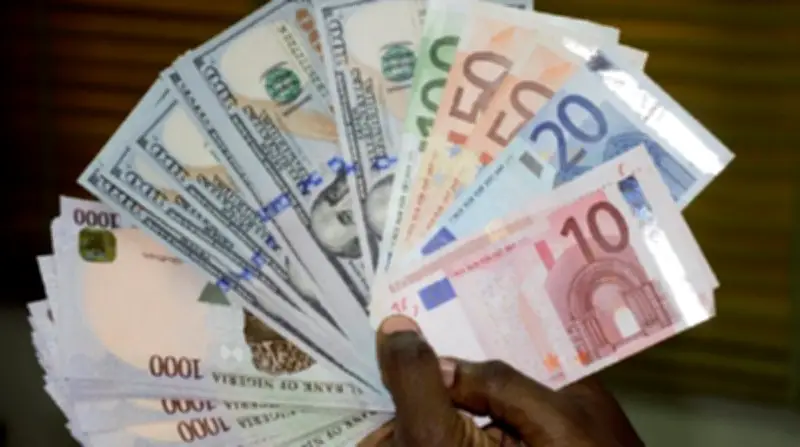
Nigeria's foreign exchange market recorded a historic turnover of $4.38 billion in June 2026, but the Association of Exchange Rate (AERE) warns that the figure may conceal significant liquidity risks that threaten the stability of the naira. The record volume, driven by increased portfolio inflows and central bank interventions, does not reflect the underlying fragility in the market, according to a new report by the industry body.
Record Turnover Explained
The $4.38 billion turnover, the highest on record, represents a 25% increase from the previous month and a 60% year-on-year surge. The surge was fueled by a combination of factors, including foreign portfolio investments attracted by high interest rates and a special dollar auction by the Central Bank of Nigeria (CBN) that injected $1.2 billion into the market.
However, the AERE cautioned that much of the turnover came from interbank and speculative trades rather than genuine end-user demand. The association's director general, Dr. Adebayo Ogunleye, stated: "A closer look at the data reveals that over 40% of the transactions were round-tripping between banks and forex bureaux, which inflates the volume without improving actual liquidity."
Liquidity Risks Under the Surface
The AERE report highlights that the convertible currency reserves available for spot transactions remain low, at just $2.1 billion as of end-June. This means the market is heavily reliant on CBN interventions, which are not sustainable. The central bank has spent over $8 billion in the first half of 2026 to defend the naira, depleting external reserves to $32 billion from $36 billion at the start of the year.
"If the CBN reduces its intervention, the naira could come under severe pressure," Dr. Ogunleye added. "The record turnover creates a false sense of security. The true test of liquidity is the ability to buy or sell large amounts without price slippage, and by that measure, the market is still shallow."
Implications for the Naira
The naira has traded within a relatively narrow band of N1,480 to N1,520 per dollar since March, buoyed by CBN support. However, the AERE model shows that without intervention, the fair value of the naira would be around N1,700 per dollar. The disparity between the official and parallel market rates has narrowed but still exceeds 10%.
Economist Dr. Funmi Adeyemi of Lagos Business School commented: "The $4.38 billion number is impressive, but it doesn't tell the whole story. The risk is that when sentiment shifts, the liquidity illusion could evaporate quickly, leading to a sharp depreciation."
Policy Recommendations
The AERE has called for structural reforms to deepen the forex market, including allowing more flexibility in the naira exchange rate, reducing the multiplicity of windows, and improving transparency in forex allocation. The report also urges the CBN to gradually reduce its intervention and rely more on market forces.
"We need to build a market that can withstand shocks without central bank life support," Dr. Ogunleye said. "The record turnover is an opportunity to accelerate reforms, not a reason to be complacent."
The CBN has yet to respond to the AERE report, but sources indicate the bank is reviewing its strategy. The next monetary policy committee meeting is scheduled for August 2026, where the naira policy is expected to be a key topic.