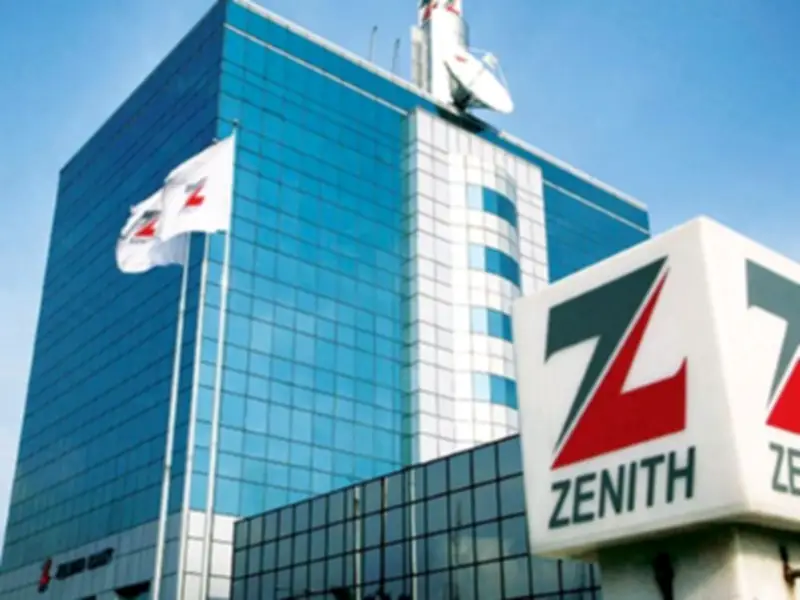
Zenith Bank has been identified as the top-tier lender in Nigeria when evaluated on metrics that go beyond mere balance sheet size. According to a recent financial analysis, the bank outperforms its peers on critical indicators such as return on equity (ROE), cost-to-income ratio, and asset quality, reinforcing its reputation as a benchmark for operational excellence in the Nigerian banking sector.
Performance Metrics That Matter
The assessment focused on efficiency and profitability rather than total assets. Zenith Bank recorded a return on equity of 24.5% for the 2025 financial year, the highest among the country's top commercial banks. This figure is significantly above the industry average of 18%, demonstrating the bank's ability to generate superior returns for shareholders. Additionally, its cost-to-income ratio stood at 45%, one of the lowest in the sector, reflecting disciplined cost management and operational efficiency.
Asset Quality Remains Strong
Beyond profitability, Zenith Bank maintained a non-performing loan (NPL) ratio of 3.2%, well below the regulatory threshold of 5% and among the best in the industry. This indicates prudent risk management and a high-quality loan book. The bank's capital adequacy ratio also exceeded the Central Bank of Nigeria's minimum requirement, providing a robust buffer against potential shocks.
According to a banking analyst at Financial Derivatives Company, "Zenith Bank's consistent focus on core banking fundamentals—efficiency, risk control, and shareholder value—sets it apart. While larger balance sheets can mask underlying weaknesses, Zenith's performance metrics reveal a lender that truly excels in its core business."
Beyond Size: A Sustainable Model
The analysis underscores that balance sheet size alone is not a reliable indicator of a bank's health or performance. Zenith Bank's strategy of prioritizing profitability and asset quality over sheer scale has enabled it to weather economic cycles effectively. For example, during the 2020 pandemic, the bank reported a 10% increase in profit after tax while many competitors saw declines.
Shareholder Value and Market Position
Shareholders have also benefited from this approach. Zenith Bank has consistently paid dividends, with a dividend yield averaging 8% over the past five years. The bank's stock price has appreciated by 35% over the last twelve months, outperforming the banking index of the Nigerian Exchange. This dual strength in operational performance and market returns solidifies its status as a best-in-class lender.
Industry Implications
The recognition of Zenith Bank as the leading lender on non-balance-sheet metrics may prompt other banks to recalibrate their strategies. Analysts suggest that a shift towards efficiency and risk management could enhance the overall resilience of Nigeria's banking sector. However, replicating Zenith's performance requires long-term investment in technology, human capital, and risk infrastructure.
Conclusion
Zenith Bank's achievement highlights that true banking excellence is measured not by size but by sustainable value creation. As the Nigerian economy evolves, the bank's disciplined approach positions it well to continue leading the pack in profitability and stability. Investors and stakeholders will be watching closely to see if this performance can be sustained in the face of rising competition and regulatory changes.