Nigeria's current inflation, which has driven up costs and caused economic shocks, is squeezing growth and profitability in event centres, forcing operators in the key commercial real estate subsector to increase rents by over 100 per cent, VICTOR GBONEGUN reports.
The rising costs of operations, driven by high energy, security, and logistics expenses, and by the workforce's demand for improved wages, have led operators of event centres to increase prices in major cities across the country. While urban centres are witnessing a significant surge in the event management sector, driven by rapid urbanisation and cultural affinity for grand celebrations, operators are leveraging high demand, especially in strategic locations, by doubling prices.
Nigeria's event industry continues to thrive, driven by creativity and a high taste for parties that cover birthday, wedding ceremony, and burial, naming ceremony, chieftaincy conferment, luncheon, graduation ceremony, book lunch, conferences, workshops, and colloquiums. In recent years, event centre operations have become a major revenue stream, as property owners convert land assets into event venues in cities such as Abuja, Port Harcourt, Anambra, Ibadan, Akure, Kano, Asaba and others. The demand for these facilities varies based on capacity, locations and available amenities.
Price Hikes Across Major Cities
Findings by The Guardian reveal that, within the past seven months, event hall rental costs have risen by over 70 per cent in Lagos, Abuja, and Port Harcourt. A 30-capacity conference room previously rented for N100,000 now goes for between N150,000 and N200,000. A 300-capacity hall, formerly N200,000, now costs about N400,000, while a 500-capacity hall has increased from about N4 million to N5 million. Similarly, a 250-capacity hall previously priced at N1.5 million now goes for between N2 million and N2.5 million, depending on location and facilities. A 50-capacity hall that costs N150,000 now rents for about N250,000, while a 100-capacity hall has risen from N250,000 to N350,000.
Rising Demand and Evolving Facilities Drive Market Expansion
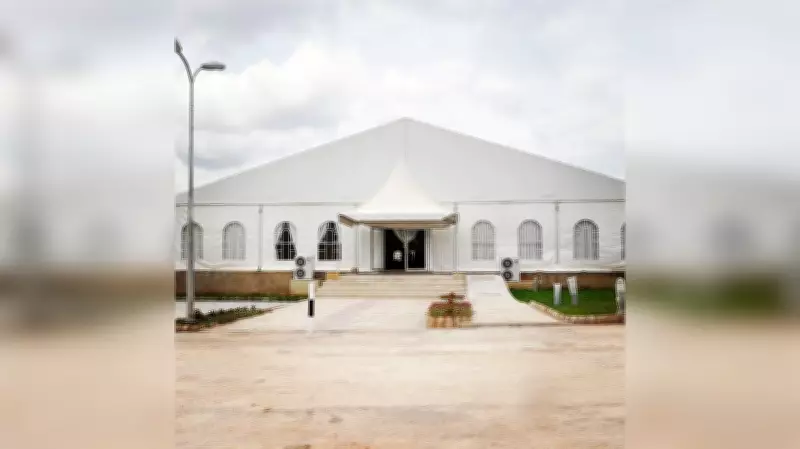
The industry is evolving, with operators introducing both micro-halls and large-capacity venues ranging from 30 to over 2,000 guests. These hall capacities emphasise quality finishing and design, constant power backed by a generator and alternative power supply such as solar, good decor, good cooling and noise absorber. Some of the facilities come with exquisite exterior and interior, with over 500 parking spaces and a seating hall capacity of over 2000 guests. The halls in some cases are equipped with state-of-the-art audio-visual systems – LED Screens, stage lights, speakers, banquet tables, gold chivalry chairs and others to make your occasion fascinating and memorable.
The cultural penchant among Nigerians to party and mark milestone events such as birthdays, weddings, receptions, anniversaries, seminars, naming ceremonies, workshops and others, makes the demand for event centres a viable business in Nigeria's cities, as there would always be demand for such facilities. Beyond that, the commercial real estate business has, over time, contributed immensely to the nation's Gross Domestic Product (GDP) growth, job creation, and infrastructure advancement in major cities. Valued at over $20 billion, event centre operators support in creating jobs, including event decorators/event planners, ushers, vendors, and security, and enhance the social fabric of the socio-cultural facets of the society. Many of the operators rely on the business as an investment, and generate high returns due to the frequent and short-term rental nature of centres.
Challenges Facing Operators
In most of the urban centres, operators are exposed to almost the same set of challenges; these include high operational costs, regulatory interference, and inadequacy of infrastructure, especially sufficient parking spaces. In locations like Lagos and Abuja, there have been a series of government clampdowns on event centres for failing to comply with existing regulations and environmental standards, especially regarding noise pollution and lack of parking space. Developers of the facilities often fail to allocate sufficient space for cars, leading to traffic congestion and creating security risks around the construction site. This is a development the government regards as a grave violation of guidelines on the physical planning law.
According to existing physical planning regulations, parking provision for commercial outlets/development shall be one car park for every 60 square metres of the total lettable floor area; places of assembly, auditorium, conference, and event centres shall provide one parking space for every 10 square metres of usable floor space or in accordance with the development plan and its approval order. Physical planning and development authorities in major states grant permits for developments with the hope that property developers and owners comply with the necessary provisions. However, many developers still build in disregard for existing law, thereby worsening traffic snarls in city areas.
A past President of the Association of Town Planners Consultants of Nigeria (ATOPCON), Muyiwa Adelu, told The Guardian that when you have an event centre with 200 seating capacity and no sufficient car park, the result is seen with people parking on the road, causing traffic delays and snarls. He noted that sometimes, the organisers have to engage traffic regulatory agencies to control traffic, which most times is insufficient, adding that there are laws, but they are not implemented and enforced in physical planning.
Energy Costs and Inflation Squeeze Profit Margins
Global economic pressures, including geopolitical tensions affecting energy prices, have significantly increased the cost of powering facilities. Rising fuel prices have made generator usage more expensive, impacting profitability. The inflation rate in Nigeria rose to 15.38 per cent as of March 2026, marking an increase from 15.06 per cent in February, indicating a 32bps rise, driven by higher energy costs and naira depreciation. Also, trends recorded have been a surging maintenance costs for facilities, including lighting and sound equipment. Some of the operators regularly experience faulty air conditioning systems, poor ventilation, and inadequate lighting, which pose a hindrance to smooth service delivery.
Operators Justify Price Hikes Amid Rising Costs
An event centre operator in Lagos, Christian Eke, said the cost of diesel alone has increased by over 100 per cent, forcing operators to adjust pricing. This, he said, is in addition to other costs of providing efficient services for clients, which have also doubled. He added that to sustain the business, operators have had to increase the cost of renting event spaces.
“A 1,000-capacity hall is now N6 million per day. Late last year, this wasn't the case. But diesel prices have risen by more than 100 per cent. Last year, a 1,000-capacity hall cost between N5 million and N5.5 million, depending on the location of the facility and the features offered,” he said. According to him, the rate for a 500-capacity hall has also increased from around N3.5 million late last year to between N5 million and N5.5 million. He pointed out that the fee covers a good sound system, stage and ambient lighting, a VIP lounge, a large car park that can accommodate over 200 vehicles, and quality seating. He noted that the increment may not be too significant for operators, considering that many facilities rely on central air-conditioning systems, which consume large amounts of electricity and diesel.
Another operator based in Abuja, Musa Ibrahim, confirmed the increase in prices, attributing it to rising inflation in the economy. He explained that the cost of operating event facilities must be factored into pricing for owners to remain profitable. According to him, despite the sharp rise in costs, event planners and celebrants continue to patronise many of the facilities, particularly those in highbrow locations, which are often fully booked well in advance.
Eke said operators now focus on ensuring that clients have suitable venues for weddings, birthdays, conferences, exhibitions, concerts, and religious activities by offering a variety of options. “Some operators offer castle- or tent-like structures, as well as outdoor spaces. Options may include a 1,200-seat hall, a beautifully decorated air-conditioned tent, or a 300-seat fully air-conditioned banquet or pavilion, complemented by services such as decoration, rentals, catering, MCs, well-groomed ushers, trained security personnel, and other support services, depending on the client's budget,” he explained.
Eke added that a key selling point for many operators is the availability of halls with capacities ranging from 1,000 to 2,000 seats, configured in banquet or theatre style depending on the event. These facilities are equipped with modern audio-visual systems, including LED screens, stage lighting, banquet tables, and Chiavari chairs, based on clients' budgets. On power supply, he noted that some operators are investing heavily in solar energy. Although still expensive, he said it helps to supplement the national grid and generators to ensure uninterrupted service delivery, noting that no client wants an event disrupted by erratic power supply.
Eke also appealed to the government to support operators with special funding schemes to help expand their businesses and enhance the sector's contribution to the national economy.