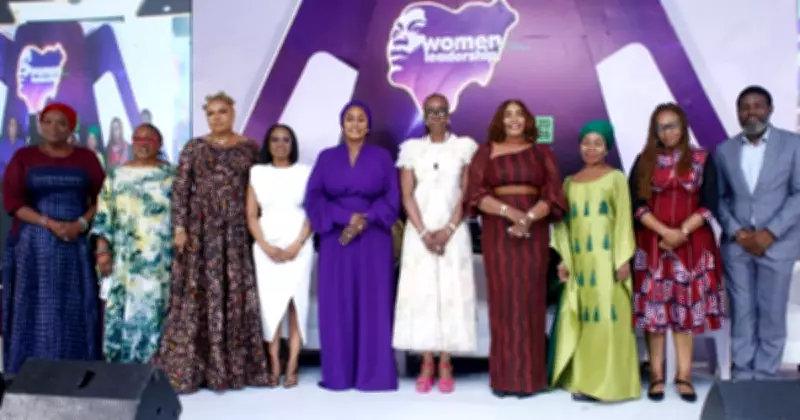
Women in Leadership Summit 2026 Concludes with Focus on Inclusive Economic Growth
The Women in Leadership Summit 2026, held under the theme “Give to Gain: Power, Purpose and the Economics of Inclusive Leadership,” has successfully concluded in Lagos. This landmark event brought together prominent voices from business, government, and development sectors to foster practical conversations on how inclusive leadership can drive substantial economic impact and sustainable national development.
High-Level Engagements and Strategic Perspectives
Co-convened by The Conversationalist Ltd, Brooks & Blake Perception Ltd, and BusinessDay Media Ltd, the summit was designed to move inclusion from theoretical discussions to measurable, actionable results. In her opening remarks, Co-convener and Chairperson of Brooks and Blake, Olufunmi Onajide, called for a fundamental shift in how leadership is defined and practiced. She urged all stakeholders to embed purpose and representation at the very core of decision-making processes to create more equitable outcomes.
The welcome address was delivered by Adenike Alao on behalf of Frank Aigbogun, emphasizing the critical role of leadership in shaping fair and sustainable economic systems that benefit all segments of society.
Panel Discussions and Economic Insights
During the summit outlook presentation, Mary Iwelumo of PwC Nigeria provided a strategic perspective on inclusive leadership within the public sector, highlighting its direct impact on governance structures and national development trajectories. A key panel session, titled “Power and Policy: Women Shaping Inclusive Economies,” featured contributions from Olaniyi Yusuf of the Nigerian Economic Summit Group and Chichi Aniagolu-Okoye of the Ford Foundation, among other distinguished participants.
Discussions during this session focused extensively on:
- Governance models that promote inclusivity
- Institutional leadership frameworks
- Policy requirements for driving inclusive economic growth
Economic Case for Inclusion and Institutional Strengthening
Ireti Sam-Ogbu of Africa Finance Corporation reinforced the economic case for inclusion by demonstrating how inclusive leadership strengthens institutions, improves risk management capabilities, and drives innovation through the leveraging of diverse perspectives. She emphasized that true leadership must extend beyond profit motives to define clear purpose and ensure that power is utilized to create long-term value for all stakeholders.
Goodwill messages at the summit reflected a broader national commitment to inclusive leadership principles. Mrs. Funmi Omotosho, representing Claudiana Ibijoke Sanwo-Olu, stressed the urgent need to move inclusion from mere aspiration to deliberate, concrete action. She noted that the summit represents a shared commitment to building a more equitable and transformative society through practical measures.
State-Level Approaches and Policy Frameworks
Patience Fakai, Commissioner of Kaduna State Ministry of Business, Innovation and Technology, representing Governor Uba Sani, outlined Kaduna State’s comprehensive approach to inclusive governance. She highlighted ongoing investments in several key areas:
- Education infrastructure and access
- Financial inclusion initiatives
- Economic empowerment programs
Commissioner Fakai stressed that sustainable development fundamentally depends on expanding opportunities for women and young people through deliberate, well-designed policy frameworks.
Publication Launch and Sustained Engagement
A major highlight of the summit was the unveiling of the Women in Leadership Special Publication, which provides a comprehensive framework for sustained engagement, accountability mechanisms, and cross-sector collaboration. The summit concluded with a communiqué presented by Adenike Alao, reinforcing the critical need to maintain momentum beyond the event and translate conversations into tangible actions and policy implementations.
Reflections on Collective Progress and Future Directions
Reflecting on the summit outcomes, Co-Convener Ime Enang emphasized the importance of shared experiences and collective progress. She noted that the platform created valuable opportunities for women to learn from one another and recognize that their leadership challenges are not isolated incidents but shared experiences requiring collaborative solutions.
Enang also highlighted the critical role of mentorship and sponsorship in advancing women in leadership positions, adding that sustained progress will depend on active collaboration across media, policy, and business ecosystems. In her closing reflections, Adenike Alao noted that the diversity of participants and the presence of key stakeholders reinforced the summit’s importance, adding that continued amplification of these conversations will be essential to driving long-term impact and systemic change.
The Women in Leadership Summit 2026 has reinforced a clear and compelling message: inclusive leadership is not merely optional but absolutely essential for achieving sustainable economic growth, building stronger institutions, and ensuring long-term national development that benefits all citizens.