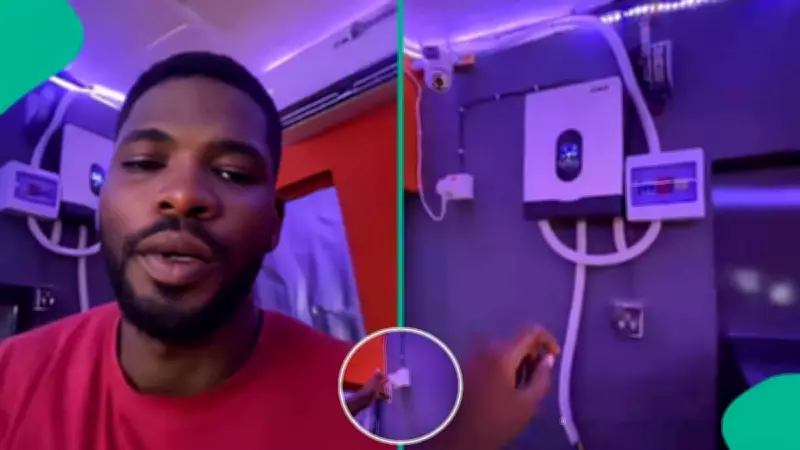
A Nigerian man has sparked widespread curiosity after demonstrating how he operates an air conditioner, refrigerator, three televisions, and other appliances using only a 2kVA solar inverter powered by a lithium battery. The individual, known as @chairman_dse on TikTok, shared a detailed breakdown of his setup in his shop, revealing how he manages to enjoy uninterrupted electricity throughout the day.
Solar Setup Details
In the viral video, he showcased his 2kVA Sako inverter and a 3.6kWh 12V Derry lithium battery. He explained that his system currently powers three TVs, three PlayStation 4 consoles, and a 1HP inverter air conditioner set at 16 degrees Celsius. The inverter displays a consumption of 1.04 to 1.05 kilowatts, while his solar panels supply about 1.08 kilowatts, keeping the battery fully charged.
Load Management Strategy
He elaborated on his daily routine: the refrigerator chiller turns on at 9 am and shuts off at 6 pm, while the air conditioner activates at 12 noon and deactivates at 7 pm. By 7 pm, the battery retains about 60% charge, allowing him to run his business until closing at 8 pm. The system continues operating overnight and resumes charging the next day. He credited smart switches with timers for enabling this efficient load management.
When asked about the cost, he revealed the entire setup amounted to ₦1.6 million.
Public Reactions
The post garnered numerous comments. APLUS SOLAR NATIONWIDE remarked, "Load management remains the most important skill an inverter user should have." Miss Prowess sought advice on batteries for her 4kVA hybrid inverter. Solaris Surge praised the load management, while Horlah of note expressed skepticism about three TVs and three PS4s consuming only 350 watts. Others shared their own experiences, with Remak Realty noting a similar 2kVA setup costing between ₦850,000 and ₦900,000. Henry Okoro added that his smart plug schedules his fridge from 9 am to 4 pm, and he runs his 1.5 HP inverter AC in generator mode when the battery is full.
This story highlights the growing trend of Nigerians adopting solar energy solutions to combat unreliable grid electricity, with proper load management being key to affordability and efficiency.