
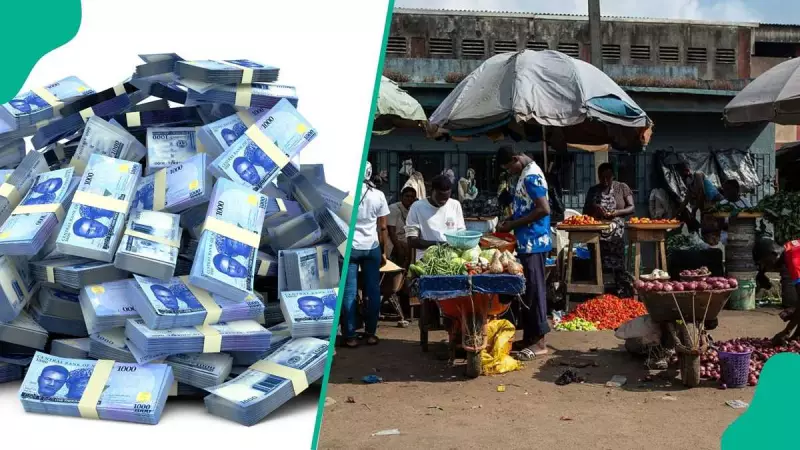
An analysis of state budget proposals has revealed a significant shift in funding strategies across Nigeria, with ten states planning to rely heavily on external borrowing and grants to finance their 2026 capital projects. The combined borrowing target stands at a staggering N4.287 trillion, raising alarms among economists and labour leaders about fiscal discipline and long-term debt sustainability.
States Turn to Loans and Grants as Budgets Swell
The ten states identified in the budget documents are Lagos, Abia, Ogun, Enugu, Osun, Delta, Sokoto, Edo, Bayelsa, and Gombe. Collectively, they have presented budget proposals worth N14.174 trillion to their respective state assemblies for the 2026 fiscal year. This move signals a growing dependence on non-recurring funding sources, moving beyond traditional revenue streams like federal allocations from the Federation Account Allocation Committee (FAAC), Value Added Tax (VAT) receipts, and Internally Generated Revenue (IGR).
While statutory transfers and IGR remain foundational, the analysis indicates that many states are increasingly looking to bridge funding gaps for infrastructure and development projects through loans, bonds, grants, capital receipts, and public-private partnerships. This trend underscores the pressure on sub-national governments to deliver development amid rising costs and revenue challenges.
Lagos, Ogun, and Abia Lead in Borrowing Plans
A closer look at individual state plans shows varying degrees of reliance on debt. Lagos State, despite boasting the strongest IGR base in the federation, has a substantial borrowing plan. Governor Babajide Sanwo-Olu's proposed N4.237 trillion budget for 2026 expects to source about N1.117 trillion (26.4%) from loans and bonds to fund capital projects.
In Abia State, the government's N1.016 trillion budget faces a financing gap of N409 billion (40.3%), which it intends to cover through borrowing and other non-recurring sources. It is noteworthy, however, that data from the Debt Management Office (DMO) shows Abia recorded a significant reduction in its domestic debt profile in 2025.
Ogun State's N1.669 trillion budget also reveals a heavy reliance on external finance, with plans to secure N518.9 billion from loans and grants. This amount accounts for over 31% of the state's total funding needs for the upcoming fiscal year.
Economists and Labour Leaders Sound Alarm on Fiscal Risks
The borrowing spree has not gone unnoticed by fiscal experts and civil society. Professor Sheriffdeen Tella, a former Vice-Chancellor of Crescent University, told Punch newspaper that states must prioritize living within their means and strengthening internal revenue management. He argued that Nigeria's core fiscal challenge is not a lack of income but rather revenue mismanagement and weak oversight at all government levels, which has made borrowing a routine practice.
Echoing these concerns, Chris Onyeka, Assistant General Secretary of the Nigeria Labour Congress (NLC), criticised the perennial issue of poor budget implementation. He stated that weak enforcement has often reduced state budgets to mere formalities rather than binding fiscal plans that drive tangible development.
Analysts warn that an excessive dependence on non-recurring funds like loans exposes states to several risks, including funding delays, rising debt servicing costs, and long-term fiscal unsustainability. This is particularly precarious for states with weak IGR bases, as debt obligations could cripple future budgets.
Mixed Debt Profiles and the National Context
The fiscal landscape across the ten states is not uniform. While some, like Osun, Delta, and Bayelsa, recorded reductions in their debt profiles in 2025, others continue to lean heavily on borrowing. For instance, Enugu and Gombe states plan to fund over 20% and 60% of their respective budgets through loans and capital receipts.
This development occurs against the backdrop of Nigeria's escalating total public debt, which has risen to N152.4 trillion, driven significantly by increased external borrowing. A recent report by BudgIT indicated that about twelve Nigerian states now rank among those with the highest debt per person in the country, with two states carrying approximately ₦100,000 debt per capita.
The planned N4.287 trillion borrowing by the ten states for 2026 underscores a critical juncture in sub-national finance. It highlights the intense pressure to fund development while simultaneously posing serious questions about revenue generation, fiscal responsibility, and the debt burden being passed on to future generations of Nigerians.




