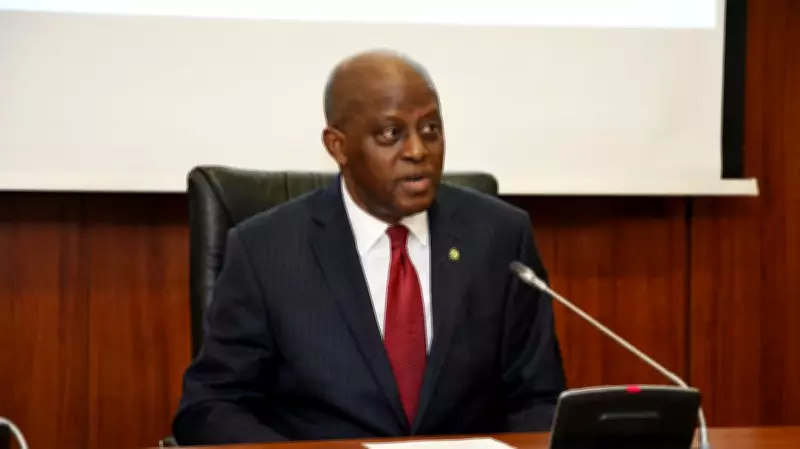
Governor of the Central Bank of Nigeria (CBN), Olayemi Cardoso, has reaffirmed that Nigeria will achieve a single-digit inflation rate despite a marginal increase in the headline inflation rate to 15.38 per cent in March from 15.06 per cent in February. Speaking during the International Monetary Fund (IMF)/World Bank Spring Meetings in the United States, Cardoso stated that Nigeria's determination to bring inflation down to single digits remains on course, even amid the ongoing Middle East crisis and other related headwinds.
Economic Reforms Bolster Resilience
Cardoso emphasized that the economy's growth prospects and resilience to global shocks are positive outcomes of the CBN-led financial sector reforms and the quest for a stronger economy. He noted that inflation has been globally acknowledged as the biggest enemy of growth and the common man. Over two years of economic reforms have boldened the Nigerian economy, preparing it to withstand shocks and thrive despite diverse headwinds. Today, there is strong recognition and recommendations that Nigeria's economic reforms have gained domestic and global investor confidence.
Contained Spillover Effects
Cardoso explained that Nigeria's experience indicates that spillover effects from the Middle East crisis, which led to a marginal rise in inflation in March, have been relatively contained. The ability of the economy to contain these headwinds reflects positive reform outcomes, including exchange rate stability, stronger reserve buffers, and an enhanced monetary policy framework. He stated, "We are not relenting on continuing to build resilience and also to stay the course with respect to something we have constantly been talking about, and that is bringing down inflation to single digits. In spite of all that is going on, we will stay that course."
NBS Data Confirms Marginal Rise
The National Bureau of Statistics (NBS), led by Statistician-General Prince Adeyemi Adeniran, reported that Nigeria's headline inflation rate increased to 15.38 per cent in March 2026, up from 15.06 per cent in February. This is the first increase in 12 months since the inflation rate started declining in April 2025. The NBS stated, "The Headline inflation rate rose to 15.38 per cent, up from 15.06 per cent in February 2026 and stood at 27.35 per cent in the same month of the preceding year (March 2025)." The bureau noted an increase of 0.32 per cent compared to February 2026. However, on a month-on-month basis, the headline inflation rate in March 2026 was 4.18 per cent, which was 2.17 per cent higher than the rate recorded in February 2026 (2.01 per cent).
Government and CBN Actions
President Bola Tinubu has directed economic managers to institute policies that will reduce the impact of the Middle East crisis on the masses. The CBN says structural reforms are beginning to filter through to the broader economy, helping to stabilize the naira and ease lending rates as inflation continues to moderate. The apex bank's monetary policy actions reflect a deliberate strategy to restore macroeconomic stability after years of fiscal and external pressures. According to the CBN, alignment of fiscal and monetary policies is indispensable at a time when technological innovation and digital finance are rapidly transforming the financial landscape.
Boosting Foreign Exchange Inflows
The CBN is cultivating multiple foreign exchange sources to increase dollar inflows and boost dollar access to manufacturers and retail end users. Moves include improving diaspora remittances through new product development, granting licenses to new International Money Transfer Operators (IMTOs), implementing a willing buyer-willing seller FX model, and enabling timely access to naira liquidity for IMTOs. These actions have simplified dollar-inflow channels for authorized dealers and other players in the value chain, leading to substantial accretion to gross FX reserves and supporting the stability of the naira. Cardoso noted that Nigeria makes roughly $600 million monthly from diaspora remittances, and that recent gains, including lower inflation, FX market stability, and stronger reserves, have boosted investor confidence and capital flows.
IMF Applauds Nigeria's Policies
The International Monetary Fund (IMF) applauded Nigeria's economic policies, stating that domestic reforms have brought visible results. IMF Director of the African Department, Abebe Selassie, disclosed during the presentation of the Regional Economic Outlook for Sub-Saharan Africa at the Annual Meetings in Washington DC that the effects of sound domestic policy choices instituted by Nigeria's fiscal and monetary authorities were increasingly visible. He noted that macroeconomic reforms and stabilization efforts, including strengthening of fiscal positions, created conditions for stronger growth and lower inflation. Exchange rate realignments after foreign exchange market reforms and reductions in fuel subsidies are among the visible policies. More recently, Nigeria began addressing long-standing macroeconomic imbalances, laying the foundations for growth.
Selassie said, "Countries such as Nigeria have reaped the benefits of macroeconomic reforms, exchange rate realignments, subsidy reduction, and strength in monetary policy frameworks. In short, 2025 was a year of hard-won stabilization gains, and policymakers across the region deserve credit for achieving them." He highlighted that the war in the Middle East is a major new external shock, with oil, gas, and fertilizer prices surging, shipping costs rising, trade with Gulf partners disrupted, and tourism and remittances being squeezed. Financial conditions have heightened, particularly for fuel-importing countries.
Outlook for Sub-Saharan Africa
Selassie explained that policy choices being made in the region at present will continue to determine the continent's economic future, while the IMF stands ready to support countries with financing policy development. He advised Nigeria to conduct liability management operations to ascertain how it intends to borrow for optimal benefits. Sub-Saharan Africa entered 2026 reaping the benefits of hard-won stabilization gains after a strong 2025. Economic activity accelerated broadly, with regional growth estimated at about 4.5 per cent—the fastest in a decade—reflecting favorable external factors and good policies, particularly in several large economies. Inflation moderated through the end of 2025 due to lower global food and oil prices, easing exchange rate pressures, and appropriately tight monetary stances in many countries. Fiscal positions improved, supported by stronger growth and favorable exchange rate developments. However, the war in the Middle East has clouded the outlook. Regional growth is expected to reach 4.3 per cent in 2026, 0.3 percentage point lower than prewar forecast, with significant heterogeneity across countries.
World Bank on Industrial Policy
World Bank Group Chief Economist for the Africa Region, Andrew Dabalen, stated that well-designed industrial policies can help unlock productivity gains and job creation, but only if grounded in a realistic understanding of country opportunities and constraints and used sparingly. These policies should be supported by strong implementation capacity and embedded in broader ecosystems that include reliable infrastructure, skilled labor, access to finance, and regional market integration. He emphasized that getting industrial policies right in Africa will depend on disciplined policy implementation, promoting economic activities rather than firms, clear performance benchmarks, credible exit strategies, and deeper regional integration, including through the African Continental Free Trade Area. Without these foundations, industrial policy risks creating ineffective isolated enclaves rather than broad-based economic transformation.
Nwadike, a financial analyst, wrote from Lagos.