
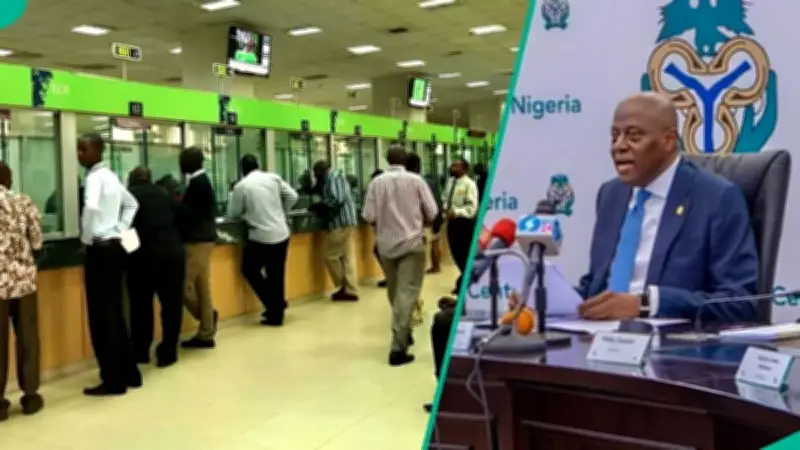
The Central Bank of Nigeria (CBN) has published ten conditions that individuals and corporate entities must satisfy before they can establish and operate a microfinance bank (MFB) in the country. The requirements, detailed in the CBN's Revised Regulatory and Supervisory Guidelines for Microfinance Banks in Nigeria, cover ownership structure, minimum capital, source of funds, management quality, board composition, and the licensing process.
Minimum Capital Requirements by Category
Prospective owners must provide the minimum paid-up capital prescribed for the category of microfinance bank they intend to establish. The CBN recognises three categories of MFBs: Unit, State, and National. A Unit MFB requires a minimum paid-up capital of N20 million, while a State MFB requires N100 million. A National MFB requires N2 billion in minimum paid-up capital.
Source of Funds and Licensing Fees
Applicants must provide satisfactory and verifiable evidence that the required capital has been paid by the proposed shareholders. The CBN requires promoters to confirm that the funds did not originate from bank credit, questionable sources, money laundering, or other illicit activities. Promoters seeking an MFB licence must also pay a non-refundable application fee, with prescribed fees of N50,000 for a Unit MFB, N100,000 for a State MFB, and N250,000 for a National MFB.
Feasibility Report and Financial Projections
Applicants must submit a detailed feasibility report explaining the objectives and justification for establishing the microfinance bank. The report must outline the services to be offered, proposed branch expansion, staff training, management succession, and other operational plans. Additionally, the proposed MFB must submit financial projections covering five years, including expected growth and profitability figures as well as the assumptions supporting those projections.
Promoters, Management, and Directors
The CBN must be satisfied that the promoters and proposed management team are fit and proper persons to invest in or manage a financial services institution. The regulator also assesses the quality of management and whether the proposed business has realistic earnings prospects. Applicants must provide the names, CVs, and credentials of proposed board members. For MFBs, at least two board members, excluding executive management, must have banking or related financial industry experience. Directors and management appointments are subject to CBN approval.
Corporate and Shareholder Documents
Promoters must submit documents including a draft Memorandum and Articles of Association, letters of intent from subscribers, and details of the proposed shareholders. The application must also contain the names, addresses, and banking details of promoters or proposed shareholders.
CBN Appraisal and Approval Process
Before issuing Approval-in-Principle, the CBN may conduct an appraisal interview with the promoters of the proposed microfinance bank. The regulator assesses the promoters, management, capital, business prospects, and proposed activities before deciding whether to proceed with the application.
Operational Conditions Before Opening
Obtaining approval does not automatically mean the MFB can begin operations. The institution must put the required infrastructure, management information systems, internal controls, and enterprise-wide risk management procedures in place. The CBN must also conduct a satisfactory physical inspection of the premises before the MFB is allowed to commence business.
The CBN guidelines show that establishing a microfinance bank in Nigeria requires more than having the required capital. Promoters must demonstrate that their funds are legitimate, their business model is viable, and their proposed management and governance structures meet regulatory standards.
Recent MFB Entry: Bank78
Earlier, Legit.ng reported that Bank78 MFB had begun operations in Nigeria as a privately owned digital lending institution. The lender said its model draws from the principles of private banking but is tailored to meet the needs of mass-affluent Nigerians seeking secure and high-quality digital banking services. Bank78 added that it was established to connect the rapidly expanding fintech sector with conventional banks and their traditional banking systems.




