
Public discourse surrounding Nigeria's government finances has once again descended into a fog of misunderstanding, limited knowledge, and in some cases, deliberate distortion. The core of the current controversy hinges on a fundamental fiscal concept: the difference between the total revenue collected by all government agencies and the portion that is actually available for the Federal Government to spend.
The Heart of the Confusion: Two Statements, Two Realities
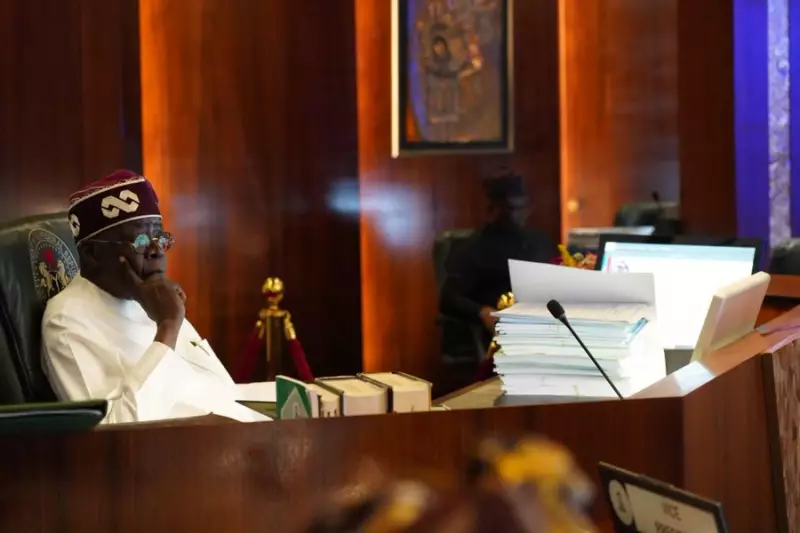
This confusion was recently amplified when statements from President Bola Tinubu and the Minister of Finance and Coordinating Minister for the Economy, Mr. Wale Edun, were wrongly portrayed as contradictory. In September 2025, President Tinubu announced that the Federal Government had met its non-oil revenue target for the year by August. He made this declaration during a meeting with members of the defunct Congress for Progressive Change (CPC) and The Buhari Organisation (TBO), led by former Nasarawa State Governor, Senator Tanko Al-Makura.
By that August, the Nigeria Revenue Service had collected over N22 trillion in taxes, while the Nigeria Customs Service generated over N5 trillion. The Nigerian National Petroleum Company (NNPC) also reported remitting several trillions of Naira. These figures did not even include income from other major agencies like the Nigerian Ports Authority (NPA), the Nigerian Maritime Administration and Safety Agency (NIMASA), and the Nigerian Communications Commission (NCC).
However, later in the year, during a National Assembly public hearing, Minister Edun stated that the Federal Government could not adequately fund its capital budget due to insufficient funds. This remark was seized upon by some analysts and opposition figures, who misinterpreted it as a contradiction to the President's earlier success announcement.
Setting the Record Straight: How Federation Finances Really Work
In reality, both officials were correct, and their statements addressed two distinct aspects of the nation's treasury. President Tinubu was right to celebrate that revenue-generating agencies exceeded their 2025 targets. However, meeting revenue targets does not equate to a government having all the money it needs for its expenditure. All governments, including the wealthiest, typically run deficits, which is the gap between income and spending filled by borrowing.
The critical distinction lies in the destination of collected funds. All revenues from agencies like the NRS, NNPC, NIMASA, NPA, Customs, and NCC are paid into a central pool known as the Federation Account. The money in this account does not belong exclusively to the Federal Government. It is constitutionally mandated to be shared among the three tiers of government: federal, state, and local.
When Minister Edun referred to N10 trillion as Federal Government revenue for 2025, he was specifically talking about the Federal Government's statutory share from the monthly Federation Account Allocation Committee (FAAC) distributions. This is the actual sum available for federal spending. The budgets of the 36 states, the Federal Capital Territory, and the 774 local governments are primarily funded from this same account.
The Media's Role and the Danger of Misinformation
Regrettably, the media landscape, which should clarify such complex issues, has often added to the noise. There is a growing tendency to amplify popular but incorrect narratives for clicks and views, rather than pursuing clarity. The situation is exacerbated on television and radio, where self-styled experts are given platforms to spread misinformation under the guise of analysis.
This environment endangers informed public debate. A democracy thrives on a well-informed citizenry. When charlatans are allowed to freely broadcast falsehoods about national finances, it undermines public trust and hampers constructive criticism. While the opposition and civil society must hold the government accountable, the media must serve as a responsible buffer and guardrail, ensuring conversations are honest and based on facts.
Understanding this distinction between federally collected revenue and the Federal Government's share is not just academic; it is essential for every Nigerian to comprehend how the machinery of government at all levels is funded and where the real fiscal challenges lie.




