
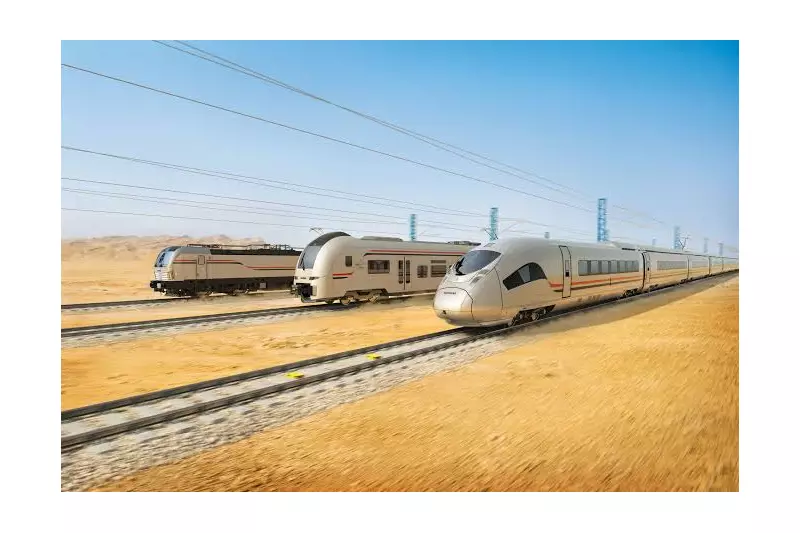
Egypt has embarked on a monumental infrastructure project, with workers now laying tracks in the desert east of Cairo for the nation's first high-speed railway. This ambitious line, dubbed the Green Line, is designed to directly connect the Red Sea with the Mediterranean coast.
A New Suez Canal on Rails
Transport Minister Kamel al-Wazir has described the project as a "new Suez Canal on rails." The 660-kilometre (410-mile) line is slated for completion in 2028 and will dramatically cut travel time, transporting passengers and cargo between the two seas in approximately three hours.
This railway is part of a series of megaprojects championed by President Abdel Fattah El-Sisi's government over the past ten years. It follows major developments like the $58 billion New Administrative Capital, also located east of Cairo.
Contract Details and Broader Network Vision
The project moved forward in 2021 when Egypt signed a $4.5 billion contract with a consortium that includes the German industrial giant Siemens. The Green Line will serve as the first of three planned high-speed routes across the country.
Authorities envision a nearly 2,000-kilometre national network that could eventually carry up to 1.5 million passengers daily. This is a significant upgrade from Egypt's existing, ageing rail network, which, while used by a million people every day, suffers from infrastructure problems linked to nearly 200 accidents last year.
The Green Line's specific route will stretch from Ain Sokhna on the Red Sea to Marsa Matrouh on the Mediterranean. It will pass through two major satellite cities of Cairo: the New Administrative Capital to the east and 6th of October City to the west, which hosts Egypt's sole dry port.
Economic and Urban Planning Impact
Beyond passenger travel, the revamped rail system is expected to have a substantial economic impact. Tarek Goueili, head of the National Authority for Tunnels, stated it would carry 15 million tonnes of cargo annually, equating to about 3% of the Suez Canal's transit volume from the previous year.
Urban planners see the railway as a strategic bet to reshape Egypt's population distribution. Faical Chaabane of the French company Systra, which is building the track, explained that the high-speed line will "ease pressure on Greater Cairo and encourage the emergence of new growth hubs."
At one desert station under construction, workers have erected an imposing geometric ceiling over six open-air tracks. The surrounding New Administrative Capital remains a vast construction site, where government ministry employees currently rely on bus commutes.
However, some on the ground are skeptical about who will ultimately benefit. Mohamed, a construction worker at the station, told AFP, "Nobody will end up living here. We've built this whole project, but it will all serve tourists and cargo." His comment highlights the challenge of developing Egypt's vast deserts, where most of the country's 108 million citizens are densely packed along the Nile River and its delta.
Following the Green Line's inauguration, Egypt plans to launch the Blue Line, tracking the Nile from Cairo to Aswan, and the Red Line, connecting Red Sea resorts like Hurghada inland to the historic city of Luxor.




