
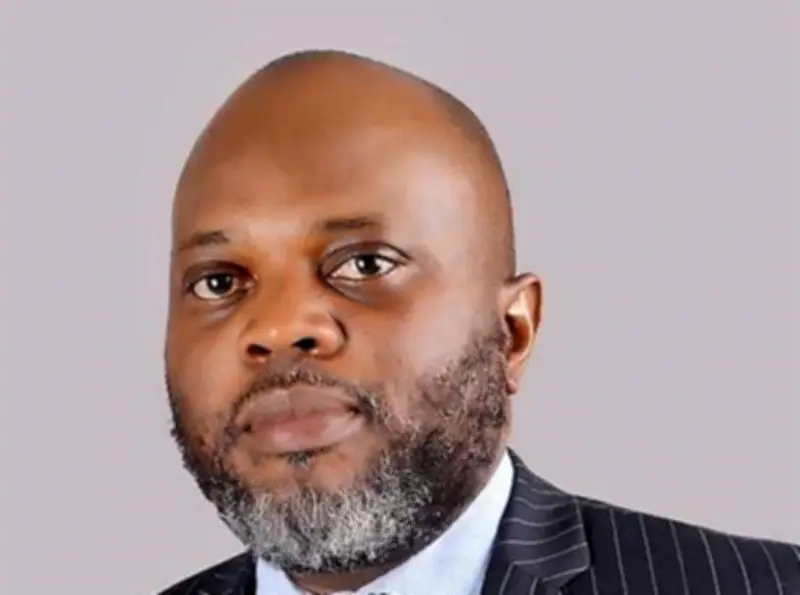
Tope Fasua, Special Adviser to the President on Economic Matters, has urged media personalities and public commentators to reduce toxic pessimism and doom-baiting in their daily interventions, arguing that Nigeria has transformed significantly since 1974 and continues to progress. In a pointed advisory directed at his friend Oseni Rufai, a television anchor, Fasua stressed that platforms with strategic reach should offer direction, encouragement, and hope rather than drama.
Social Media and Negativity Bias
Fasua highlighted that Nigerians spend nearly four hours daily on social media, ranking among the top globally according to the World Economic Forum and AI data. He warned that this penetration makes the population highly impressionable, with purveyors of pessimism currently holding the upper hand. He noted that good news is often considered boring, while bad news sells, and many Nigerians are psychologically wired to seek and spread negative information about their country without interrogation.
He described a tendency toward superlative, nihilistic language, such as declaring Nigeria dead or finished, even among those whose livelihoods depend on the nation. He called for a more balanced narrative that acknowledges progress and contextualizes challenges.
Defending the $1 Trillion GDP Target
Fasua addressed criticism of President Bola Tinubu's ambition to achieve a $1 trillion gross domestic product (GDP) by 2030. He referenced a viral video of Mustapha Chike Obi, former AMCON managing director, doubting the feasibility of the target. Fasua argued that setting ambitious targets drives progress, and even if Nigeria reaches $750 billion or $800 billion by 2030, it would be a remarkable achievement.
He noted that Nigeria's GDP in naira terms is currently close to ₦500 trillion, with the IMF projecting ₦530 trillion by end of 2024 and ₦580 trillion by 2027. Fasua claimed that if exchange rates remained at the Buhari-era rate of ₦490 per dollar, Nigeria's GDP would already be $1.08 trillion. He emphasized that at the local government level, the naira matters more due to purchasing power parity, where a dollar goes ten times further in Nigeria than in the US.
Naira Depreciation and Foreign Reserves
Fasua explained that the naira's depreciation through market forces in 2023 and 2024 eliminated the 70-80 percent arbitrage between official and unofficial rates. He argued that a weaker naira discourages imports and encourages exports, placing the economy on a more solid footing. The Central Bank of Nigeria, he said, is not in a hurry to strengthen the naira to avoid encouraging imports and returning pressure on the currency.
He cited the IMF Article IV report indicating that the naira is now undervalued and should trade at around ₦1,147 per dollar. Foreign reserves, currently at $52 billion, are predicted to reach $58 billion by end of 2026. Fasua suggested that if the naira strengthens to ₦1,000 per dollar, Nigeria's GDP would immediately hit $500 billion, making it the largest in Africa again.
Historical Context and Debt Concerns
Fasua addressed Rufai's emotional reaction to Nigeria's 1974 oil boom when the country lent $240 million to the World Bank and $120 million to the IMF. He explained that Nigeria lacked the intellectual depth to manage the sudden dollar liquidity, leading to mismanagement like the cement armada that choked Apapa ports. He argued that nations have become wiser since then, and Nigeria should focus on learning from best practices.
He reiterated his earlier article stating that Nigeria is not overborrowed but underfinanced, noting that Africa holds only 1.8 percent of global debt. He questioned why the continent carries such a small debt proportion compared to the UK, France, and Australia, and emphasized that Nigeria's debt-to-GDP ratio of 38 percent is lower than many peers like South Africa, Egypt, Kenya, and Brazil.
Call for Constructive Discourse
Fasua urged media personalities to avoid hysteria and instead focus on constructive questions about development, infrastructure financing, and public-private collaboration. He warned that constant negativity damages Nigeria's image, closes doors for businesses, and slows progress. He accused some media outlets of profiting from doom-baiting and suggested they may not genuinely want Nigeria to improve, as that would reduce their revenue. He concluded: "Something must shift."




