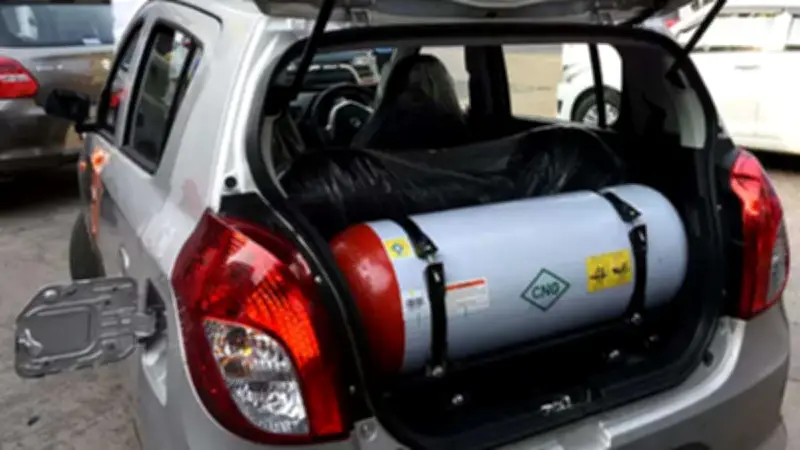
The Federal Government’s pledge to reduce transportation costs by promoting the use of Compressed Natural Gas (CNG) has not materialised, as fares across Nigeria remain elevated, according to a report by Nairametrics.
Since the removal of the petrol subsidy in May 2023, the government has aggressively pushed CNG as a cheaper alternative to petrol. However, over a year later, the expected relief for commuters has not been felt, with many transport operators still charging high rates.
Current Transport Fare Situation
Data from the National Bureau of Statistics (NBS) shows that the average transport fare for bus journeys within cities rose by 0.5% year-on-year in July 2024 to N742.40 per drop. For intercity bus journeys, the average fare increased by 18.5% to N5,219.00 per trip. These figures indicate that the cost of transportation has not dropped significantly, despite the government’s CNG initiative.
In Lagos, for instance, commuters report that bus fares have remained high, with some routes costing N500 to N700 for short distances, compared to N200 before the subsidy removal. The situation is similar in other major cities like Abuja, Port Harcourt, and Kano.
Challenges Hindering CNG Adoption
Several factors have hindered the widespread adoption of CNG, which the government had hoped would drive down fares. One major challenge is the limited availability of CNG conversion kits and refueling stations. According to the Nigerian Midstream and Downstream Petroleum Regulatory Authority (NMDPRA), there are only about 50 CNG refueling stations in the country, compared to thousands of petrol stations.
Additionally, the cost of converting a vehicle to run on CNG ranges from N1 million to N1.5 million, a prohibitive sum for many commercial transport operators. The government has offered incentives, including a 50% subsidy on conversion kits, but uptake has been slow.
“The conversion cost is too high for us. Even with the subsidy, we still have to pay over N500,000, and many of us cannot afford that,” said Usman Bello, a commercial bus driver in Abuja, as quoted by Nairametrics.
Government Response and Next Steps
The Federal Government has acknowledged the challenges and is working to address them. The Presidential CNG Initiative (PCNGI) has stated that it aims to deploy 1,000 CNG refueling stations across the country by 2027. The government has also partnered with private sector players to increase the number of conversion centers.
“We are aware of the challenges, and we are working to ensure that more stations are built and conversion costs are reduced. The target is to make CNG accessible and affordable for all Nigerians,” said Michael Oluwagbemi, Programme Director of PCNGI, according to the report.
Despite these efforts, experts warn that the impact on fares will take time. The high initial investment and the slow rollout of infrastructure mean that immediate relief for commuters is unlikely. In the meantime, transport fares are expected to remain high, as the cost of petrol continues to fluctuate and inflation persists.