Poor Infrastructure Identified as Key Constraint to Intra-African Trade and Integration
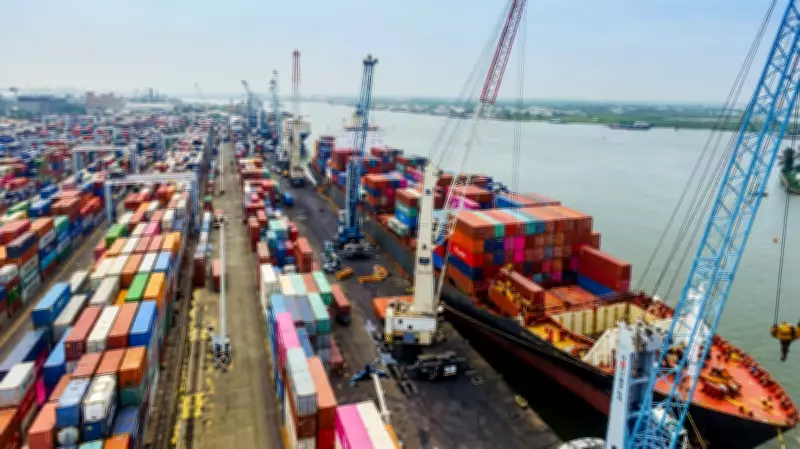
Dilapidated and, in many cases, non-existent infrastructure has been pinpointed as one of the most significant barriers to intra-African trade and regional integration across the continent. According to the African Export Import Bank's (AfreximBank) Regional Integration and Market Access Insights report for April 2026, logistics costs in Africa are substantially higher than global standards, severely hampering economic connectivity.
Logistics Costs in Africa Far Exceed Global Benchmarks
World Bank estimates indicate that logistics costs account for approximately 25 to 30 percent of trade value in Africa. This figure starkly contrasts with eight to 10 percent in Organisation for Economic Co-operation and Development (OECD) economies and 12 to 14 percent in Asia. Despite ongoing recovery initiatives, intra-African trade remains disproportionately low compared to other regions, with external trade still dominating over 80 percent of Africa's total trade activities.
This cost disparity, among other factors, continues to undermine export competitiveness and highlights the critical role of infrastructure in shaping integration outcomes. The report emphasizes that infrastructure effectiveness relies on the seamless movement of goods across interconnected transport, energy, and digital systems.
Shift Towards Corridor-Based Integration Strategies
A defining characteristic of the current period is the transition toward corridor-based integration, where investments are coordinated along strategic trade routes rather than implemented as isolated national projects. This approach is particularly evident in West Africa, where integration efforts are anchored on the Abidjan–Lagos Highway Corridor.
This 1,028-kilometre project links Côte d’Ivoire, Ghana, Togo, Benin, and Nigeria, reaching a key milestone in 2026 with the operationalisation of the Abidjan–Lagos Corridor Management Authority. Progress in multimodal connectivity is reinforcing this role, with freight services along Nigeria’s Lagos–Kano Standard Gauge Railway extending connectivity toward the Niger border. Additionally, digital integration at the Sèmè–Kraké One-Stop Border Post has reduced average truck dwell time from several days to under 12 hours.
These improvements are complemented by energy and logistics interventions, including solar-powered cold-chain systems under the Regional Off-Grid Electricity Access Project. These systems support cross-border trade in perishable goods and strengthen regional value chains, as noted in the report.
Regional Gains in East and Central Africa
Beyond West Africa, similar advancements are being realized in East Africa, where integration is increasingly driven by the transition from fragmented border procedures to fully digitized trade facilitation systems. While East Africa's progress has been largely fueled by digitalization and trade facilitation, Central Africa is undergoing a more structural transformation.
The Economic Community of Central African States (ECCAS) and the Economic and Monetary Community of Central Africa (CEMAC) are shifting from a raw-resource export model toward a transformation-at-source industrial strategy. This shift is supported by targeted market access programs and improvements in infrastructure and institutional capacity.
Central to this transition is the Africa Trade Competitiveness and Market Access Programme (ATCMA), launched in March 2026. This program supports the development of regional value chains in sectors such as wood, cocoa, and cassava. Following a region-wide ban on raw timber exports, investment is increasingly directed toward downstream processing in Gabon and Cameroon. Certification laboratories in Cameroon are enabling producers to obtain European Union-recognized phytosanitary certification locally.
Improvements in transport and energy connectivity are reinforcing this transition. Construction along the Kribi–Bangui–Kisangani corridor has reduced transit times by approximately 25 percent. Regional transmission agreements under the Grand Inga initiative are expected to lower industrial electricity costs by up to 15 percent, further enhancing trade efficiency and integration across Central Africa.