The Lagos State Government has officially unveiled the Lagos State Industrial Policy (LSIP) 2025–2030, which sets an ambitious target of achieving a 10.2% contribution from the manufacturing sector to the state’s real GDP by 2026. The policy was presented at the 59th Annual General Meeting of the Manufacturers’ Association of Nigeria (MAN), Ikeja Branch, held at the Radisson Blu, Ikeja, where the Lagos State Commissioner for Commerce, Cooperatives, Trade and Investment, Folashade Bada Ambrose-Medebem, served as the Special Guest of Honour.
Policy Framework and Strategic Pillars
Ambrose-Medebem, represented by the Director of Commerce, Segun Alogba, described the LSIP as the most consequential industrial framework Lagos has produced in a generation. The policy is structured around six core pillars: strengthening the industrial base, improving the business environment, developing micro, small, and medium-sized enterprises (MSMEs), providing infrastructure, advancing skills, and promoting innovation and sustainability.
The policy translates Federal priorities into state-level actions through clear implementation mechanisms, timelines, and accountability frameworks. According to Ambrose-Medebem, success will depend on implementation rather than the policy document itself. She stressed, “Policies alone do not build factories. Policies alone do not create jobs. What transforms a Policy from paper to prosperity is implementation.” She added, “The LSIP is not a document to be admired from a distance; it is a roadmap to be followed with discipline and determination.”
Delivery Instruments and Support Mechanisms
Several delivery instruments have been outlined under the policy. These include regulatory and administrative reforms to reduce the time required to start, operate, and expand industrial enterprises through one-stop investor facilitation and fast-tracked approvals. The policy also calls for the expansion and optimisation of industrial clusters in Ikeja, Apapa, Ilupeju, and the Lekki Free Zone Manufacturing Corridor.
Financial support will be provided through the Lagos Industrial Development Fund and the LASMECO Partnership with the Bank of Industry, which offers qualifying small businesses single-digit, non-collateralised credit. Additionally, the Lagos State Export Readiness Programme (LASERP) will assist qualified firms in transitioning from informal operations to AfCFTA-grade exports.
Historical Context and Recent Performance
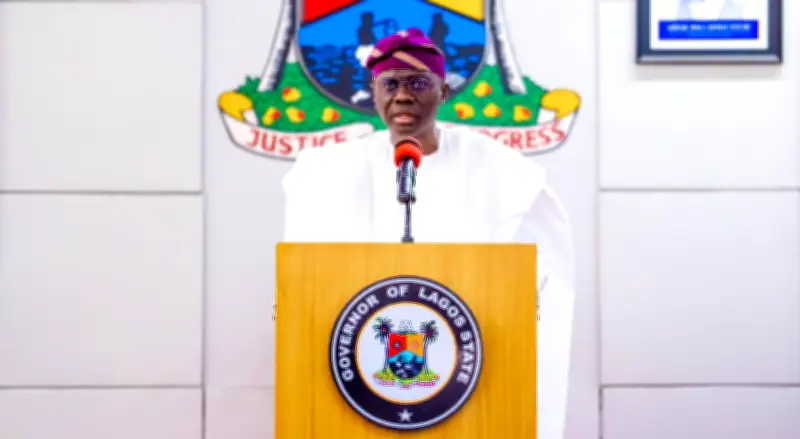
The LSIP was initially launched in April 2025 by Lagos State Governor Babajide Sanwo-Olu as a strategic blueprint to reposition the state’s industrial sector for competitiveness in a rapidly evolving global economy. Sanwo-Olu, represented by the Secretary to the State Government, Bimbola Salu-Hundeyin, said the policy was designed to address structural constraints, unlock new growth opportunities, and drive inclusive economic development across Lagos.
Ambrose-Medebem noted that Nigeria’s manufacturing sector grew by 3.29% year-on-year in Q1 2026, its strongest quarterly performance in four years, with its contribution to real GDP standing at 9.57%. This growth supports MAN’s projection of 3.1% manufacturing growth in 2026, which could push the sector’s contribution to 10.2%.
Manufacturers’ Concerns and Regulatory Response
MAN Ikeja Branch Chairman, Thomas Osobu, welcomed the policy direction but highlighted ongoing challenges constraining manufacturing productivity. He identified policy inconsistency, multiple taxation, foreign exchange volatility, escalating energy costs, and inadequate infrastructure as major obstacles. Osobu called for constructive dialogue between government and manufacturers to ensure consistent implementation of policy reforms, stating that well-conceived and consistently implemented reforms could unlock industrial productivity, stimulate investment, encourage innovation, create quality employment, and position Nigeria as a globally competitive manufacturing hub.
Chief Executive Officer of the Lagos State Electricity Regulatory Commission (LASERC), Temitope George, acknowledged manufacturers’ concerns over electricity tariffs and supply. She reaffirmed LASERC’s commitment to developing a functional, transparent, and well-regulated electricity market, with a goal of ensuring that every Lagos resident has access to reliable electricity at appropriate pricing by 2030.
Alignment with Federal Industrial Policy
The LSIP forms part of broader efforts by the Federal and Lagos State governments to strengthen Nigeria’s industrial base and improve the operating environment for manufacturers. President Bola Ahmed Tinubu officially launched the Nigeria Industrial Policy 2025 in February 2026, with Vice President Kashim Shettima describing it as a strategic roadmap for re-engineering Nigeria’s industrial ecosystem. The Federal policy seeks to deepen value addition and address structural bottlenecks affecting industrial growth.
The implementation of the LSIP will be closely tied to how effectively Lagos addresses the infrastructure, energy, taxation, and regulatory challenges identified by manufacturers. The policy’s success hinges on translating its ambitious targets into tangible outcomes for the state’s industrial sector.