
Tanzania's Maasai Community Confronts Volkswagen Over Carbon Credit Initiative
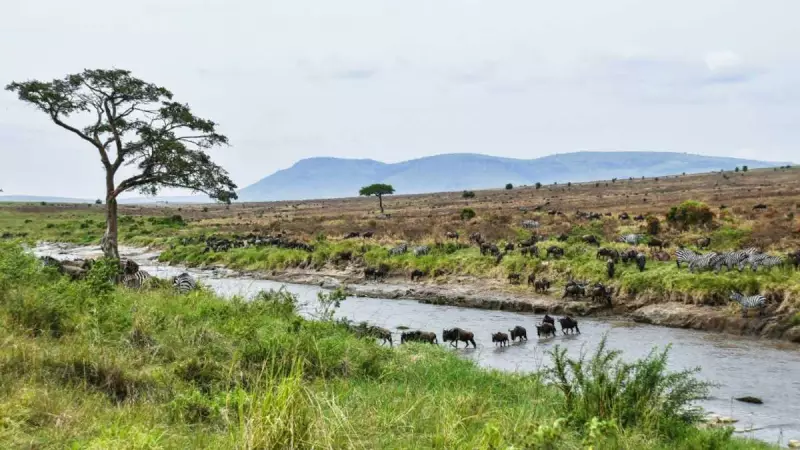
In the vast landscapes of northern Tanzania, the Maasai people are raising serious concerns about a carbon credit program connected to German automaker Volkswagen. The initiative, which critics label as corporate greenwashing, threatens to dismantle centuries of traditional pastoral life.
Namnyak, a 33-year-old Maasai herder and mother of three from Longido district, expresses the community's deep apprehension. Local Maasai have maintained sustainable land management practices for generations, naturally rotating their cattle grazing patterns according to seasonal changes.
The Controversial Carbon Credit Mechanism
The scheme operated by Volkswagen's partner, Soils for the Future Tanzania (SftFTZ), covers an enormous territory of 16,000 square kilometers across Longido and Monduli districts - an area approximately twenty times larger than New York City.
Under this arrangement, Maasai herders receive financial incentives to adhere to a strict rotational grazing schedule, moving their cattle every two weeks. The theory suggests that longer grass growth will capture additional atmospheric carbon, generating carbon credits that Volkswagen can purchase to offset its industrial emissions.
However, many local community members remain deeply suspicious. "It does not matter how much money they give us. We depend on our land for our cattle, our crops and our beekeeping. This is our lives, and the ones of the future generations," Namnyak told journalists.
Greenwashing Allegations and Expert Skepticism
Environmental organizations and researchers have strongly criticized the Volkswagen initiative, questioning both its environmental effectiveness and ethical foundations. A 2023 study by Survival International examining a similar program in neighboring Kenya found the claimed grazing regime "highly implausible" and noted continued vegetation deterioration in project areas.
Joseph Oleshangay, a Maasai lawyer, didn't mince words when characterizing the scheme. "Ultimately, there is nothing done for the land, not even a tree is being planted," he stated, describing the entire operation as a "scam."
The controversy extends beyond Tanzania. In September, Verra - the primary international carbon credit validation body - suspended credits from a major Volkswagen-supported forestry project in Zimbabwe, determining its environmental benefits had been significantly exaggerated.
Community Concerns and Corporate Defense
Despite assurances from SftFTZ and Volkswagen that land seizure isn't part of their agenda, many Maasai remain unconvinced. The organization offers $2 per hectare for communities to sign 40-year contracts, representing substantial sums in local economic terms.
Sherie Gakii, advocacy officer for Greenpeace, articulated the broader concern: "Such projects only existed to let companies like Volkswagen continue polluting and making big profits on the backs of indigenous people trying to protect their ancestral land."
Volkswagen's environmental division, ClimatePartner, maintains that the carbon credits will rely on "scientifically validated measurements" including regular soil sampling to verify increased carbon capture.
Meanwhile, the Maasai International Solidarity Alliance has called for a five-year moratorium on all similar carbon credit schemes pending comprehensive evaluation, questioning whether promised financial benefits will ever materialize for local communities.
As Benja Faecks of Carbon Market Watch emphasized, the fundamental solution lies elsewhere: "Volkswagen should focus on phasing out the internal combustion engine" rather than pursuing offset mechanisms that critics argue primarily serve to legitimize continued pollution.




