
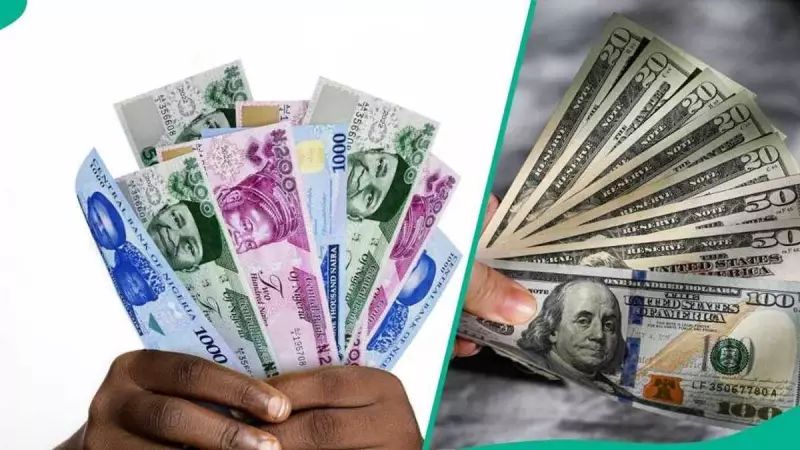
The Nigerian naira extended its positive start to the year by recording a modest gain against the United States dollar in the official market during the past trading week. Data from the Central Bank of Nigeria (CBN) confirms the local currency appreciated against the greenback at the Nigerian Foreign Exchange Market (NFEM).
Weekly Performance and Trading Details
According to the figures, the naira closed at N1,417.95 per US dollar on Friday, January 16, 2026. This represented an improvement from the rate of N1,421.46/$ recorded at the opening of the week on Monday, January 12. The movement translates to a gain of N3.51, or approximately 0.25%, over the five-day trading period.
A detailed look at the daily closings shows the naira's path to weekly appreciation:
- January 12: Closed at N1,425/$
- January 13: Firmed to N1,420.25/$
- January 14: Strengthened further to N1,419.50/$
- January 15: Settled at N1,420/$
- January 16: Ended the week at its strongest point of N1,417.95/$
Market analysts pointed to increased dollar supply and steadier liquidity as the primary drivers behind the naira's performance. Inflows from exporters, importers, and non-bank corporations helped boost market depth, even in the absence of visible intervention from the Central Bank of Nigeria.
Analyst Insight and Cautious Optimism
Financial market analyst, Chukmeke Alozie, provided context for the currency's movement. He stated that the naira continues to be supported by ongoing reforms in the foreign exchange market. "The narrowing gap between the highest and lowest rates indicates reduced speculative pressure and better price discovery," Alozie noted.
However, he issued a note of caution, emphasizing that the naira's recovery remains fragile. Its sustainability is heavily dependent on continued foreign currency inflows, particularly from oil exports and portfolio investments. Alozie warned that import demand and seasonal pressures in the coming weeks could test the currency's resilience.
Parallel Market and External Reserves Movement
The positive sentiment was mirrored in the unofficial parallel market, where traders reported a similar trend. Bureau de Change operators indicated that the dollar rate fell by about N5 during the week, moving from around N1,485/$ at the start of the week to approximately N1,480/$ by Friday.
In a related development, Nigeria's external reserves have seen a recent decline. CBN data shows reserves dropped to $45.32 billion on December 15, 2025, from $45.47 billion previously. The decrease continued, falling to $45.27 billion before a further reduction of $57.05 million brought the reserves to $45.21 billion as of December 17, 2025. This lowered the year-to-date gain to 10.60%.
The naira also showed varied performance against other major global currencies at the official market's close on January 16:
- Pounds Sterling: N1,901.33
- Euro: N1,647.51
- Swiss Franc: N1,768.68
- Yuan / Renminbi: N203.42
- South African Rand: N86.41
While the weekly appreciation is a welcome development for the Nigerian economy, market watchers agree that maintaining this trajectory requires consistent policy measures and robust inflows of foreign exchange to stabilize the market in the long term.




