Naira Falls in Parallel Market as Official Rate Holds Steady
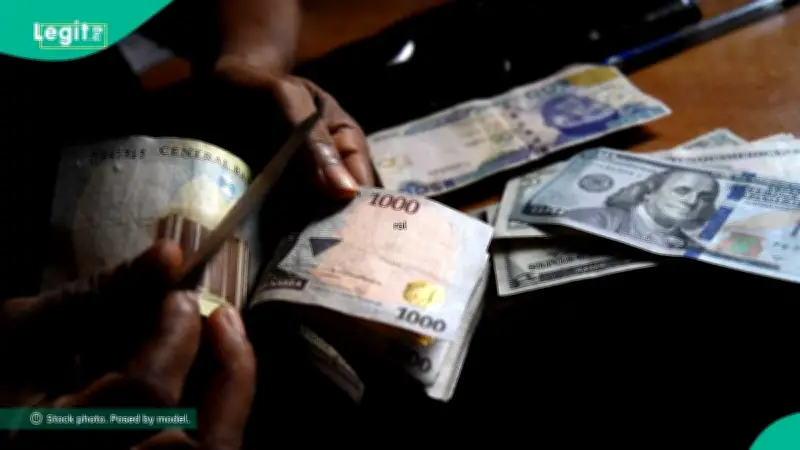
The naira closed at N1,378.43 per dollar at the official Nigerian Foreign Exchange Market (NFEM) on Thursday, July 9, 2026, gaining a marginal 64 kobo (0.05%) from the previous session's N1,379.07. However, the parallel market told a different story, with the currency trading at N1,425 per dollar, marking a premium of about N46 over the official rate. This divergence reverses the near-convergence achieved earlier in 2026 when the naira briefly traded around N1,370 per dollar in February.
Data from the Central Bank of Nigeria (CBN) revealed a steep drop in interbank foreign exchange turnover, which fell by over 62% to $78.71 million, down from $208.09 million the day before. Completed transactions also declined from 150 to 106, signaling limited appetite and no fresh CBN intervention in the market.
Seasonal Dollar Demand Drives Depreciation
Analysts attributed the renewed pressure on the naira to seasonal factors. As summer begins, demand for dollars spikes among Nigerians financing overseas education, holidays, medical treatment, and business travel. This temporary surge places significant strain on supply, even as Nigeria's external reserves remain strong at above $51 billion.
“The level of external reserves provides firepower rather than a guarantee,” analysts noted. The CBN's apparent decision to hold back intervention has left the market to clear at weaker rates, exposing the gap between official and street-level reality.
Beyond the official and parallel markets, the naira also softened against other major currencies. GTBank's FX desk quoted the currency at N1,385 to the dollar, while the naira settled at N1,846.82 per pound sterling and N1,576.10 per euro. The CBN's published rates placed the Saudi Riyal at N367.16, the UAE Dirham at N375.31, the Chinese Yuan at N202.83, and the South African Rand at N84.19.
Analysts Warn of Continued Pressure
Looking ahead, analysts said sustained exchange rate stability will hinge on a reliable flow of foreign currency from oil export revenues, diaspora remittances, and foreign portfolio investments, combined with continued confidence in Nigeria's ongoing foreign exchange reforms. Without a meaningful pickup in dollar supply to counter the seasonal demand spike, the naira is expected to remain under pressure in the weeks ahead, regardless of the country's strong reserve position.
The parallel market rate represents a roughly 3.9% depreciation from the February levels, reversing months of stability. The widening gap between official and parallel rates highlights the persistent challenges in Nigeria's foreign exchange market, even as the CBN maintains a steady official rate.
Tanzania Bans Use of Dollar for Domestic Payments
In a related development, the Bank of Tanzania prohibited the use of foreign currencies, including the US dollar, for domestic payments and transactions across the country. Under the new directive, businesses and individuals are required to quote prices and complete payments exclusively in Tanzanian shillings for goods and services offered within Tanzania. The central bank, through its governor Emmanuel M. Tutuba, said the policy aims to reinforce the use of the national currency while noting that a limited number of foreign currency transactions remain permissible under the revised regulations.