
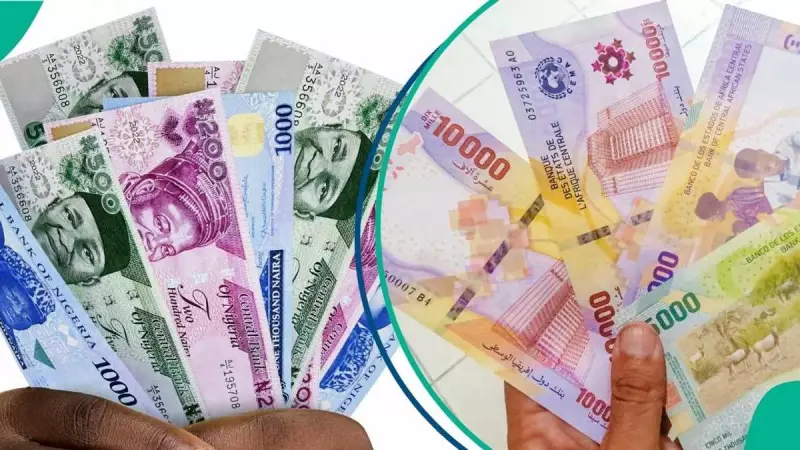
The year 2025 delivered a harsh lesson in economic vulnerability for several African nations, as their currencies suffered dramatic declines against the US dollar. A new end-of-year ranking has spotlighted the continent's weakest performing currencies, revealing a familiar pattern of structural fragility, political instability, and over-reliance on single exports.
South Sudan and Ethiopia Lead the Currency Collapse
The South Sudanese pound and the Ethiopian birr emerged as Africa's worst-performing currencies in 2025, according to World Bank analysis. Each currency lost more than 10 percent of its value against the US dollar over the course of the year. For Ethiopia, the decline was particularly severe, with the birr shedding over 15 percent of its value, earning it the dubious distinction of becoming the world's third-weakest currency, trailing only the Argentine peso and Turkish lira.
These collapses were not mere market fluctuations. They were symptoms of deep-seated economic crises. In South Sudan, an economy where over 90 percent of foreign-exchange earnings come from crude oil exports was brought to its knees. Fighting in neighbouring Sudan critically damaged the vital oil pipeline to Port Sudan, choking off the country's primary source of hard currency almost overnight.
The Devastating Real-World Impact of a Falling Currency
The consequences of such a currency crash extend far beyond forex markets. In South Sudan, the plummeting pound supercharged an inflation crisis. Data from Finance in Africa shows inflation skyrocketed from a modest 2.4 percent in 2023 to a staggering 107.9 percent by September 2025. This hyperinflation erodes salaries, devastates household purchasing power, and pushes basic necessities out of reach for ordinary citizens.
In Ethiopia, the birr's weakness was fueled by a toxic mix of acute dollar shortages, persistently high inflation, and the complexities of a sovereign debt restructuring. This environment shattered investor confidence, creating a vicious cycle where anxiety further weakened the currency, making economic stabilization even more difficult.
Why the Nigerian Naira Was Notably Absent
Amid this turmoil, one notable absence from the list of the ten weakest currencies was the Nigerian naira. This is despite the naira's own well-documented struggles throughout 2025. The Nigerian currency closed the year trading at ₦1,445.68 per US dollar on December 30, a position that reflects significant pressure, yet not enough to place it among the very worst performers.
This relative positioning occurred even as the Central Bank of Nigeria (CBN) reported a robust accretion of external reserves, which hit a seven-year high. The divergence between reserve growth and currency performance underscores that currency strength is a multifaceted issue, influenced by more than just central bank reserves or interventions.
Currency volatility remains one of the biggest deterrents to investment across Africa. For international investors, sudden exchange-rate losses can obliterate projected returns in a short period. For local businesses, planning becomes a nightmare when import costs swing wildly due to an unstable currency, making long-term investment and growth nearly impossible.
The list of Africa's weakest currencies in 2025, compiled using the Forbes currency calculator, paints a clear picture: economies lacking diversification, battling high inflation, and grappling with political or fiscal instability are the most exposed when global or regional shocks occur. As Africa moves into 2026, the lesson from the year's currency crises is unequivocal. A strong currency is not merely a product of monetary policy; it is a direct reflection of deeper economic resilience, strategic diversification, and overall national stability.




