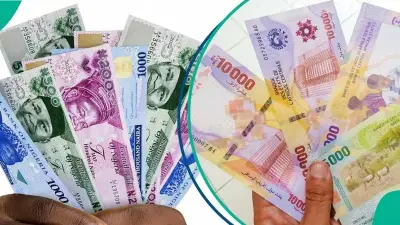
The naira has appreciated against the euro in Nigeria's official foreign exchange market, with the European currency dropping below the N1,500 threshold for the first time since April 2024. Data from the Central Bank of Nigeria (CBN) shows the naira closed at N1,497 per euro, reflecting improved local currency value as the euro weakened against the US dollar globally.
Official Exchange Rates for Dollar, Euro, and Pound
According to the latest available CBN exchange-rate data reported by market sources, the naira traded at approximately N1,329.16 per US dollar, N1,510.06 per euro, and N1,766.59 per British pound on October 2, 2026. These figures provide a snapshot of the naira's performance against the three major international currencies ahead of the next official trading update.
- US dollar ($1): N1,329.16
- Euro (€1): N1,510.06
- British pound (£1): N1,766.59
The dollar has remained relatively stable around the N1,330 level in the official market, while the pound continues to command a higher value than both the dollar and the euro. Rates are in naira per unit of foreign currency and may change with subsequent trading.
Why the Naira Is Gaining Against the Euro
The naira's improvement against the euro is partly linked to movements in the international foreign exchange market. Because the naira's value against the euro is influenced by the dollar's performance, a weakening euro against the US currency can translate into a stronger naira against the European currency, even when the dollar-naira exchange rate remains relatively stable.
The euro's decline from levels above N1,680 in late 2025 to around N1,500 in early October 2026 highlights the scale of the movement. Nigeria's foreign exchange reforms, tighter monetary policy, and improved transparency in the official market have also helped support currency stability by improving access to foreign exchange and limiting speculative activity.
Factors Supporting Naira Stability and Outlook
The naira's relative stability against the dollar in the official market is supported by foreign exchange market reforms, improved liquidity, and Nigeria's external earnings. The naira's outlook will continue to depend on foreign exchange inflows, global currency movements, oil earnings, and the Central Bank of Nigeria's monetary policy.
For Nigerians making international payments, the official rates provide a useful benchmark. However, the actual amount charged by banks and other authorised dealers may differ because of transaction fees and the rates applicable when a payment is processed.