
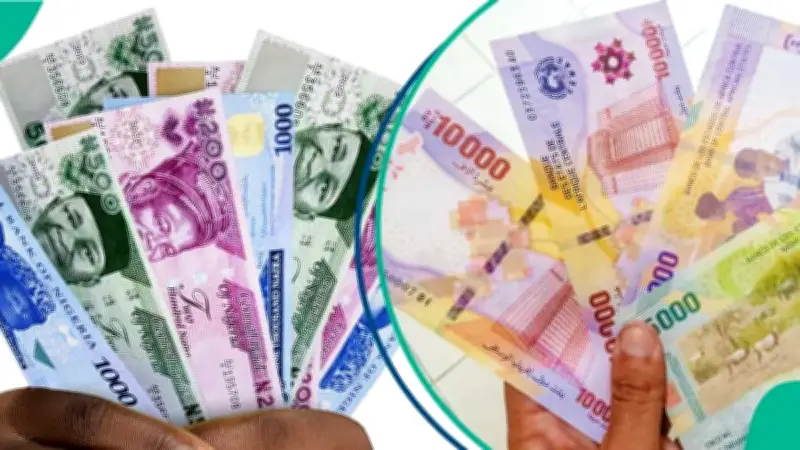
The latest Forbes ranking of Africa's strongest currencies for July 2026 underscores a stark reality for Nigeria: the naira's modest recovery is still not enough to crack the top ten. While the local currency appreciated slightly against the US dollar, it failed to secure a spot on the list compiled using the Forbes Currency Converter, leaving policy experts and investors to question when the naira will regain sustained strength.
Why Currency Strength Matters for Economic Stability
A stable and strong currency is widely regarded as a fundamental indicator of economic resilience. It helps curb inflation, reduces the cost of imports, attracts foreign investment, and protects consumers—particularly low-income households—from sharp price swings on essential goods and services. Countries with robust currencies spend less in local terms when purchasing fuel, machinery, pharmaceuticals, and industrial equipment, which in turn lowers production costs and eases the overall inflationary burden.
Currency stability also plays a pivotal role in attracting foreign direct investment (FDI). Investors are naturally drawn to economies where exchange rate risks are minimal, allowing them to preserve the value of their returns when converting profits into foreign currencies. According to market analysts, nations with strong export earnings, healthy foreign exchange reserves, and prudent monetary policies are better positioned to maintain currency stability, even in the face of global economic uncertainty.
Forbes Names Africa's 10 Strongest Currencies for July 2026
According to the Forbes Currency Converter, the ten strongest African currencies against the US dollar in July 2026 are:
- Tunisian Dinar (TND) – Tunisia
- Libyan Dinar (LYD) – Libya
- Moroccan Dirham (MAD) – Morocco
- Ghanaian Cedi (GHS) – Ghana
- Seychellois Rupee (SCR) – Seychelles
- Botswanan Pula (BWP) – Botswana
- Eritrean Nakfa (ERN) – Eritrea
- South African Rand (ZAR) – South Africa
- Swazi Lilangeni (SZL) – Eswatini
- Namibian Dollar (NAD) – Namibia
The ranking comes as several African economies continue to battle exchange-rate volatility driven by elevated global oil prices, persistent demand for the US dollar, and external financial pressures, as reported by Business Insider Africa. Notably, Ghana's cedi made the list despite projected pressure, while the naira remained absent despite its positive monthly performance.
Kenya and Zambia Show Signs of Resilience
A recent Reuters survey of foreign exchange traders indicated that several African currencies, including Nigeria's naira, Ghana's cedi, and Uganda's shilling, could face renewed pressure in the coming weeks. However, Kenya's shilling is expected to remain relatively stable, supported by strong diaspora remittances. Zambia's kwacha, meanwhile, continues to benefit from robust copper exports—the country's largest foreign exchange earner.
These examples highlight how diversified export revenues and consistent foreign exchange inflows can strengthen national currencies. They also offer a benchmark for Nigeria as it seeks to reduce its over-reliance on oil proceeds and broaden its export base to shore up the naira.
Naira's Modest Gain in July 2026
Although it missed the Forbes ranking, Nigeria's naira finished July with a modest gain in the official foreign exchange market. Data released by the Central Bank of Nigeria (CBN) showed that the local currency appreciated by N4.19 against the US dollar during the month, closing at N1,368.22/$1 on the final trading day. This represented a 0.3% improvement from N1,372.41/$1 at the beginning of July.
Despite the monthly gain, the currency weakened slightly every week, losing N6.13 compared with the previous week's official exchange rate. In the parallel market, commonly known as the black market, the naira depreciated by N7 during July to close at N1,415/$1, widening the gap between the official and unofficial markets to 3.45%.
Trading Turnover Rises as Deals Decline
Trading activity in Nigeria's interbank foreign exchange market improved significantly in July. Total turnover surged by 26.97% month-on-month to $3.39 billion, up from $2.67 billion in June, according to CBN data. Interestingly, the number of completed deals declined during the period, suggesting that fewer, larger transactions dominated the market.
This increase in turnover indicates a degree of market confidence, but the widening parallel-market gap remains a concern. Sustained reforms, stronger foreign exchange inflows, and a more transparent pricing mechanism will be critical to narrowing that gap and ultimately earning the naira a place on Forbes' list in future months.
What This Means for Nigeria's Economy
The naira's exclusion from Forbes' strongest currencies list does not come as a surprise to many analysts, given the persistent structural challenges facing the Nigerian economy. However, the modest monthly gain in the official market and rising interbank turnover signal that the CBN's interventions may be having a gradual effect.
For ordinary Nigerians, currency stability directly affects the cost of living, especially for imported goods and services. A stronger naira would help tame inflation, reduce pressure on household budgets, and attract the kind of long-term investment that creates jobs and drives growth. Until then, the naira's absence from the Forbes ranking serves as a reminder of the work still needed to build a truly resilient economy.




