
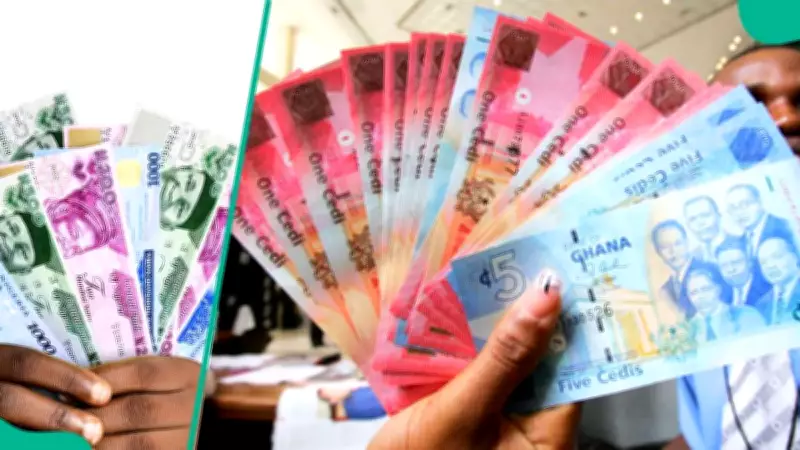
Currency traders across West Africa are projecting divergent paths for Nigeria's naira and Ghana's cedi in May 2026. The naira is expected to record further gains against the U.S. dollar, while the cedi could remain under pressure due to rising foreign exchange demand.
Naira Extends Rally on Improved Dollar Supply
The Nigerian naira has continued its recent recovery at the official foreign exchange market, supported by stronger FX liquidity and attractive yields that are drawing foreign portfolio investors. As of May 7, 2026, the naira was quoted at N1,356 per U.S. dollar on the official market, an improvement from N1,374 recorded a week earlier. At the parallel market, the naira exchanged at around N1,404 per dollar, reflecting a narrower spread compared to previous weeks.
Traders believe the local currency may continue its upward movement if the current level of dollar inflows is sustained. "We may see a further rally," one market trader said. According to the trader, Nigeria's high-yield environment remains attractive to foreign investors seeking better returns, which is expected to support additional FX inflows into the economy. "Yields are still attractive for foreign investors, so we should still see more FX flows coming to Nigeria," the trader added.
Ghana's Cedi Expected to Stay Weak
While Nigeria's outlook appears positive, Ghana's cedi is facing renewed pressure and is expected to weaken further against the dollar in the short term. According to LSEG data, the cedi traded at 11.24 to the dollar, slightly weaker than the 11.19 recorded a week earlier. Financial experts say the weakening trend is driven by heavy foreign currency demand from major corporate players, especially energy firms and manufacturers that rely on imports and dollar-denominated obligations.
"The cedi is likely to remain on the back foot against the dollar," a trader said. Despite increased foreign exchange allocations through recent central bank auctions, analysts say demand continues to outpace supply. Backlogs of unmet demand are reportedly persisting, particularly from the energy sector, where rising global crude oil prices are increasing pressure on import costs.
Energy Sector Remains a Major Pressure Point
Another trader noted that Ghana's local currency could continue to face short-term headwinds as FX liquidity remains tight and the market struggles to clear outstanding demand from central bank interventions. The energy sector remains the biggest source of pressure, with firms aggressively seeking dollars to meet international payment obligations. Manufacturing companies are also contributing to demand, making it difficult for the cedi to find support despite central bank efforts.
Regional Outlook Remains Mixed
The latest outlook highlights a growing divergence between two of West Africa's major currencies. While Nigeria's naira is benefiting from stronger investor confidence and improved dollar supply, Ghana's cedi is battling persistent FX shortages and corporate demand pressures. For businesses, importers, and investors across the region, the coming weeks could prove critical in determining whether the naira can sustain its gains and whether Ghana's cedi can avoid deeper depreciation against the U.S. dollar.




