Nigeria's Economic Vulnerability in a Shifting World Order: A Call for Strategic Reform
In the context of global conflicts and evolving economic dynamics, Nigeria faces critical challenges that threaten its position on the world stage. The nation's inability to harness its potential in key sectors like steel production and energy has left it dependent on foreign imports, undermining its sovereignty and economic growth.
The Steel Industry: A Missed Opportunity for Self-Sufficiency
Nigeria should be competing with economic giants like China and India in steel manufacturing, yet the neglect of the Ajaokuta Steel Complex has rendered this ambition unfulfilled. Steel remains a fundamental material for modern warfare and industrial applications, used in everything from missiles and guns to warships and railways. The recent Nigeria-UK deal, valued at 746 million pounds ($902 million), for steel supply is a stark indictment of governmental failure. Instead of revitalizing domestic production, this agreement bolsters the struggling British steel industry, creating jobs abroad while further crippling Nigeria's own sector. In contrast, India's strategic investments enabled Tata Steel to acquire Britain's Corus in a 6.2 billion pounds deal in 2007, showcasing the benefits of foresight and capacity building.
Energy Sector: Weaknesses and Untapped Potential
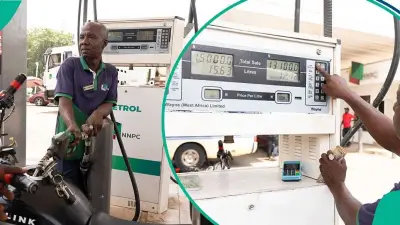
Nigeria's role in global energy supply is not only weak but operates below capacity. Despite being a major oil producer, the country ships crude abroad for refinement, only to repurchase it as finished products, with the Dangote Refinery's 650,000 barrels per day (bpd) offering a rare exception. Corruption and poor leadership have left the three state-owned refineries moribund. With past petroleum earnings, Nigeria should be refining at least 1.5 million bpd locally, but this goal remains unmet. Beyond oil and gas, the nation struggles in the broader energy sphere. For a population of 240 million, Nigeria generates only about 4,000 megawatts from the national grid, far short of the 100,000 megawatts needed for industrial and residential demands. Although installed solar capacity reached 803 MW by 2025, untapped potential could yield up to 210 gigawatts if just one percent of suitable land is utilized. To position itself properly, Nigeria must overhaul its energy policies, developing a roadmap to ensure sustainable generation and supply to power industries and homes.
Youth Unemployment and ICT Skills: A Wasted Resource
Nigeria boasts a vibrant youth population, with 70 percent under 30 years old, yet as of December 17, 2025, Action Aid Nigeria reported nearly 80 million young Nigerians unemployed, accounting for about 53 percent of youths. This is despite labor being a critical factor of production. No political-economic principle can drive national growth without an actively employed population engaged in goods and services. Investment in youth, particularly in ICT skills, is essential. Sadly, UNICEF and the Nigeria Bureau of Statistics agree that only about seven percent of Nigerian youths possess basic ICT skills, with many wasting time on unproductive social media activities. By channeling youthful energies into areas like FinTech, robotics, artificial intelligence, and drone technology, Nigeria could unlock immense economic gains.
Geopolitical Realities and the Need for Economic-Driven Policies
In an era marked by destructive wars often fueled by religious sentiments, Nigeria must reduce religious engagements and elevate secularism. Policies should be economically driven, with deliberate efforts to eliminate insurgents and dangerous ideologues. Global conflicts, such as America's economic interests in the Middle East or Russia's war in Ukraine aimed at controlling critical minerals, highlight that economic motives often underlie geopolitical actions. Iran's use of religious cover to intimidate Middle Eastern nations for economic control further illustrates this point. Nigeria must make well-thought-out political and economic decisions to safeguard its domestic stability and international influence.
Accountability and Debt Management: A Call for Transparency
Nigeria's meager resources continue to be mismanaged, with opaque borrowing practices exacerbating the crisis. On March 31, 2026, the Senate approved a $6.9 billion loan request from President Tinubu within four hours, without debate, raising public debt to over N152 trillion (approximately $94 billion). This represents a 65 percent increase under the current regime, questioning the accountability of savings from fuel subsidy removal. As the world edges toward potential major conflicts, Nigeria must urgently consolidate all economic facets and assert control over its politics both at home and globally.
War, as a continuation of politics by other means, underscores the importance of Harold Lasswell's thesis on politics as "who gets what, when, how." Nigeria must deftly navigate the "how" to secure a place in the unfolding global political economy and protect itself from internal and external threats. Strategic reforms in steel, energy, youth employment, and policy-making are not just advisable but imperative for national survival and prosperity.