
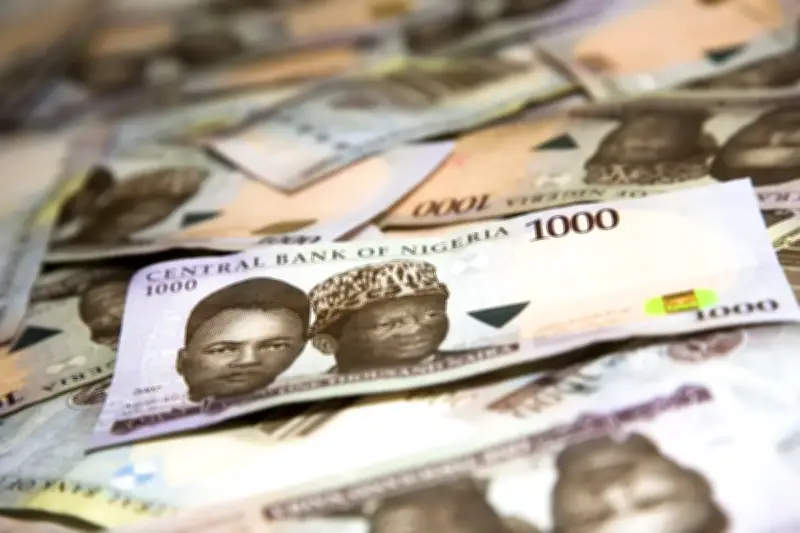
Nigeria's money supply jumped to N133.25 trillion in June 2026, according to the latest data from the Central Bank of Nigeria (CBN), despite the Monetary Policy Committee (MPC) holding the benchmark interest rate at 26.5%. This represents a significant increase from the previous month's figure of N128.4 trillion, highlighting ongoing liquidity expansion in the economy.
Money Supply Components Drive Growth
The broad money supply, known as M2, expanded by 3.8% month-on-month, driven largely by increases in narrow money (M1) and quasi-money. Narrow money, which includes currency in circulation and demand deposits, rose to N45.6 trillion from N44.2 trillion in May. Quasi-money—comprising savings and time deposits—grew to N87.65 trillion from N84.2 trillion over the same period.
Currency in circulation outside banks also increased, reaching N4.2 trillion, up from N4.0 trillion in May. Demand deposits climbed to N41.4 trillion, reflecting higher transactional balances held by individuals and businesses.
Interest Rate Stance Fails to Curb Liquidity
The MPC has maintained the Monetary Policy Rate (MPR) at 26.5% since July 2025, aiming to rein in inflation and tighten monetary conditions. However, the persistent growth in money supply suggests that the high interest rate has not been fully effective in absorbing excess liquidity from the banking system. Analysts attribute this to factors such as fiscal spending, foreign exchange inflows, and lending activities by commercial banks.
“Despite the hawkish posture of the CBN, money supply continues to expand due to structural factors, including government expenditure and a recovering credit market,” said Dr. Aliyu Musa, an economist at the University of Lagos. “The high interest rate may be constraining private sector credit growth, but overall liquidity remains elevated.”
Implications for Inflation and Economic Growth
The sustained increase in money supply poses challenges for inflation management. Nigeria's headline inflation stood at 24.8% in June 2026, down slightly from 25.1% in May, but still well above the CBN's target range of 6%–9%. The expansion in money supply could fuel demand-pull inflation, potentially eroding the gains from the MPC's tight monetary policy.
On the other hand, the growth in quasi-money indicates that savers are parking funds in interest-bearing deposits, attracted by the high yield environment. Time deposits, a key component of quasi-money, rose to N52.3 trillion in June, up from N50.1 trillion in May, reflecting a preference for savings over consumption.
Credit to Private Sector Expands
Credit to the private sector also increased, rising to N95.6 trillion in June from N93.2 trillion in May, according to CBN data. This suggests that banks are gradually extending more loans despite the high interest rate, possibly driven by demand from sectors such as agriculture, manufacturing, and services.
Net foreign assets held by the banking system improved, climbing to N45.2 trillion from N43.8 trillion, supported by inflows from oil exports and diaspora remittances. Net domestic assets, which include credit to government and the private sector, expanded to N88.05 trillion from N84.6 trillion.
Outlook and Policy Response
Economists expect the MPC to maintain its tight stance at its next meeting in September 2026, as the committee seeks to anchor inflation expectations. However, the continued rise in money supply may prompt the CBN to consider additional measures, such as raising the Cash Reserve Ratio (CRR) or mopping up liquidity through Open Market Operations (OMOs).
“The CBN faces a delicate balancing act: curbing inflation without stifling growth,” said financial analyst Funmi Ogunlade. “If money supply continues to grow at this pace, we may see further tightening, which could slow down economic recovery.”
Nigeria's economy grew by 3.2% in the first quarter of 2026, driven by the non-oil sector. The government has projected a growth rate of 3.5% for the full year, but persistent liquidity and high inflation remain key risks.




