
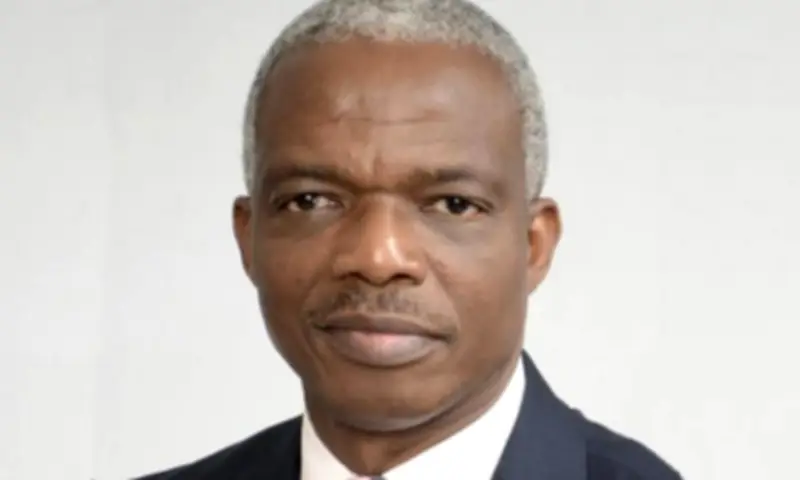
Nigeria's wealth inequality has reached alarming levels, with the top 1% of the population now controlling 44% of the country's total wealth, according to Professor Doyin Salami, former Chief Economic Adviser to President Muhammadu Buhari. Speaking at a recent economic forum in Lagos, Salami highlighted the stark disparity, warning that such concentration threatens social stability and inclusive growth.
Details of the Wealth Distribution
Salami cited data from the World Inequality Report and the National Bureau of Statistics, showing that the richest 10% of Nigerians hold over 70% of the nation's assets, while the bottom 50% own less than 5%. He noted that the situation has worsened over the past decade, driven by factors such as uneven access to education, land, capital, and opportunities. The former adviser emphasized that the COVID-19 pandemic exacerbated the gap, as the wealthy recovered faster while the poor faced job losses and inflation.
According to Salami, the wealth concentration is not just a moral issue but an economic one. High inequality dampens consumer demand, reduces social mobility, and fuels corruption. He argued that without deliberate policies, the trend will continue, undermining democratic institutions and fueling unrest.
Impact on Society and Economy
The professor pointed out that Nigeria's Gini coefficient, a measure of inequality, has risen from 0.35 in 2000 to an estimated 0.50 in 2025, placing it among the most unequal countries globally. He contrasted this with countries like South Africa and Brazil, which have higher inequality but stronger social safety nets. Nigeria's lack of effective redistribution mechanisms leaves the poor vulnerable to shocks.
Specifically, Salami noted that the top 1% control assets worth over $100 billion, while over 40% of Nigerians live below the poverty line. The wealthiest individuals often invest in real estate, stocks, and foreign assets, while the majority lack access to basic services. This dual economy stifles entrepreneurship and innovation, as talent is wasted due to lack of opportunities.
Call for Policy Reforms
To address the imbalance, Salami recommended progressive taxation, improved public spending on education and healthcare, and stronger enforcement of antitrust laws. He also advocated for land reform to give the poor access to productive assets. "We must break the cycle of privilege and build a society where hard work pays off for everyone, not just the connected few," he stated.
The former adviser urged the government to publish wealth data regularly and create a national wealth fund to invest in infrastructure and social programs. He also called for transparency in natural resource revenues, which often benefit elites. Without such measures, Nigeria risks perpetual poverty for the majority and instability for all.
Reactions and Broader Context
Economists have echoed Salami's concerns. The Nigerian Economic Summit Group (NESG) recently noted that inequality is a major barrier to achieving the Sustainable Development Goals. Meanwhile, civil society groups have called for a living wage and tax reforms. The debate comes amid growing discontent over economic hardship, with protests over fuel subsidy removal and inflation.
In his concluding remarks, Salami warned that unless the government takes bold action, the top 1% may soon control half of the nation's wealth. He called for a national conversation on inequality and a commitment to inclusive growth. The full text of his speech is available on the Nairametrics website.




