As an ordinary citizen, I share the natural optimism that defines many Nigerians, always hoping for a better tomorrow despite frequent setbacks. Hope is part of our national character; we endure disappointments yet continue to believe in renewal. However, optimism must not replace reality; it must be tested against evidence, performance, and outcomes. From that perspective, I reflect on the future of the Nigerian National Petroleum Company Limited (NNPC Ltd) and its significance for Nigeria.
The Strategic Importance of NNPC Ltd
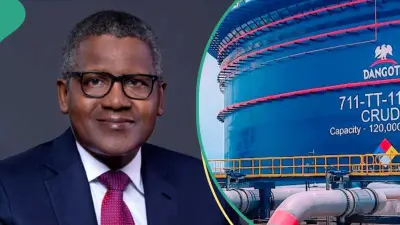
Few institutions are as vital to the Nigerian state as NNPC Ltd. Recent developments highlight how strategic energy institutions can be when properly conceived and executed. The emergence of the Dangote Refinery, despite its challenges and controversies, has already altered Nigeria's energy calculus. Amid global supply disruptions, volatile geopolitics, and constrained refining capacity, a large integrated domestic refinery has begun reducing Nigeria's exposure to external shocks, easing foreign exchange pressure, and improving fuel availability. Its impact, even at partial operations, demonstrates what competent capital mobilisation and clarity of purpose can achieve for national energy security. It also reminds us that institutional performance, not intent, ultimately reshapes outcomes.
Governance Contradictions
NNPC Ltd sits at the centre of public finance, foreign exchange earnings, energy security, and investor confidence. For decades, petroleum revenues have sustained federal and state budgets, financed imports, and provided fiscal oxygen. Agriculture no longer carries the economy as before; manufacturing remains weak, and non-oil exports are too small. Nigeria remains heavily dependent on hydrocarbons. Thus, the future of NNPC Ltd is inseparable from Nigeria's future.
When the current leadership team, led by Group Chief Executive Officer Bayo Ojulari and board chairman Musa Ahmadu-Kida, assumed office, many expected a decisive break from the past. The hope was that a commercially run company, backed by the Petroleum Industry Act, would emerge from bureaucracy, opacity, and political patronage. I shared that hope. However, after observing developments over the past year, I have become more cautious. The issue is not personalities but structure. Nigeria has attempted to create a modern national energy company while preserving an old political control model—a contradiction at the heart of NNPC Ltd's difficulties.
In theory, NNPC Ltd belongs to Nigerians; in practice, ownership is exercised indirectly through the state. Effective governing authority rests largely with the presidency, which appoints ministers, directors, and senior executives. This results in layered ownership, centralised power, and diffused accountability. Such a model rarely produces transformational institutions. Boards struggle to exercise independent authority when ultimate political power lies elsewhere. Management teams are constrained by political calculations, competing interests, and administrative caution. Commercial logic often yields to state expediency. Decisions that should take weeks take months; problems that should be solved commercially become prolonged disputes. No serious company can thrive under those conditions.
Operational Weaknesses
This explains why many operational weaknesses associated with the old NNPC remain visible in the new NNPC Ltd. Joint ventures are less effective than they should be. Technical and financial service agreements are not always managed with sufficient urgency. Asset optimisation remains slow. Internal coordination appears weak, and cost discipline is uneven. A culture of delay competes with the need for delivery. The greatest tragedy is that Nigeria suffers from underperformance, not lack of resources. Several producing assets illustrate this failure: OML18, OML24, OML42, OML123, and OML124 are often cited as assets whose potential has not been fully realised, constrained by evacuation challenges, unresolved commercial disputes, infrastructure limitations, or management bottlenecks. These are governance failures, not geological ones. An oil-producing nation with Nigeria's reserves should not struggle to maximise already discovered assets. Such matters should be resolved through competent negotiation, decisive leadership, and disciplined execution. Instead, opportunities are delayed while national needs grow.
The economic cost is immense. Every barrel not produced is lost revenue; every gas molecule not commercialised is lost industrial power; every delayed investment decision weakens confidence; every unresolved dispute signals risk to international capital. Investors do not wait indefinitely. Capital flows to jurisdictions with clear rules, predictable governance, and credible execution. Nigeria competes for investment not only with Angola and Guyana but also with the US shale sector, the Middle East, and emerging African producers. Sentiment alone will not attract capital; performance will. Without deep reform, external investment will remain cautious, joint ventures will underperform, production will remain under-optimised, leakages will persist, revenue pressures will intensify, and the wider economy will pay the price.
The Presidential Energy Task Force
This is why the debate around NNPC Ltd must move beyond personalities. No chief executive, however competent, can fully succeed inside a structure designed to dilute authority and multiply interference. Likewise, no board can deliver exceptional governance without power, autonomy, or political backing to enforce standards. Systems matter more than individuals. Against this backdrop, the appointment of Mr. Fola Adeola to lead a presidential energy task force must be understood. The creation of such a body is an admission of the depth and persistence of failure across Nigeria's energy sector. A task force is rarely convened where systems work; it is convened when normal structures have proven inadequate. Yet the composition raises difficult questions about continuity of reform thinking. Many individuals who played defining roles in Nigeria's foundational oil and gas reforms of the early 2000s—figures like Mallam Nasir El-Rufai, Dr. M. M. Ibrahim, and Professor Yinka Omorogbe, SAN—are noticeably absent. Institutions do not reform themselves through goodwill alone; they require memory, precedent, and hard-won experience. How this task force will navigate the full breadth of Nigeria's energy value chain, reconcile competing interests, and translate diagnosis into execution remains unclear. For now, it is an experiment warranting close observation rather than premature judgment.
What Is Required
First, governance must be clarified; ownership and accountability cannot remain blurred. Second, the board must have genuine authority to govern, not symbolic responsibility without power. Third, management must be empowered to act commercially within clear performance targets, insulated as far as possible from routine political intrusion. Fourth, stranded and underperforming assets must be urgently reviewed, restructured, and commercialised. Fifth, transparency, procurement discipline, digital accountability, and cost efficiency must become non-negotiable. Above all, national interest must prevail over internal turf battles.
I am not an incurable pessimist, nor am I hostile to the current leadership. I remain hopeful that course correction is still possible, but hope must be earned through measurable outcomes. One year is too short to fairly assess Bayo Ojulari and his team. The scale of dysfunction inherited, particularly across the upstream and downstream value chain, means no serious transformation could have been completed within such a short time. To his credit, there are signs of pragmatism: the willingness to move away from endlessly funding troubled refineries and to confront the burden of stranded downstream assets suggests a more realistic reading of Nigeria's energy challenges. Yet realism alone is not enough. The progress visible so far is insufficient to justify stellar pass marks, but it is also too early to pronounce failure. What is clear is that the harder phase of reform still lies ahead. My greater concern is whether the approaching political cycle will deny management the policy focus, institutional backing, and difficult decisions required to succeed. Reform in Nigeria often slows when politics intensifies; that must not happen again. NNPC Ltd remains too important to be trapped between old inefficiencies and new distractions. Its success will strengthen public finance, investor confidence, energy security, and national stability. Its failure will deepen pressures already facing the country. For now, judgment should remain reserved, expectations should remain high, and performance should remain the only true measure. The future of NNPC Ltd, and in many respects the future of Nigeria, will be decided not by promises, but by what happens next.