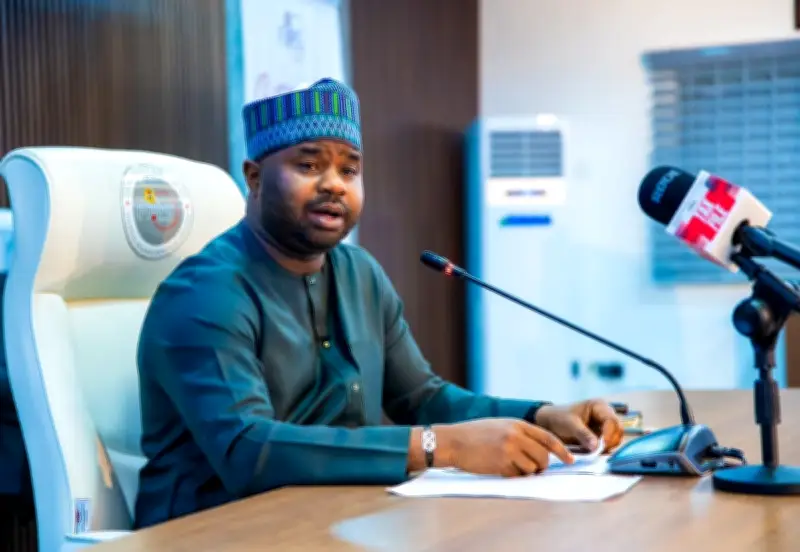
Zacch Adedeji, Chairman of the Nigeria Revenue Service (NRS), has outlined four major economic distortions inherited by President Bola Tinubu's administration, which he says have been impeding the nation's economic growth and development. The revelations came during his address at the 2026 Annual Tax Conference in Abuja, where he detailed the fiscal challenges that required immediate intervention.
Four Distortions Hindering Nigeria's Economy
Adedeji identified the four distortions as: the fuel subsidy regime, foreign exchange (FX) market instability, multiple taxation, and the underperformance of state-owned enterprises (SOEs). These elements, he explained, were deeply entrenched in Nigeria's economic framework and have been causing significant financial leakages and inefficiencies.
According to Adedeji, the fuel subsidy alone consumed over N10 trillion between 2010 and 2022, a figure that highlights the massive drain on public resources. He noted that this unsustainable expenditure contributed to the widening fiscal deficit and limited the government's capacity to invest in critical infrastructure and social services.
Impact on Economic Growth
The NRS Chairman emphasized that these distortions have had a cascading effect on Nigeria's economy, leading to a low revenue generation capacity, high public debt, and a stifled private sector. He stressed that the removal of the fuel subsidy, which was one of the first actions taken by the Tinubu administration, was a necessary step to redirect funds towards more productive sectors.
Adedeji also pointed out that the FX market instability, characterized by multiple exchange rates, created arbitrage opportunities that fueled corruption and discouraged foreign investment. He praised the government's efforts to unify the exchange rate, which he said would enhance transparency and attract long-term capital inflows.
Measures to Address the Distortions
To tackle multiple taxation, the NRS has been working with state governments to harmonize tax collection and eliminate redundant levies. Adedeji noted that this initiative aims to reduce the burden on businesses and improve compliance, thereby expanding the tax base.
Regarding the underperformance of SOEs, he called for a comprehensive reform to improve their efficiency and profitability. He argued that these enterprises, which include power and transportation companies, should not only be self-sustaining but also contribute to the national revenue pool.
Future Outlook
Adedeji expressed optimism that with the implementation of these corrective measures, Nigeria's economy would witness significant improvement in the coming years. He projected a growth rate of 3.5% in 2026, up from the current 2.8%, driven by increased oil production and non-oil sector expansion.
He also urged citizens to support the government's reform agenda, emphasizing that the sacrifices made now would yield long-term benefits. "We are laying the foundation for a sustainable economic future," he said.
The conference, themed "Taxation and Economic Rebirth," brought together policymakers, tax experts, and business leaders to deliberate on strategies for enhancing Nigeria's fiscal landscape.