
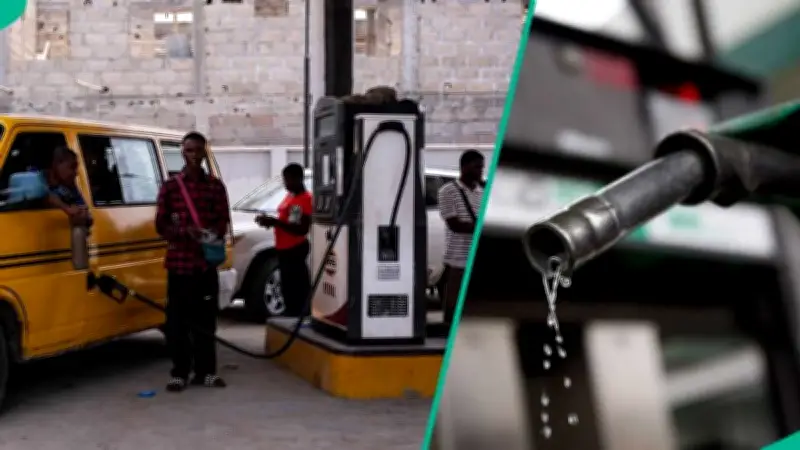
Petrol prices have dropped once more across several Nigerian cities as filling stations and depot operators respond to fresh rate reductions from domestic refiners and suppliers. The latest cuts, announced on Monday, August 10, 2026, follow a series of downward adjustments in the downstream oil market over recent weeks.
MRS Cuts Petrol Price by N50 in Abuja
MRS filling stations, which source fuel from the Dangote Refinery, reduced their pump price in Abuja and surrounding areas from N1,260 to N1,210 per litre, a decrease of N50. This adjustment is part of an ongoing competitive trend among retailers. Other outlets in Abuja, including AA Rano, also lowered their prices by approximately N25 per litre on the same day, bringing petrol to around N1,275 per litre.
NNPC Reduces Prices in Lagos and Abuja
The Nigerian National Petroleum Company Limited (NNPC) also adjusted its retail prices as competition among domestic refiners intensifies. Checks conducted on Monday, August 10, revealed that NNPC stations in Lagos are selling petrol at N1,205 per litre, down from N1,265—a drop of N60. In Abuja, the price fell by N15, moving from N1,295 to N1,280 per litre.
Depot Prices Follow the Downward Trend
Data from Petroleumprice.ng showed that major petroleum depots in Lagos have revised their rates downward. MRS Tincan lowered its depot price from N1,222 to N1,172 per litre. Pinnacle cut its rate from N1,215 to N1,165.70, while Aiteo moved from N1,217 to N1,168 per litre. NIPCO reduced its price from N1,218 to N1,168, and Integrated brought its rate down from N1,218 to N1,169. African Terminal also dropped from N1,218 to N1,169 per litre.
Impact on Consumers and Retailers
The sustained decline in depot prices could push more filling stations to lower their pump rates as cheaper supplies become accessible to retailers. However, the extent of further price cuts may vary among retailers, depending on their storage costs and market positioning. For consumers, this trend offers some relief from the high cost of petrol, which has been a burden on households and businesses alike.
Diesel Price Rises by 86.40%
In contrast to petrol, the National Bureau of Statistics (NBS) recorded a sharp increase in the average retail price of Automotive Gas Oil (AGO), commonly known as diesel, in May 2026. The NBS Diesel Price Watch Report showed that the average price climbed to N3,277.47 per litre during the month, representing an 86.40% increase compared with the N1,758.26 per litre recorded in May 2025. The latest figure also reflected a significant month-on-month rise, with diesel prices increasing by 32.44% from N2,474.69 per litre in April 2026 to N3,277.47 per litre in May 2026.
Market Dynamics and Future Outlook
Industry analysts attribute the petrol price reductions to increased local refining capacity, particularly from the Dangote Refinery, and competitive pricing among suppliers. The NNPC's adjustments reflect its strategy to remain competitive in the retail market. As domestic production grows, further price cuts are possible, though global crude oil prices and exchange rate fluctuations remain key factors. The divergent trends for petrol and diesel highlight the complexity of Nigeria's fuel market, where subsidies and deregulation policies continue to shape pricing.




