Economist Urges Federal Government to Revive Ajaokuta Steel for Massive Economic Gains
In a compelling virtual address, development economist Prof. Banji Oyelaran-Oyeyinka has issued a clarion call to the Federal Government, urging immediate steps to operationalise the long-dormant Ajaokuta Steel Company. He emphasised that reviving the facility could inject a staggering $115 billion into Nigeria's Gross Domestic Product (GDP), conserve $9.1 billion in foreign exchange annually, and generate up to 70,000 new jobs.
A National Embarrassment and Economic Contradiction
Speaking during the Virtual International Conference on Ajaokuta, organised by the Coalition for the Revival of Ajaokuta, Oyelaran-Oyeyinka described a country of over 200 million people without primary steel production as "a travesty and a national embarrassment." He warned that continued delays in reviving the steel plant pose a severe threat to Nigeria's industrial future, stressing that steel is not merely a commodity but the backbone of modern civilisation and industrial power.
He highlighted a stark economic contradiction: Nigeria has already expended an estimated $10 billion on the Ajaokuta project without producing a single tonne of steel, while simultaneously importing approximately $4 billion worth of steel each year. "This is a contradiction we can no longer afford," he asserted.
Potential and Persistent Failures
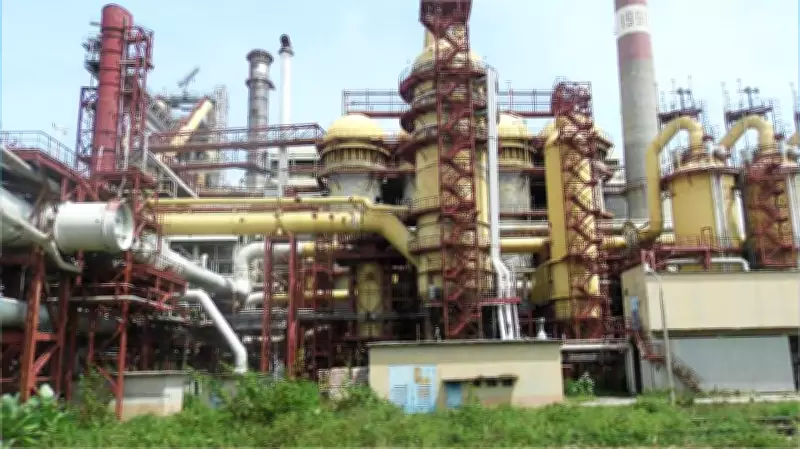
Designed to produce 1.3 million tonnes of steel annually, the Ajaokuta plant has the capacity to significantly meet domestic demand, reduce reliance on imports, and catalyse broad industrial development if brought to full operational status. "The time for hesitation has passed," Oyelaran-Oyeyinka declared, urging the government to reposition steel as the cornerstone of Nigeria's industrialisation strategy.
His intervention comes amid ongoing heavy public spending on the facility, which has remained largely inactive for over four decades. In the 2026 budget, the government allocated about N6.69 billion to Ajaokuta, with over 90% directed towards personnel costs rather than production activities, underscoring its status as a non-performing asset.
Oyelaran-Oyeyinka attributed the persistent failure of the project to poor leadership, rampant corruption, and inconsistent policies. He argued that the collapse of Ajaokuta marked a critical turning point in Nigeria's industrial decline, noting that "no country has achieved meaningful industrialisation without a functional steel base."
Global Comparisons and Privatisation Proposals
Drawing parallels with nations like China, India, and South Korea, the economist pointed out that strategic investments in steel production were central to their transformations into industrial powerhouses. He cautioned that Nigeria risks falling further behind in the global economic landscape without a similar commitment.
To ensure efficiency and technical expertise, Oyelaran-Oyeyinka proposed a full privatisation of the steel complex. He suggested that majority ownership should be handed to a capable Nigerian consortium working in partnership with experienced global operators.
Conference Outcomes and Stakeholder Consensus
The one-day international conference, which featured over 50 participants, concluded with a unanimous call for the Nigerian government to privatise Ajaokuta Steel as a last resort for its survival. The event, themed 'Ajaokuta Phenomenon in the Tinubu’s Era: A Turning Point or Another Missed Opportunity?', facilitated structured dialogue among stakeholders on the state, challenges, and future pathways for the company.
In a communiqué signed by the National Coordinator of the Coalition, Mohammed Bougei Attah, and Nnanna Nwafor, CSO representative and Executive Director of FENRAD, participants reinforced the urgency of decisive action to revive this critical national asset.