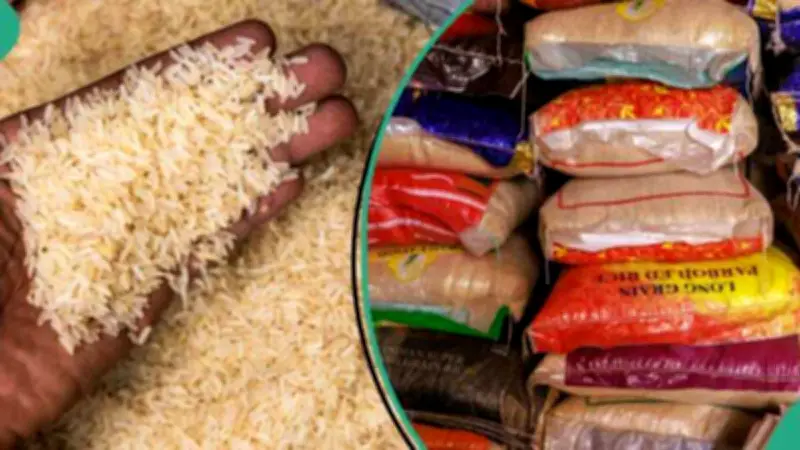
The price of rice has fallen sharply in parts of Nigeria, with a 50kg bag now selling for between N48,000 and N49,000, bringing relief to consumers but raising fresh concerns among local farmers and rice millers. According to the National Chairman of the Rice Millers Association of Nigeria, Peter Dama, the decline is driven partly by the influx of cheaper imported rice following government measures aimed at improving food availability and reducing inflation.
Local Producers Struggle as Cheaper Imports Flood Market
While consumers are benefiting from the lower prices, Dama warned that the policy could further weaken Nigeria’s domestic rice industry as local producers struggle with high production and operating costs. He noted that imported rice can now be sold at around N48,000 to N49,000 per 50kg bag, making it difficult for locally produced rice to compete.
Dama explained that countries such as India, China, Malaysia, and Japan provide substantial support to their rice farmers, allowing them to produce at lower costs and maintain export competitiveness. Nigeria, he argued, does not provide comparable support to farmers, leaving domestic producers exposed to rising input, energy, labour, and transportation costs.
High Production Costs Squeeze Millers
Dama said the disparity in production costs means Nigerian millers can spend significantly more producing rice than the prevailing market price allows them to recover. He also highlighted the rising cost of labour as another major challenge facing the industry.
According to him, workers involved in activities such as drying, washing, and processing paddy now demand substantially higher daily wages, adding to the cost of locally processed rice. Transportation and loading expenses have also surged. Dama cited the cost of loading bags onto trucks as an example, saying charges that were previously as low as N15 per bag had risen to about N500 in some cases. For a truck carrying hundreds of bags, he said, the additional cost quickly becomes substantial and is ultimately reflected in the price of locally produced rice.
Millers Shut Down as Imported Rice Gets Cheaper
The association chairman said the rising costs had already forced some rice millers to shut down because they could no longer compete with cheaper imported products. He said local producers needed to make a profit to remain in business but were increasingly being pushed into a situation where production costs exceeded selling prices.
The development has raised concerns about the long-term impact of cheaper imports on Nigeria’s efforts to achieve self-sufficiency in rice production and protect investments made in the domestic agricultural value chain.
Government Policy Shifts: From Duty-Free Window to Tariff Reforms
The Federal Government approved a 150-day duty-free import window in July 2024 for selected food commodities, including husked brown rice, maize, wheat, and beans, as part of measures to tackle food inflation. The Nigeria Customs Service subsequently released guidelines for the implementation of the policy, which allowed qualified importers to bring in the affected commodities at zero import duty and other associated levies.
Although the 2024 measure was presented as a temporary intervention, subsequent fiscal and tariff reforms have altered the import regime. In 2026, the government introduced broader tariff changes that reduced duties on several agricultural products, including rice, rather than maintaining the earlier blanket zero-duty arrangement.
Consumers Rejoice, But Farmers Warn of Long-Term Damage
Consumers, particularly in Lagos, have expressed satisfaction with the lower prices, but farmers’ groups have continued to raise concerns about the influx of imported rice, warning that cheaper imports could undermine domestic production if local farmers are not given adequate support. The latest price decline therefore presents a dilemma for policymakers: consumers are benefiting from cheaper rice, but domestic farmers and millers say they are struggling to survive under the same market conditions.
Earlier Price Slash in Lagos
Legit.ng earlier reported that the cost of rice had taken a surprising dip across Lagos and several key cities in Nigeria after the state government slashed the price of its own brand, Lagos Rice, to N57,000 per 50kg bag. The announcement, which came from Governor Babajide Sanwo-Olu, immediately sparked excitement among both consumers and stakeholders who have battled sky-high food inflation for months. The price slash marked a bold intervention designed to ease the pressure on households ahead of the Christmas season.