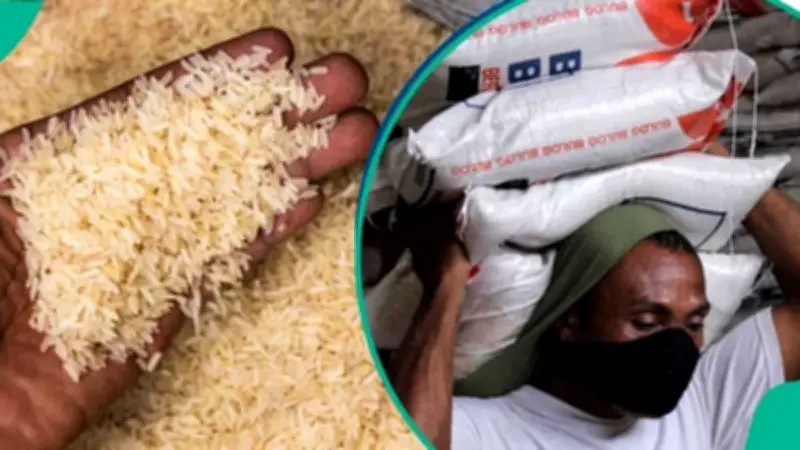
Imported long-grain rice prices in Nigeria dropped by ₦15,000 per 50kg bag between January and September 2026, according to a market survey published in September. A 50kg bag of imported long-grain rice, which sold for about ₦70,000 in January, fell to ₦55,000 by September, a decline of 21.4% in nine months.
National Average Milled Rice Price Falls Sharply
Separate data from the Alliance for a Green Revolution in Africa (AGRA) showed an even sharper year-on-year decline in the average price of milled rice. According to AGRA's latest Food Security Monitor, Nigeria's national average price of milled rice declined by 6.9% month-on-month to ₦616.94 per kilogramme in August. The average price was also 18.4% lower than six months earlier and a substantial 31.8% below its level a year earlier.
AGRA linked the decline to improved supplies and reduced pressure in the market. Nigeria also recorded the lowest rice price among the West African markets monitored when measured in dollar terms. The improvement is significant for households because rice remains one of Nigeria's most widely consumed staples.
Market Survey Reveals Price Variations by Category
A dealer and market survey from September 2026 tracked price changes across several rice categories. The imported long-grain 50kg bag dropped from ₦70,000 to ₦55,000, a fall of ₦15,000. Nigerian-manufactured 50kg bags declined from ₦60,000 to ₦53,000, a drop of ₦7,000. The 25kg Nigerian-manufactured bag fell from ₦30,000 to ₦26,500, a reduction of ₦3,500. Imported long-grain 25kg bags dropped from ₦35,000 to ₦27,500, a decline of ₦7,500, while imported short-grain 25kg bags fell from ₦30,000 to ₦25,500, a reduction of ₦4,500.
However, the latest available market tracking suggests that the decline is not uniform across Nigeria. ArketData's September 23 figures put the median price of foreign rice at ₦66,000 per 50kg bag across 12 Nigerian markets, with a typical range of ₦58,750 to ₦70,000. Prices ranged from ₦48,500 at Ifo Market in Ogun State to as much as ₦110,000 at Effurun Market. The data indicate that foreign rice prices have been broadly stable over the past 90 days rather than continuing to crash.
Lagos Consumers Face Different Price Pressures
For Nigerian rice, the national market tracker showed a median of about ₦54,000 in the week beginning September 21, compared with ₦55,000 during several weeks in August and early September. Prices ranged from roughly ₦45,000 to ₦65,000, according to a survey by Legit.ng.
Lagos is one market where consumers have recently faced renewed pressure. A BusinessDay survey published in late September found that a 50kg bag of foreign parboiled rice was selling for around ₦68,000, compared with ₦58,000 in July. Local parboiled rice was selling for about ₦61,000. The Lagos figures show why the current trend is better described as a major year-to-date price correction rather than a nationwide price crash.
Food Inflation Eases, Providing Some Relief
The broader food inflation picture is also improving. The National Bureau of Statistics reported that Nigeria's food inflation eased to 19.57% in August from 20.31% in July, while month-on-month food inflation dropped sharply to 1.02% from 5.56%. Headline inflation also eased marginally to 15.39% in August from 15.43% in July.
Despite the relief, prices remain vulnerable to transportation costs, insecurity, production challenges and changes in rice import policy. For consumers, the numbers nevertheless point to a significant improvement from earlier levels: a family buying imported long-grain rice at the surveyed September price would spend about ₦15,000 less on a 50kg bag than in January. Whether that relief continues into the final quarter of 2026 will depend largely on harvest supplies, logistics costs and how the government manages the balance between cheaper food for consumers and protection for Nigerian rice farmers.