
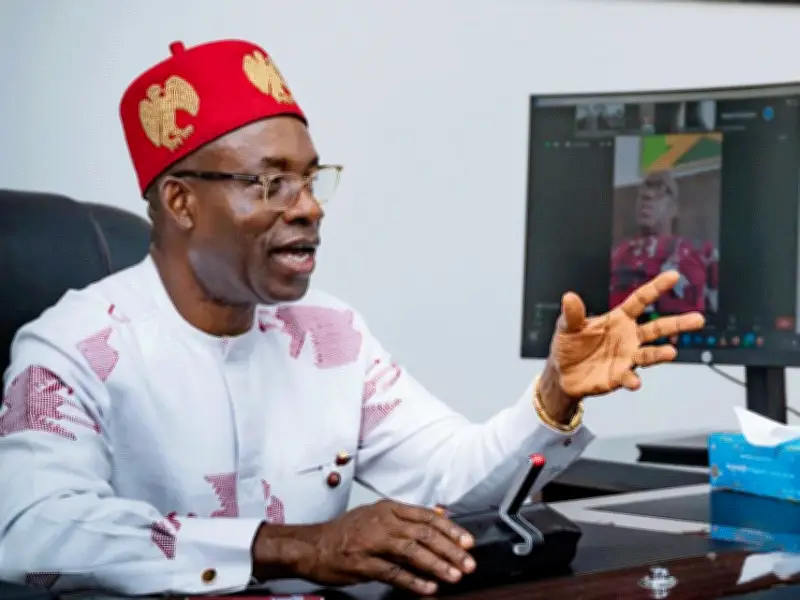
Anambra State Governor Charles Soludo has declared that his administration has not borrowed any money since he assumed office, asserting that responsible financial management can drive development without increasing public debt. Speaking on Monday at the Delta State Economic and Investment Summit, Soludo also expressed confidence that Nigeria's economy is stabilising and gradually recovering.
No Borrowing, Responsible Management
Soludo, a former Governor of the Central Bank of Nigeria (CBN), stated emphatically: “Nigeria has stabilised and is on the rise. I haven’t borrowed a dime since I became governor.” He argued that state governments can achieve significant development through careful management of available resources rather than relying heavily on borrowing.
The governor's remarks come at a time when many state governments are grappling with debt burdens and fiscal challenges. His position underscores a growing call for fiscal discipline and prudent resource allocation in public administration.
Call for Local Patronage
Soludo also urged Nigerians to increase their patronage of locally made products, warning that the country's dependence on imported goods is limiting industrial growth and job creation. He said: “We cannot create the kind of jobs we want with all of us using foreign or imported goods.”
The governor criticised the continued preference for foreign-made items among Nigerians, including influential citizens. He observed: “I look in this room, and I see suits from Europe, America and China.” This, he argued, undermines local industries and hampers economic self-sufficiency.
Potential for Job Creation
Soludo highlighted the immense potential of the local manufacturing sector, stating that greater support for Nigerian-made clothing, textiles, and other locally produced goods could create millions of employment opportunities. He projected: “If all 247 million Nigerians wear only made-in-Nigeria, more than 10 million jobs will be created.”
This projection underscores the significant impact that consumer behaviour can have on economic growth and employment. By shifting preferences towards local products, Nigeria could stimulate production, reduce import dependency, and foster sustainable development.
Commitment to Local Industries
The governor reiterated his commitment to promoting local industries, stating that increased demand for Nigerian products would encourage production, create jobs, and strengthen the country's economy. His remarks align with broader policy discussions on economic diversification and self-reliance.
Soludo's stance is particularly notable given his background as a former central bank governor, where he oversaw monetary policy and financial stability. His current advocacy for fiscal prudence and local patronage reflects a consistent approach to economic management.
Broader Economic Context
The Delta State Economic and Investment Summit provided a platform for Soludo to share his insights on economic recovery and development. His comments on Nigeria's stabilising economy come amidst ongoing efforts by the federal government to address inflation, currency depreciation, and other macroeconomic challenges.
Soludo's message resonates with a growing consensus among economists and policymakers that Nigeria must reduce its reliance on imports and build a robust local industrial base. The potential for job creation in the textile and clothing sectors alone is substantial, given the country's large population and youthful demographic.
As Nigeria continues to navigate its economic trajectory, Soludo's call for fiscal discipline and local patronage offers a pragmatic path forward. By embracing made-in-Nigeria products and managing resources wisely, the country can achieve sustainable growth and reduce its vulnerability to external shocks.




