
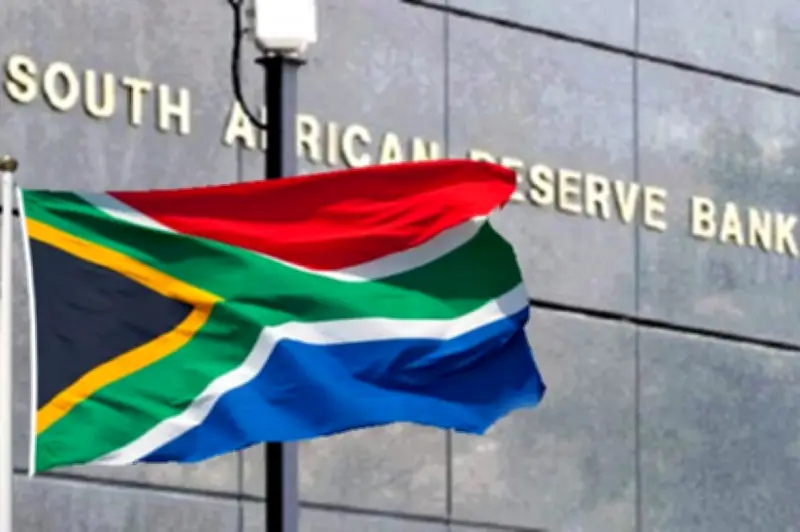
The South African Reserve Bank (SARB) held its key interest rate steady at 7% on Thursday, surprising some analysts who had expected a cut to support a struggling economy. The decision comes as inflation accelerated to 5.2% in June, breaching the central bank's 3-6% target range midpoint, and the rand weakened past 18 to the US dollar.
SARB Prioritizes Inflation Control Amid Economic Pressures
SARB Governor Lesetja Kganyago said the Monetary Policy Committee (MPC) voted unanimously to keep the repo rate unchanged, emphasizing that the bank remains focused on anchoring inflation expectations. "The MPC is of the view that the current stance of monetary policy remains appropriate to steer inflation back to the midpoint of the target band over the medium term," Kganyago stated.
South Africa's inflation rate rose from 4.6% in May to 5.2% in June, driven by higher food and transport costs. The rand has depreciated by about 10% against the dollar since the start of 2026, adding to imported inflation pressures.
Economic Growth Outlook Remains Weak
The SARB downgraded its 2026 GDP growth forecast to 1.2% from 1.5%, citing persistent power cuts, logistics bottlenecks, and subdued global demand. The bank also revised its inflation forecast upward to 5.0% for 2026, from 4.7% previously.
"The risks to the inflation outlook are tilted to the upside, largely due to the weaker exchange rate and higher food prices," Kganyago said. He added that the MPC would remain data-dependent and stands ready to act if inflation expectations become unanchored.
Market Reaction and Analyst Views
The rand strengthened slightly after the rate decision, trading at 17.95 against the dollar by midday Thursday. Bond yields edged lower as investors welcomed the hawkish hold. Some economists, however, expressed concern that keeping rates high could further dampen an already fragile economy.
"While we understand the need to fight inflation, the economy needs stimulus. The SARB is walking a tightrope," said Thando Ndlovu, an economist at Johannesburg-based research firm EconAfrica. Others noted that the rate hold was necessary to prevent a sharper depreciation of the rand.
Outlook for Future Rate Decisions
The next MPC meeting is scheduled for September 2026. Analysts are divided on whether the SARB will cut rates later this year, with some expecting a 25-basis-point reduction if inflation moderates and the rand stabilizes. Others predict rates will remain on hold through 2026 given persistent price pressures.
The SARB's decision contrasts with other central banks in emerging markets, such as Nigeria and Kenya, which have recently cut rates to support growth. However, South Africa's higher reliance on imported goods makes it more vulnerable to currency swings.




